
The Next AI Frontier Is Turning a Single Still Image Into a Moving Scene
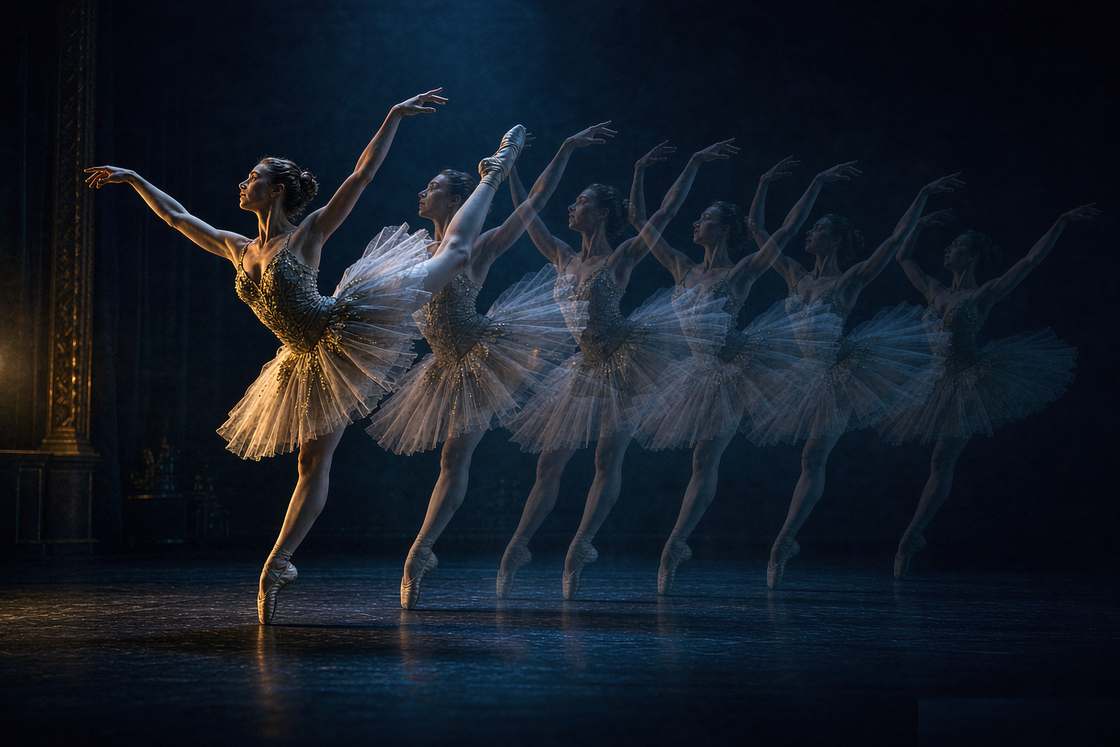
Image generation has gotten good enough that the conversation is moving on. The new frontier, the one the tools and the researchers are chasing this season, is video. Specifically, taking one still image and making it move.
That sounds like a small step, but it is a different technical problem. A diffusion image model refines noise into a single coherent frame. Video means hundreds of frames that have to stay consistent with each other, with the physics of the subject, and with the original image. Get it wrong and the character's face melts three seconds in.
This is where the energy is going in 2026, and it is worth understanding what is actually possible now, because the gap between the demo and the usable tool is still the whole game.
The physics problem, and why it was hard
The clearest way to see why this is hard is to look at what a good image-to-video tool does when it works.
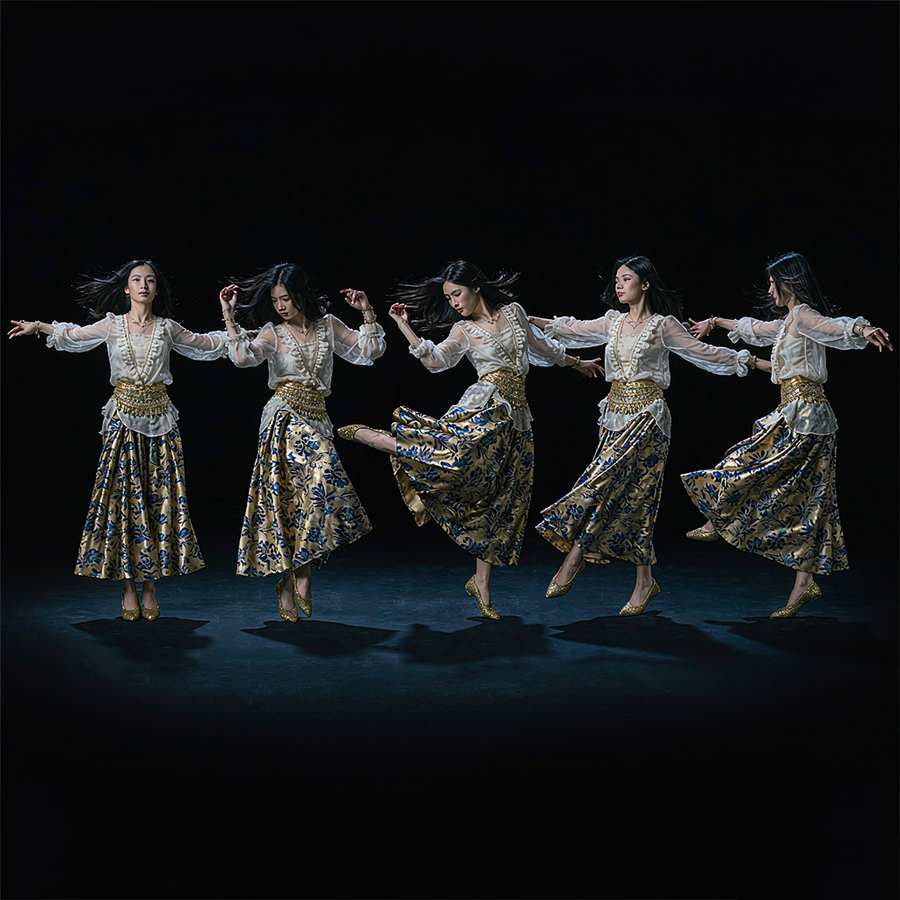
Take a character. A still image of a person is one frozen pose. To animate that person dancing, walking, or waving, the model has to understand body geometry, not just pixels. If it only copies visual patterns, the limbs drift, the proportions warp, and you get the melted, puppet-like motion that defined the early tools.
Viggle, the tool that became famous for exactly this, built its reputation on a different approach. Its JST-1 model is a 3D physics model rather than a pure diffusion model. It works from an understanding of body geometry, which is why character proportions hold up through fast, complex choreography where frame-by-frame generators tend to fall apart. The model powers character animation from a single still, and it has become the default for meme makers and short-form creators who want a character to dance.
The open-source side is waking up
The open-source world has been slower here, because video generation is expensive to train. But it is moving.
Viggle released Viggle-Animate on Hugging Face in September, an image-to-video model aimed at character replacement and video editing, distilled from MiniMax-H3. Distillation is the trick of training a smaller model to reproduce a larger parent's behavior, which matters when the goal is faster inference and lower compute costs. The release is narrow in scope, character swapping and editing existing footage rather than generating clips from scratch, but it puts a purpose-built tool in developers' hands without a closed API.
That pattern is worth watching. Every hard problem in AI eventually gets opened up, and character-driven video editing was one of the harder ones to hold closed. The open release is rough, and the license is non-standard, but it is a signal that the open-source stack is catching up to the closed tools.
The commercial landscape
On the commercial side, the field has sorted itself into niches.
Viggle owns character animation from stills. It is not a general purpose video tool, and it does not handle landscapes or products, but for making a character dance or pose from one image it has no real rival. The free tier gives five watermarked videos a day, and paid plans add resolution and remove the watermark.
PixVerse leads on budget. It turns a single still into a short stylized clip, with start and end frame control so you can guide motion between two keyframes, and it has a deep catalog of one-tap viral effects. The tradeoff is short clips and weaker narrative consistency.
Runway and Kling sit at the production end for people who need multi-scene control and camera work. And the model makers themselves, OpenAI, Google, and xAI, keep pushing their video models forward, with the "single image to video" capability increasingly folded into the main apps rather than sold as a separate thing.
How to actually use these tools without wasting your time
The people getting real value out of image-to-video right now share a few habits, and they are worth copying.
Start with a good still. The animation cannot fix a bad source image. If the character is blurry, off-center, or awkwardly posed, the video will be blurry, off-center, and awkwardly posed, in motion. Generate or pick a clean, well-lit still first, and the animation has something to work with.
Design around the clip limit. Most of these tools cap out around ten to fifteen seconds, and the best results stay well inside that. Plan for a loop, a hook, or a single beat rather than a scene. Trying to stretch one tool beyond what it does is how you end up with the melted frames everyone has seen.
Use keyframes when the tool offers them. PixVerse and others let you set a start frame and an end frame, which gives the model two anchors to interpolate between. That one habit removes most of the drift and makes the motion feel deliberate instead of random.
And be honest about the output. These tools are strongest for stylized, character-driven, or product-spin content. They are not yet a replacement for real footage when realism and trust matter. For a meme, a social post, or a product loop, they are ready. For anything that has to look like it was shot, they are not.
The creators who thrive with image-to-video are the ones who treat it as a new kind of camera, with its own limits, rather than a cheaper version of the old one. Learn the limits and shoot within them, and a single still image becomes a surprisingly large canvas.
What is actually usable today
The honest version is that image-to-video has crossed from "demo" to "useful for short clips," but it has not crossed into "production ready for long-form."
For a ten second loop of a character dancing, a stylized social post, or a product spin for an ad, the tools are good enough that the result is worth the effort. For anything that needs narrative continuity, consistent camera work, or a full minute of coherent footage, the tools still fall apart.
That is not a knock. It is just where the technology is. The people who get value out of image-to-video right now are the ones who respect the clip length limit and design around it, rather than fighting it.
The frontier is real, though. The industry has been clear that 3D generation and video animation from single images are the next major step, expected to mature over the next year or two. The fact that open-source and closed tools are now converging on character animation from a single still means the hardest piece, the physics of motion, is finally being treated as a solvable engineering problem rather than a research curiosity.
Related articles
The Open-Source AI Image Stack Is Being Rebuilt, One Workflow at a Time
Workflow1111 recreates AUTOMATIC1111 with 73 nodes and 11 pipelines. What the community rebuild means for local image generation.
The Numbers Behind AI Image Generation: A 99 Percent Price Drop Ate Stock Photography
Market size, stock photo disruption, adoption numbers and the hybrid workflow, explained through the statistics.
Flux 2 vs Stable Diffusion 3.5: The Open-Source Image Race Has a Clear Leader
Flux 2 leads on quality, Stable Diffusion 3.5 keeps the deepest ecosystem. How to choose between them in 2026.
Who Owns an AI-Generated Image? Copyright, and the Firefly Loophole
Licensing, indemnification, and Adobe Firefly's legal cover: what you can safely publish in 2026.