
2,727 Garment Photos With Nobody in Them, and a Try-On Backend You Can Repoint

The repository is called nvzhuang, it has 2,841 stars, and it started as a joke in a Chinese developer forum. What it ended up as is more useful than the joke: a browsable library of 2,727 AI-generated garment images, plus 1,499 portrait references, plus an optional try-on backend that will talk to whichever image model you have a key for.
The design decision worth copying is in the first line of the description. The images are shot with no person in frame. No model, no hands, no styling poses. Just the garment, 2:3, centred, on a neutral backdrop. 1,407 of them are photoreal and 1,320 are anime-style.
Why nobody in the frame is the point
A reference image with a person in it is two references fighting each other. If you want to show a client what a jacket looks like in a different colour, a photo of the jacket on a model also encodes that model's proportions, the lighting on their face, and the pose. An image model asked for "this jacket, blue" will faithfully reproduce the pose as well, because the pose is in the pixels.
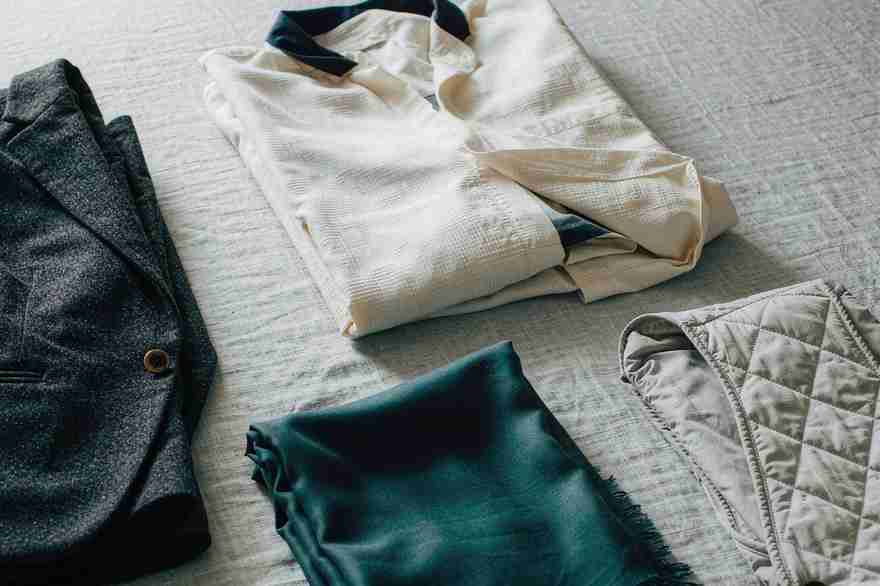
Pull the person out and the garment becomes a clean object. It can be placed on any body, in any scene, at any aspect ratio, without the model having to disentangle what it is supposed to keep. Fashion catalogues have known this for decades; it is why e-commerce shoots on invisible mannequins. The repo just applied the convention to AI-generated reference data.
The 1,499 model portraits are the other half of the same idea, and they are CC0. A try-on flow needs a body to put the clothes on, and the common failure at that step is that the user has no suitable photo. Pre-loading a library of faces and builds removes an entire class of abandonment.
What ships, and what you have to build
The front end is static. Open the hosted preview and everything works with no install, no key, no backend: three libraries to switch between, category filters, bilingual search in both directions, full-screen viewing, and a basic pairing board for assembling an outfit.
The try-on itself is the part that needs assembly. The backend lives in backend/ and runs on GoFrame, and you configure it with an API key and base URL for a model that can do image editing: GPT Image 2, ByteDance's Seedream, or Gemini are the three named. Calls consume your own quota with that provider.
Making the provider pluggable is the smart structural choice. Image models change every six weeks, prices move faster than that, and a try-on feature locked to one vendor has a shelf life measured in quarters. A repo that lets you swap the endpoint survives the model cycle. It also means the quality ceiling is yours to set: a cheap fast model for browsing, an expensive one for the final render.
Everything is MIT, including the images, and the README explicitly permits commercial use and derivative work. That is rarer than it should be and it is the reason this repo is more valuable than its star count.
What a three-step pipeline looks like
The repo is easy to dismiss as a gallery, so it is worth spelling out the workflow it enables. Step one, pick a garment reference and a body reference. Step two, send both to an editing model with an instruction: put this garment on this person, keep the fabric and the seams. Step three, keep the result and the two reference IDs alongside it, so the same outfit can be regenerated on a different body next season without hunting for the original prompt.
That last step is the one teams get wrong. Without a record of which references produced which output, a campaign becomes unreproducible the moment the person who ran it leaves. A catalogue with stable IDs, which is all this repo really is, fixes that for free.
The pattern behind it
Reference libraries are becoming the most valuable asset in consumer AI imagery. A model can be rented. A curated set of 2,727 objects with consistent framing, licensing and metadata cannot be rented, because someone has to decide what belongs in it.
The same pattern shows up in the pose library this author shipped earlier, in the AI portrait sets circulating on CC0 terms, and in the garment packs that Chinese e-commerce teams build internally and never publish. The value sits in consistency and in a licence you can hand to legal, not in novelty.
For a brand, the practical use is a mood board that a model can read. Instead of describing a fit in adjectives, you point at a reference and say "this silhouette, that fabric". For a tool builder, it is a seed dataset for a try-on product that does not require a photo studio. For a researcher, it is a hundred megabytes of clean, single-subject, licence-clear images, which is a description that applies to almost nothing else on the internet.
Handling the tone
The project's origin is a forum joke about cross-dressing, and the README leans into it with emoji and in-jokes. That framing will limit its audience, which is a shame, because the underlying structure, garments isolated from bodies with a swappable editing backend, is exactly what a fashion e-commerce team needs and exactly what most of them build badly in-house.
Strip the joke and what remains is a competent little product: a static catalogue with good search, a documented data model, a backend that takes any provider, and a licence that lets a company use it on Monday. That is a better artifact than most funded startups ship in their first year.
The caveats
Generated garments are not real garments. A reference image shows a plausible jacket, not one you can manufacture, and the fabric behaviour in an AI-generated photo is a guess. For inspiration and for style transfer it is fine; for a supplier brief it is not.
The anime half is a different audience with different expectations, and mixing the two libraries in one product means neither is perfectly tuned. It works because the interface is simple, and it would not survive a serious product roadmap without splitting.
The last caveat is the one that applies to every reference set: coverage. 2,727 garments is a lot until you need a specific thing. The value decays the moment your use case is outside the collection, and no amount of interface polish fixes a missing category.
What the repo proves is that the assembly is not the hard part anymore. A single developer can stand up a catalogue, a search, a pluggable model backend and an APK in the time it used to take to brief a studio. The hard part is deciding what to collect and getting the licence right, and that is still human work.
Related articles
The Jensen Discount: What Nvidia Loses When Its Founder Walks Out
Nvidia lost roughly $600 billion in market value when its founder stepped down. The earnings did not change. The multiple did, and that says where the value really lived.
Chinese text in video always turns to mush. Dreamina handed the typesetting to code
Dreamina launched Motion Studio on November 10. It no longer generates frames; the model writes code that lays out text, shapes and pacing. Chinese titles stop blurring, but whether the content is right is still on you.
A community spreadsheet of taps that turns off the ads inside Chinese Android builds
A no-root tool that switches off the ads Chinese phone makers ship inside the system UI. Its method is a hand-written tap script per phone model, maintained by volunteers every time a ROM moves. It works, and the maintenance is the point.
GPT Image 2.6 held the token price and raised the bill
GPT Image 2.6 kept every token rate from 2.5 and still costs more per image, because more of the work now happens in output tokens. Eleven days into the ramp, the pricing structure says more than the leaderboard does.