
Two Courts Drew a Line Around Your Face and Your Voice
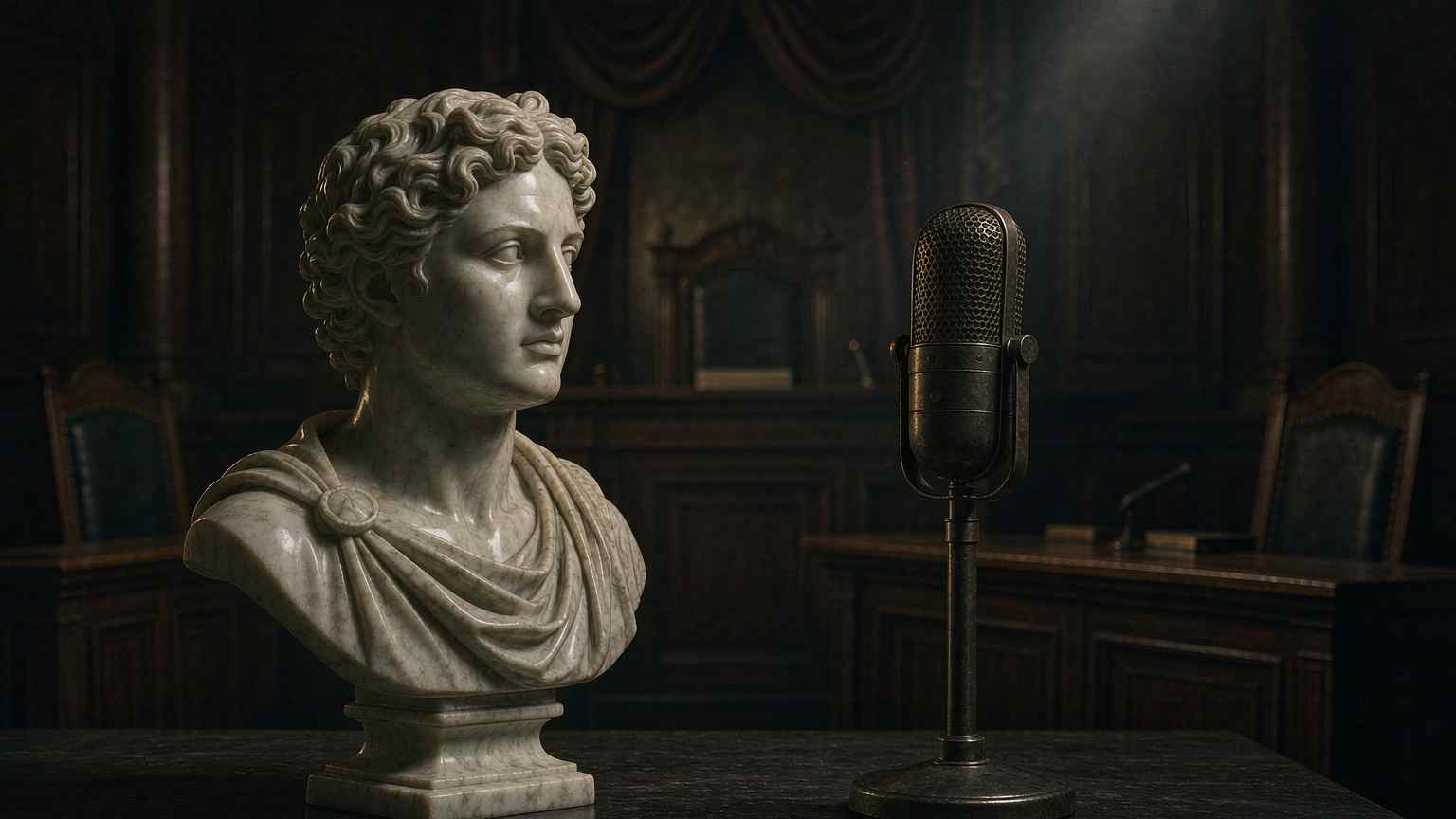
On the same day, in two different countries, two courts answered a question that generative AI has been forcing for three years: when a machine can produce your face or your voice on demand, does the law have anything to say before the damage is done?
The Tokyo District Court said yes to voices. The Bombay High Court said yes to faces. Neither ruling settles the global debate, and both come with caveats. But together they mark a shift in how courts treat a person's likeness, moving it out of the "maybe copyright" bucket and into something closer to property that belongs to the individual.
Tokyo: a voice is as personal as a portrait
The Tokyo case involved Kenjiro Tsuda, a voice actor known for roles like Kento Nanami in Jujutsu Kaisen. He sued TikTok over 188 videos that an anonymous account published between July 2024 and September 2025, alleging the account used AI to clone the distinctive baritone he is known for.
The account mattered commercially. It had more than 200,000 subscribers and, according to the ruling, earned somewhere between ¥500,000 and ¥750,000 a month by leaning on that voice to draw attention.
TikTok argued the narration used a generic male voice and that the uploader claimed the AI had been trained on a friend's recordings. The court disagreed, finding the output closely resembled Tsuda's voice. Judge Aya Takahashi framed the decision around identity rather than imitation alone: an unauthorized use of a voice for commercial appeal infringes publicity rights, because a voice is "as symbolic of one's personality as portraits are."
One part of Tsuda's claim failed. He asked for the videos to be taken down, and the court declined, because the account had already been deleted by June 29, 2026, which made that specific demand moot. The ruling still matters because it establishes the principle, even where the remedy evaporates.
This is a first in Japan. The country has no specific statute covering voice rights. Its Ministry of Justice and Ministry of Economy, Trade and Industry had drafted guidelines suggesting voices might be protected under publicity rights and the Unfair Competition Prevention Act, but until this ruling no court had actually recognized such an infringement. The decision converts guidance into precedent.
Bombay: a face, an injunction, and eighteen defendants
Nine thousand kilometers west, the Bombay High Court took a broader swing. Justice Madhav Jamdar issued an interim injunction on October 1 ordering the removal of unauthorized AI-generated deepfakes of actress Samantha Ruth Prabhu, and restrained further use of her name, image and voice across digital platforms.
The defendant list is the interesting part. It runs to 18 and names Meta, Google and Amazon alongside AI developers, social media platforms and e-commerce portals. The court also granted a John Doe order, a device that lets a plaintiff pursue unidentified infringers, so the ruling is not limited to the parties in the room.
Prabhu's counsel argued her identity was being exploited across websites, social platforms, pornographic portals and AI-based services, including morphed images and videos and interactive chatbots built around her name and likeness. The court found a prima facie violation of her personality, publicity and moral rights.
The legal scaffolding is worth reading carefully. The court invoked Article 19(1)(a) of the Indian Constitution, which covers free speech, and Article 21, which protects life and personal liberty and has been read to include privacy and dignity. It also relied on Section 38B of the Copyright Act, a provision that grants performers moral rights and the ability to restrain distortion or mutilation prejudicial to their reputation. That is a performer's right, not a studio's, and applying it to AI-generated content is the notable move.
The court also leaned on the 2021 IT Rules, which require intermediaries to act with due diligence and take down unlawful content. The inclusion of the government's electronics and telecom ministries as respondents shows the court expects the order to be carried out, with a further hearing set for December 10.
Why this is not a copyright question
It helps to be precise about what these courts did and did not decide. In both cases, the plaintiff's core claim was that their identity had been used to make something, and that the use itself was the injury. Whether a generated file copied a protected work was secondary.
That is a personality-rights theory, and it behaves differently from copyright. Copyright asks whether an output is substantially similar to an existing protected expression, and it has defenses built in for transformation and fair use. Personality rights ask whether a person's name, image, voice or likeness was appropriated for commercial gain without consent. A generated image that resembles no existing photograph can still violate the second theory, because the person it depicts never agreed to be in it. Japan's ruling leans on publicity rights, the right to control the commercial use of one's own identity. India's leans on publicity, privacy and a performer's moral rights.
The practical consequence is that the usual generative-AI defense, that the model learned from data rather than copying a specific work, does not answer the question these courts are asking. It matters whether the person consented, not whether the pixels are original.
The platforms are in the frame
Both rulings also reach past the individual who made the content and toward the services that host and distribute it. Bombay's injunction directs intermediaries to remove the material and stop circulating more, citing the due-diligence obligations that Indian rules place on platforms. In Tokyo, the individual account was gone before the court could order its removal, which is the ordinary outcome for viral content and the reason the ruling's principle matters more than its remedy.
For platforms, that creates a compliance burden that is hard to automate. Deciding whether a voice is a clone or a coincidence, or whether a face is a real person's, is exactly the kind of judgment calls that content moderation has always struggled with, now handed to systems that can generate the material faster than any review queue can process it.
What the two rulings share
Strip away the different statutes and the same idea shows up in both. A person's face and voice are treated as part of who they are, and using them commercially without consent can be a legal wrong on its own terms, before anyone argues about whether a particular image or clip is copyrightable.
That distinction matters for AI creators and platforms. Copyright questions tend to focus on the output, on whether a generated image is derivative or transformative. Personality-rights questions focus on the person, on whether their identity was used without permission. A pipeline that produces clean, clearly synthetic outputs can still run into trouble under the second theory even if it dodges the first.
The rulings also put platforms in the frame. Bombay's order directs intermediaries to remove material and refrain from circulating more. Tokyo's case shows the friction: by the time a court rules, the account may already be gone, and the harm may have already been monetized for a year.
Where the lines are still blurry
Both decisions leave gaps. Tokyo recognized the principle but delivered no takedown, and the ruling is specific enough to a famous voice that its reach into ordinary cases is untested. Japan's government may now move faster to codify voice rights, but that is a promise, not a statute.
Bombay's injunction is interim, the strongest relief is still to be argued in December, and the defendants have not had their day in full. It is also an Indian ruling applying Indian constitutional and copyright law, which limits how directly it travels.
There is a harder question underneath both cases that neither court fully answers. Where exactly does the line fall between an exact clone and a voice or face that is merely similar? Tsuda's team won partly on a finding of strong similarity, but similarity is a spectrum, and the next case will put the needle somewhere else.
What is clear is the direction. Two courts on two continents, in the same twenty-four hours, decided that identity is not a free input for generative systems. For anyone building a product that puts a person's face or voice into an output, that is the line to design around now, not after the first injunction arrives.
Related articles
Salesforce Pays $2 Billion for a Company That Interviews Your Customers For You
Interviews are evidence. Digital twins are a prediction. The line between them is the test.
AMD Buys Fei-Fei Li's World Labs for $8.2 Billion to Own Physical AI
AMD is buying a research lab, and paying a chipmaker's price for it.
Google Put a TPU in Orbit and Started Counting the Cost of Space Data Centres
One working chip proves the trip is survivable. It says little about the profit.
Someone Catalogued 13,000 Ways AI Writing Gives Itself Away
The tells did not disappear. They moved somewhere harder to see.