
Google Put a TPU in Orbit and Started Counting the Cost of Space Data Centres
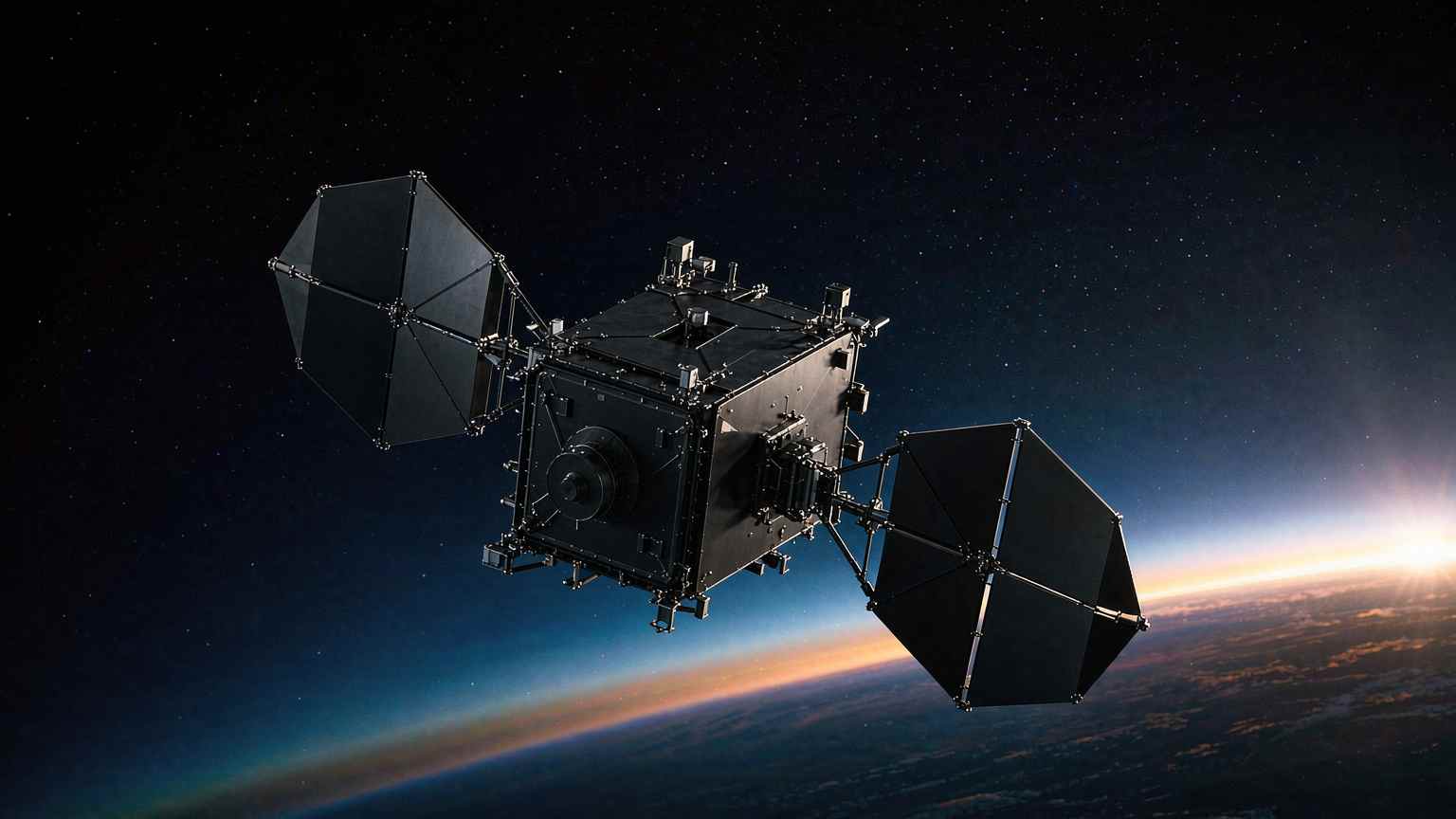
Google has launched its first custom Tensor Processing Unit into low Earth orbit, riding a SpaceX rocket and working with the satellite manufacturer Planet Labs under a project it calls Suncatcher.
The prototype is not a data centre. It is a single chip in a small satellite, and the point of the flight is to answer a narrow set of engineering questions. Can a TPU run in space without cooking itself, without accumulating logic errors from radiation, and without degrading faster than the mission needs it to? To even attempt an answer, the satellite has to supply a continuous kilowatt of power and run the chip in 15-minute bursts.
Why anyone would bother
The case for orbital compute is straightforward once you take it seriously. Ground-based data centres are running into two hard constraints at once: electricity and cooling. A solar array in orbit gets sunlight without clouds and radiates heat into a vacuum that never warms up. In theory, that is a power and cooling environment a building on Earth cannot match.
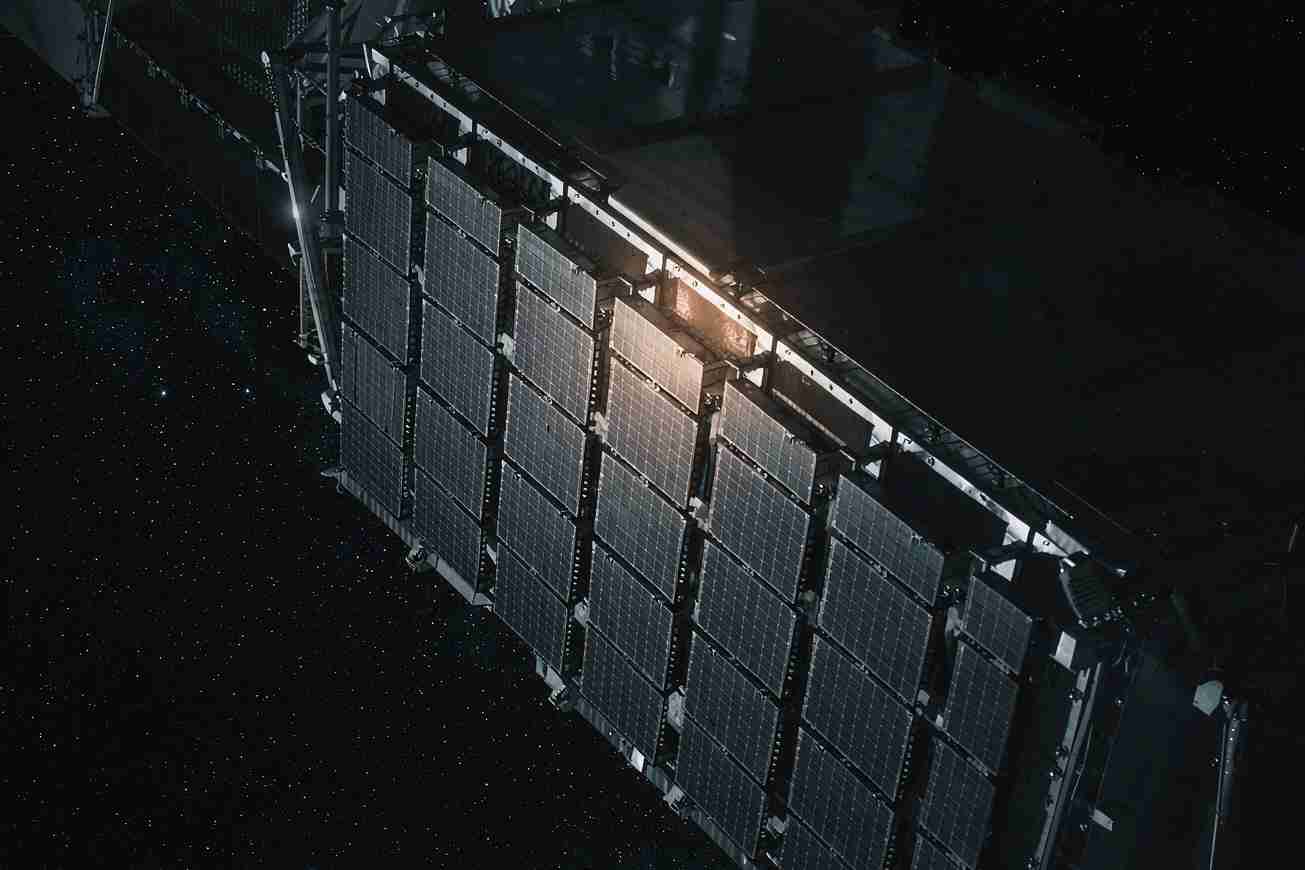
In practice, the physics reverses on you. Vacuum carries no heat by convection, so a satellite has to get rid of waste heat by radiation, which is slow and demands large surfaces. Hardware that cannot be repaired is hardware you have to over-engineer. Radiation flips bits in memory in ways that a data centre operator never has to think about.
Google's flight was paired with a paper in the journal Joule that modelled how many launches it would take to make orbital data centres economically viable at all. That question, more than the chip itself, is the real story. A single working TPU proves a chip can survive the trip. It says almost nothing about whether a fleet of them can turn a profit.
The bet under the marketing
The interesting thing about Suncatcher is that it is being run like an experiment rather than a product launch. There is no pricing page. There is no waitlist. There is a chip, a power budget, and a list of failure modes to rule out.
That is the right way to read it. Google is not claiming that your next inference job will run in space. It is testing whether the building blocks hold together well enough to justify a much larger number. The two variables that matter most are launch cost and chip longevity. Launch cost has fallen sharply and continues to fall. Longevity in orbit is the open question, and it is the one this prototype is designed to probe.
The 15-minute operating window is a clue. Running a high-power accelerator in bursts rather than continuously suggests the thermal and power margins are tight, and that the team is being careful about how much heat the satellite has to dump. A production system would need to run far longer than 15 minutes to be anything more than a curiosity.
Consider what a server rack does on Earth that a satellite cannot. It draws steady power from a grid that already exists, dumps heat into cooled air, and can be opened, repaired and upgraded by a technician who drives to the building. Every one of those conveniences has to be rebuilt from scratch in orbit, and none of them is cheap.
The quiet competition
Orbital compute is one of those ideas that sits at the edge of seriousness, popular enough to attract real engineering and speculative enough that most of the money still goes elsewhere. Google is not alone in looking at it, and the calculation changes for every player. A company that already owns launch capacity has a different threshold from one that has to buy a ride.
There is also a geopolitical layer that companies rarely discuss on the record. Data centres in orbit are not subject to any single country's land-use rules, but they are very much subject to whoever owns the launch and the ground stations. Space does not remove jurisdiction. It relocates it.
That relocation cuts both ways. On one hand, a satellite crosses borders without asking permission. On the other, the ground segments that talk to it sit firmly inside national territory, and the rockets that reach orbit launch from a handful of pads controlled by a handful of governments. The freedom is real but conditional, which is a combination regulators tend to notice eventually.
The ground segment problem
A data centre in orbit is only as good as the link to it. Every inference job has to travel up to the satellite and back, and that round trip runs through ground stations that are limited in number, contested in location and constrained by weather. Radio links through the atmosphere are slower and less reliable than a fibre cable inside a building. A model that needs to stream tokens to a user in real time cannot afford a route that goes through the sky twice. That constraint, more than the chip, will decide which workloads orbital compute can actually serve. Batch jobs that tolerate latency can wait for a pass overhead. Interactive ones cannot, and most of the money in AI inference is in the interactive kind.
The comparison to make
It helps to hold Suncatcher next to the trends it competes with. Terrestrial data centres are getting more efficient, not less, and the industry keeps finding ways to pack more compute into the same power envelope. Cooling has moved from air to liquid to immersion, each step buying headroom that was not there before.
Orbital compute has to beat that moving target, not the data centre of five years ago. The argument for space was always strongest when land, water and grid power were the binding constraints, and those constraints are exactly what a decade of terrestrial engineering has been steadily loosening. That does not kill the orbital case. It raises the bar for what "worth launching" means.
What would count as progress
Watch for three things. First, whether the TPU survives its intended mission life without a radiation-induced failure serious enough to matter. Second, whether the Joule model's launch-volume estimate comes down, because that is what would move orbital compute from a demo to a plan. Third, whether anyone follows with a larger platform, because one chip in one satellite does not validate a fleet.
If those hold, the interesting question stops being technical and becomes economic. Data centres on Earth are constrained by land, power, water, and the patience of the people who live nearby. Space removes the neighbours and the weather and replaces them with a launch schedule and a repair bill that cannot be paid at any price once the satellite is up.
That trade is not obviously good yet. But it is no longer obviously absurd, and a single working chip in orbit is enough to keep the question open. For a project that has not sold a single unit of anything, that may be all it set out to do.
Related articles
Salesforce Pays $2 Billion for a Company That Interviews Your Customers For You
Interviews are evidence. Digital twins are a prediction. The line between them is the test.
AMD Buys Fei-Fei Li's World Labs for $8.2 Billion to Own Physical AI
AMD is buying a research lab, and paying a chipmaker's price for it.
Someone Catalogued 13,000 Ways AI Writing Gives Itself Away
The tells did not disappear. They moved somewhere harder to see.
The Watermark Is Not Keeping Up With the Fake
The systems work. The coverage does not. The gap is being filled by whatever the audience assumes.