
Qwen Image 2.1: Why a 7B Open-Weights Model Is Giving Nano Banana 2.0 a Run for Its Money

When Alibaba quietly released Qwen Image 2.1, the headline numbers looked unremarkable. Seven billion parameters. Open weights. Another week, another model. Then the benchmarks landed, and a Tom's Hardware report claimed the small model beat Google's Nano Banana 2.0 on several image benchmarks while staying competitive with OpenAI and Meta offerings. A Hacker News thread on the official Qwen blog post pulled in 739 points and nearly 200 comments, which is the kind of traffic a routine model release does not get.
Something is going on here, and it is worth unpacking, because the interesting part is less about who tops a leaderboard and more about where image generation is heading.
Small models, serious output
The parameter count is the story. Most frontier image models sit in the tens of billions. A 7B model that benchmarks competitively changes the math for anyone running inference on their own hardware. On an RTX 5090 you can run the full BF16 denoiser without quantizing anything. On a MacBook Pro with an M1 Max and 32 GB of memory, a developer got text-to-image and image editing running natively on Apple Silicon at roughly 24 seconds for a 512x512 output, and posted the demo to r/StableDiffusion. That is not datacenter performance on a laptop. That is a hobbyist running a model that allegedly rivals the best closed systems, on a machine bought for video editing.
Community ports followed within days. Someone added Qwen-Image 2.1 support to TensorSharp with GGUF quantization and LoRA configs, including faster draft variants that cut generation to a handful of steps. Another developer built a Fooocus-style Gradio studio around it, with masks, annotations, outpainting, OpenPose references, and sketches as inputs. The pattern repeats: when weights are open, the ecosystem builds the tooling the official team never gets around to.
The benchmark skepticism is healthy
Of course, vendor benchmarks deserve suspicion, and the Hacker News commenters did not disappoint. The usual caveats apply: benchmark selection matters, prompt sets matter, and "beats Nano Banana" depends heavily on which tasks you measure. A 192-image side-by-side comparison of Qwen Image 2.1 against Krea 2, sorted by category and posted publicly, is exactly the kind of crowd verification that settles these arguments better than press releases. The person running it had to quantize the text encoder to NF4 to fit their memory budget, which tells you something about the gap between benchmark conditions and real setups.
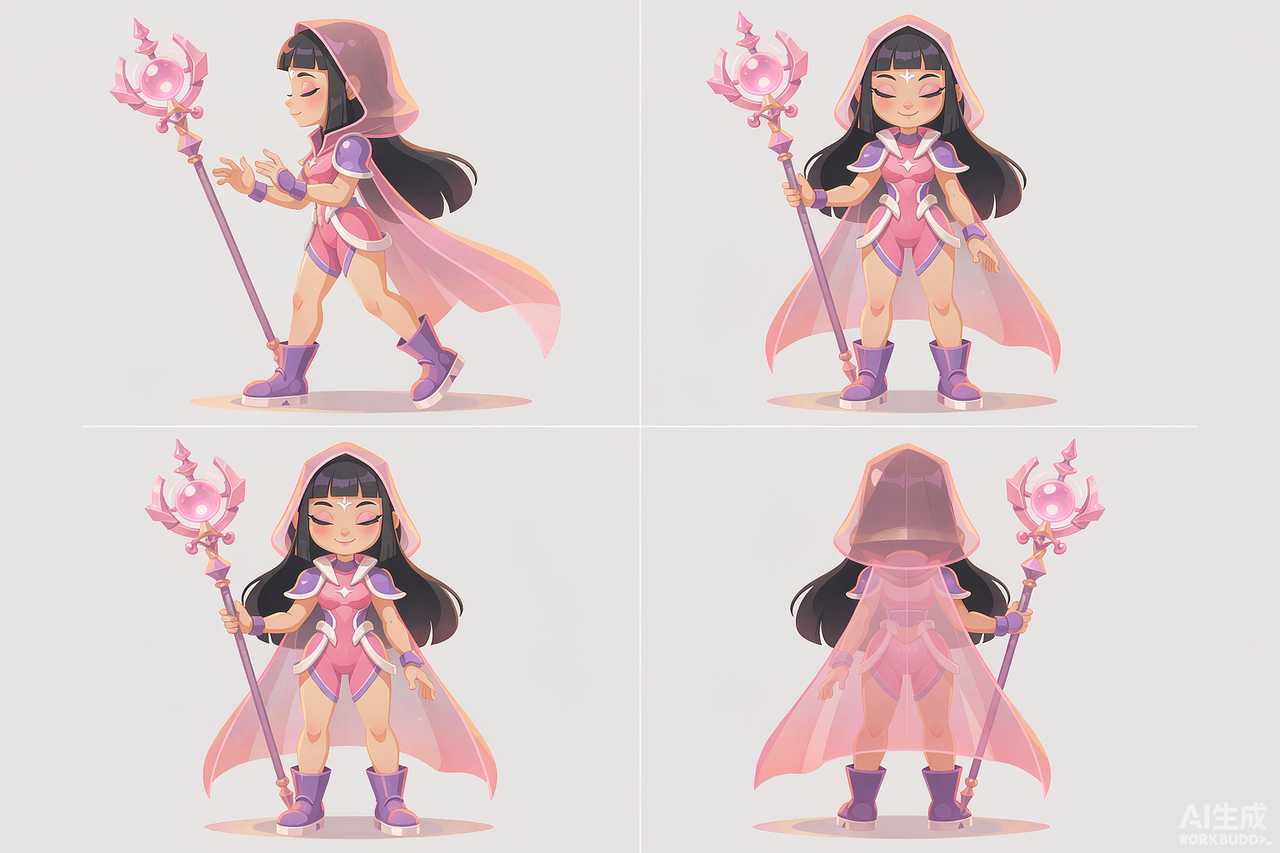
Text rendering remains one of the most watched capabilities, and it is where Qwen models have historically done well for CJK scripts as well as English. Editing is the other front. One r/StableDiffusion post demonstrating character design sheets generated with Qwen's editing mode and no LoRAs got attention because that workflow used to require a stack of fine-tunes and a weekend of ComfyUI wiring.
Why this matters beyond one model
Two larger currents are visible here. The first is that the open-weights community has a new default. For a long stretch, local generation meant Stable Diffusion derivatives and Flux variants, with a constant hunt for the least-bad checkpoint. Qwen Image 2.1 slots into that ecosystem with modern editing abilities built in, and the tools followed almost immediately. The second current is geographic. A separate r/singularity thread titled "Chinese AI models surge in global popularity — and Washington is worried" racked up discussion precisely because models like this keep landing near the top of preference tests that users run themselves, not the ones vendors commission.
For anyone choosing a daily driver right now, the practical read is straightforward. If you want the absolute best edit quality from a hosted API, the closed leaders are still worth their price. If you want something you can run, fine-tune, quantize, and wire into your own pipeline without asking permission, the 7B contender is hard to ignore. And if you are just curious, the weights are on Hugging Face. Twenty-four seconds on a two-year-old laptop is a low bar to clear for a first experiment.
Editing as the new battleground
The most consequential feature is not text-to-image at all. It is editing. Earlier image models treated modification as a separate problem: inpaint this region, wire up a ControlNet, hope the seams disappear. Qwen Image 2.1 treats editing as a native mode, the same model that draws can redraw. One demonstration that circulated on r/StableDiffusion showed character design sheets, multiple consistent views of the same character across poses and outfits, produced with no LoRAs and no reference rigging. Anyone who tried that workflow a year ago knows what it cost: a fine-tune per character, hours of mask painting, and results that drifted between angles.
Editing is also where the commercial value concentrates. Marketing teams do not want images; they want their image, adjusted. A product shot with the background swapped. A poster with the headline regenerated in a different language. Native editing collapses that pipeline, and the fact that it now exists in a downloadable model means the collapse reaches people who will never pay for an API.
The community tooling reflects this. The TensorSharp port ships with editing configs from day one, not as a later addendum. The Fooocus-style studio exposes masks, annotations, outpainting, and pose references as first-class inputs. When porters treat editing as a core feature rather than a bonus, that is the market voting on what matters.
How the community actually tests claims
Benchmarks from vendors are marketing until someone reproduces them, so the more interesting artifacts this month were the crowd ones. The 192-image Qwen versus Krea 2 comparison, generated with identical prompts and sorted by category, is the format that actually settles arguments. It has the same virtue as a blind taste test: nobody's ranking survives contact with it unchanged. Categories where one model dominates are visible at a glance, and so are categories where both fail.
Hacker News did its part by refusing to accept the headline at face value. The comment sections on the release thread and the Tom's Hardware submission pushed on the usual soft spots: which benchmark suite, whose prompt set, what happens outside the tested distribution. That skepticism is the immune system of the open-weights community, and it is why claims that survive there carry weight. Qwen Image 2.1's reputation is currently built less on Alibaba's numbers than on the fact that hundreds of people ran it and mostly did not post humiliation threads.
The economics of good-enough and open
There is a business reading that goes beyond model quality. Hosted image generation is priced against the frontier, and the frontier is expensive to operate. A 7B model that delivers most of the frontier's quality for the cost of electricity changes what customers will tolerate paying. It also changes what developers build on: an open model with stable weights can be pinned, fine-tuned, and shipped inside a product without negotiating an API agreement or fearing a deprecation.
That last point deserves emphasis because the industry just provided an object lesson. OpenAI retired the standalone DALL·E product at the end of August, folding image generation into ChatGPT Images. Nothing was lost technically, but every integration built on the old interface had to migrate on someone else's schedule. Open weights do not send that email.
None of this makes Qwen Image 2.1 the best image model in the world. It makes something arguably more disruptive: the best image model that a random person can own outright. The leaderboard argument will be settled by the next release anyway, and the one after that. The ownership shift is the part that lasts.
The pace is the other thing to internalize. Twenty-plus image model releases in a single month, as one r/PromptEngineering poster counted recently, means any "best model" claim has a shelf life measured in weeks. Qwen Image 2.1 is the current proof that small and open can embarrass big and closed. Give it a month, and the interesting question will be what replaces it.
Related articles
Huawei's Ascend Chips Are Building an Alternative Road for AI Image Models
Image models are compute-hungry, and the hardware story just got a second road. What Huawei's Ascend push means for who can afford to build and run them.
Apple Now Wants to Train AI on Your Data, and Image Models Are in the Crosshairs
The privacy company now wants to train on your photos. Apple's reported reversal is a signal about where training data comes from next.
Grok's Image Generation Mess Is Rewriting the Rules for Everyone Else
Millions of non-consensual deepfakes, investigations on three continents, and a paid-subscription patch. What the Grok crisis settled about AI image responsibility.
Chinese AI Image Models Are Winning Fans Overseas, and Washington Is Watching
The adoption is technical first, political second. Developers download what works, and right now that is increasingly from Chinese labs.