
Mid-Autumn and National Day Poster Crunch Season: I Tried Doubao, Jimeng, and Tongyi Wanxiang One by One — Real-World Differences and Commercial-Use Pitfalls
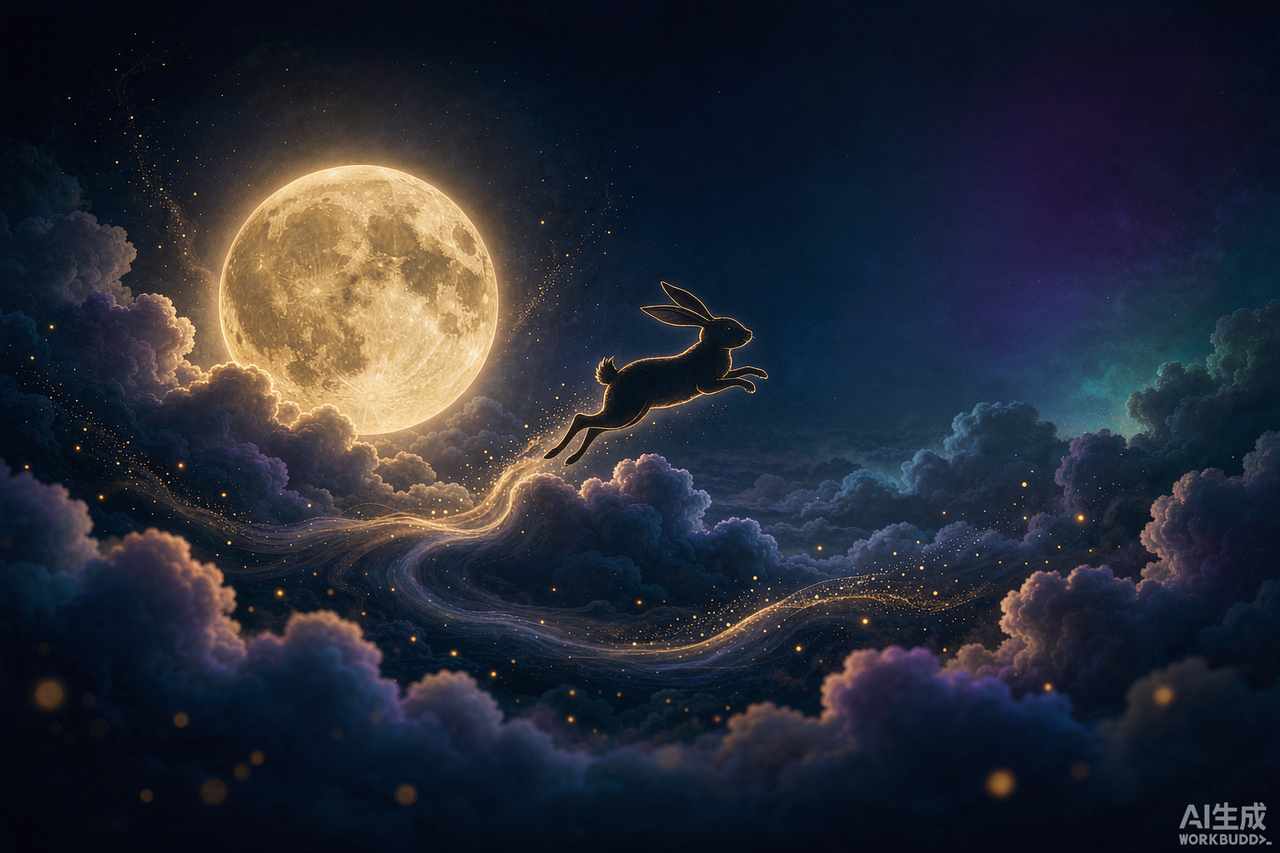
During the last two weeks of September, my message list was flooded with the same sentence: “Can you put together a few Mid-Autumn posters? Ideally today.” Mooncake shops needed promo images, companies needed National Day campaign pages, and a friend's Xiaohongshu account needed a holiday cover. In past years, this kind of work meant either paying a designer fifty yuan an image or scrolling through stock asset sites hunting for templates. This year, everyone's first instinct has become opening an AI image generator.
Lively as it all is, once you actually get hands-on you realize just how far apart these tools feel. I ran dozens of images through each of the three most commonly used domestic tools, and here's some straight talk.
Doubao: Best Used as a Sketchpad
The most effortless thing about Doubao is how shallow the entry point is. You just say in the chat, “Draw me a Mid-Autumn promo poster, deep blue night sky, jade rabbit silhouette, leave space for the title,” and four images come out in thirty seconds. Not happy? Keep tweaking in the conversation — “change the moon to gradient gold” — and it regenerates in seconds. This chat-as-you-tweak rhythm is especially friendly for people who don't know how to write prompts.
The free quota is basically nothing to worry about — more than enough for a few sets of social media graphics. The weak spots are obvious too: as soon as there are several people in the frame it tends to get muddy, and complex compositions occasionally scramble the elements. My approach is to use it to quickly lay down drafts, then switch tools for a polished version once I've picked a direction.
Jimeng: Vertical Format Is Its Home Turf
Jimeng is built on ByteDance's Seedream model. It's very well optimized for vertical composition, turns out 9:16 images fast, and once you're done you can sync straight into CapCut (Jianying), which makes the workflow smooth for short-video creators. Its Chinese comprehension is among the more accurate of the domestic models — it generally understands native aesthetic terms like “guofeng wedding dress” and “Chinese-style cyberpunk.”
Holiday posters happen to be the biggest chunk of vertical-format demand — WeChat Moments and Xiaohongshu covers are both vertical. After switching to the flagship model, the details hold up to zooming, with wood grain and lighting all correct. The trade-off is that free credits burn fast, and 4K output means paying per image.
Tongyi Wanxiang: A More Solid Foundation for Still Images
Given the same description, Tongyi Wanxiang's output has less “motion” to it, but it's noticeably steadier with still lifes and product shots. It also has a signature feature for e-commerce scenarios: pairing product images with virtual models, so you no longer need to hire someone to shoot clothes on a model — it can produce a dozen-plus candidates at once. For friends doing e-commerce, where a single shoot costs eighty or ninety yuan, this feature saves real money.
Comparing all three, my conclusion matches that of many who've tested them: for short-video workflows choose Jimeng, for still images and e-commerce choose Tongyi Wanxiang, and for throwaway graphics use Doubao. Don't expect any of them to nail it in one prompt — running more rounds and learning to describe things well matters more than which tool you pick.
Once You've Got the Image, Copyright Is the Real Pitfall
That the tools are good is a matter of the past two weeks; copyright is a problem that's been piling up for years. In early September there was big news: the Supreme People's Court issued the Guiding Opinions on the Trial of Cases Involving Artificial Intelligence Disputes — the first time China's top court has issued a dedicated document guiding the adjudication of AI disputes. The document doesn't directly answer whether AI-generated images have copyright, but it pushes judicial thinking a big step forward.
Current judicial practice roughly follows this logic. In the Beijing Internet Court case “Spring Breeze Brings Tenderness,” the plaintiff revised her prompts more than 150 times using Stable Diffusion and kept a complete record of the creative process; the court found that she had invested original intellectual labor, that the image constituted a work of fine art, and that anyone who stripped the watermark and misappropriated it would have to pay. But the result in the Zhangjiagang “Butterfly Chair” case was the opposite: a designer's Midjourney-generated chair image was reproduced by someone using the same prompts and turned into a product for sale, and the court held that a single prompt couldn't reproduce the same result, so it didn't amount to an original expression, and dismissed all claims.
Both cases point to the same thing: what the court looks at isn't whether the image is pretty, but whether you can produce evidence of the process. Prompt drafts, parameter records, intermediate drafts, why you picked this particular one — these traces determine whether your image is protected.
For ordinary people rushing out holiday posters, a few practical tips: when you deliver to a client or your boss, take a moment to archive the prompts and revision records; before commercial use, skim the terms of service — Doubao and Jimeng only unlock commercial rights with a paid membership, and many platforms state that images made with free credits can't be used commercially; and don't use prompts to specify a particular artist's style, since that's where disputes are currently most concentrated.
A Closing Word
This double-holiday season, AI image generation has gone from a “novelty” to the default option for poster crunch work. The differences between tools aren't as big as you'd think — workflow and documentation habits are what set people apart. Wishing you all a sell-out mooncake season.
Related articles
What AI Images Actually Cost in 2026: From a Penny to 48 Cents
From a penny to 48 cents per image: how to judge cost per approved asset instead of cost per generation.
Can You Still Tell an AI Image from a Real One? The Honest Answer Is No.
The tells are gone and the detectors are unreliable. The honest answer to spotting AI images is no, and the fix is upstream of your eyeballs.
Chinese AI Image Models Are Winning Fans Overseas, and Washington Is Watching
The adoption is technical first, political second. Developers download what works, and right now that is increasingly from Chinese labs.
What the Prediction Markets Are Betting About AI Images
Real money is betting on who wins AI images. OpenAI leads stills, MiniMax leads video, and the open models are the wildcard nobody prices.