
Federal Prosecutors Say $300 Million in Nvidia Servers Went to China Through Malaysia
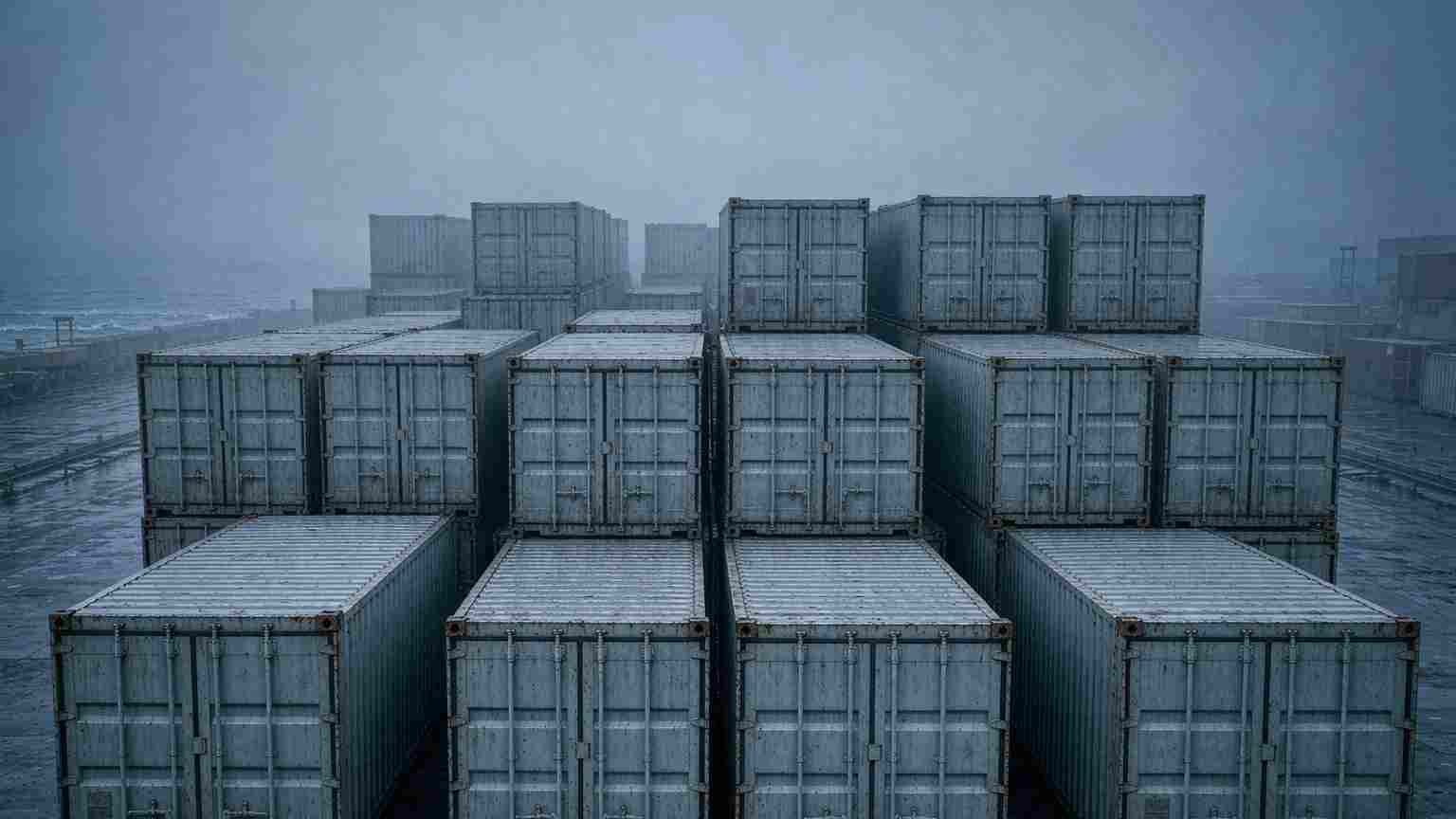
A California technology company owner was arrested on October 1 and charged with smuggling more than $300 million worth of restricted computer servers containing Nvidia chips to China. The indictment, filed in the Central District of California, describes a transshipment scheme that used Malaysia and Singapore as the visible destination and China as the real one.
Greg Lui, 38, also known as Yiu Kong Lui, of San Gabriel, owns Earthmade Computer Inc. in the City of Industry. He faces one count of conspiracy to violate US export controls, one count of outbound smuggling and one count of conspiracy to commit money laundering. If convicted on all counts, the Justice Department says he could face more than 20 years in prison. Prosecutors argued in a filing that he should be detained without bail because of a serious risk he would flee.
The gap the scheme was built around
The case turns on a licensing difference. Shipping this class of server to Malaysia or Singapore does not require an export licence from the US Commerce Department. Shipping it to China does.
Prosecutors say Lui and unidentified co-conspirators gave chip manufacturers paperwork naming end users in those two countries, then hired freight forwarders to carry the machines on to China. The alleged conspiracy ran from 2023 until at least mid-August, according to charging papers.
The indictment relies on bank records and emails. One purchase order to a US manufacturer covered 27 servers containing Nvidia H100 chips, worth about $7.6 million. A packing list showed them leaving the Los Angeles area for Kuala Lumpur. Soon afterward, prosecutors say, one of Lui's co-conspirators emailed a Malaysian government official to report that all 27 had gone to China. In 2024, Earthmade received more than $176 million from two Malaysia-based shipping companies as part of the scheme, according to the government.
The chips named in the case are the A100 and the H100. Neither is Nvidia's newest part, but both are powerful enough for AI work. The H100, released in 2022, was built to run the large language models that generate text, code, images, video and audio.
A pattern rather than a one-off
This is not the first prosecution of its kind to come out of Los Angeles. In August 2025, federal prosecutors charged two Chinese nationals living in Southern California, Chuan Geng and Shiwei Yang, who ran ALX Solutions Inc., with illegally exporting AI chips to China in a haul valued in the tens of millions of dollars. In March 2026, authorities charged a co-founder of Super Micro Computer with diverting billions of dollars in Nvidia chips to China. He pleaded not guilty.
The rules those cases test have kept moving. The US first placed chip export controls on China in 2022, and Nvidia responded with reduced-capability versions designed to stay legal in that market. Those were later restricted as well. Last year, President Trump relaxed some controls on advanced chips sold to China. Late last year he said he would let Nvidia offer its H200 chip to Chinese customers in exchange for 25 percent of that revenue, though exports there remain heavily restricted. This week he signed an executive order rebranding artificial intelligence technology as "super intelligence."
Some lawmakers want tighter curbs on technology exports to China. Nvidia and AMD have lobbied against restrictions. Nvidia's own statement on the arrest was pointed: "This case shows yet again that smuggling is a losing proposition, legally, economically and technically. Our work with law enforcement has led to prosecutions, and we will continue to engage with law enforcement."
The charges were announced jointly by federal prosecutors, the FBI and the Commerce Department's Bureau of Industry and Security, which runs the export control programme. The case is USA v. Lui, 26-cr-00618.
How the controls actually work
The licensing regime is administered by the Commerce Department's Bureau of Industry and Security, which maintains the export control classification for advanced computing items and the entity list of restricted buyers. A shipment to a permitted destination requires a declaration of the end user. A shipment to a restricted destination requires a licence, which can be denied.
That structure explains why the alleged scheme centred on paperwork rather than on hardware. There is no physical difference between a server destined for Kuala Lumpur and the same server destined for Shenzhen. The only thing separating them is the declaration attached to the bill of lading, and once the goods clear US jurisdiction, nothing in the American system follows the container further.
Enforcement therefore depends on evidence generated after the fact. In this case, prosecutors cite banking records showing payments from Malaysia-based shipping companies and an email in which a co-conspirator told a Malaysian government official that all 27 servers had gone to China. That message is the kind of record no participant intends to create. It exists because moving goods through a third country requires coordination with people in that country, and coordination leaves traces.

The alternative, extending licence requirements to transshipment, would put a compliance burden on legitimate trade with Malaysia and Singapore, both of which are building out data centre capacity and buying advanced hardware openly. That is the trade-off regulators face: either accept that some share of permitted exports will be diverted, or slow down the legal flows to catch the illegal ones.
Why enforcement cases matter more than the policy debate
The public argument about chip exports tends to be about policy: what should be sold, to whom, and under what conditions. Enforcement cases answer a narrower and more consequential question. Given the rules as they stand, how do goods actually move, and how hard is it to stop them?
The answer visible in this indictment is that the mechanism is mundane. Paperwork naming the wrong end user, a freight forwarder, two countries that do not require a licence, and a bank account receiving payments from the transit jurisdiction. None of that requires technical sophistication. It requires the assumption that nobody will follow the container the last leg of the journey.
That is why the transit countries matter. Malaysia and Singapore are legitimate destinations for advanced servers, and both are important nodes in the region's data centre build-out. A licensing regime that treats them as trusted endpoints while the onward leg is unmonitored creates exactly the kind of gap this case alleges. Closing it means either extending licence requirements to transshipment or building the auditing capacity to check where goods go after they clear.
There is no export licence that can be enforced purely at the origin. Customs declarations and end-user certificates describe intent at the moment of shipment, not arrival. The enforcement tools that actually bite are the ones applied later: banking records, freight documentation, and in this case an email to a government official that contradicted the paperwork.
What is still open
Lui has no attorney listed in the court docket, and the case has not been adjudicated. The charges describe an alleged scheme, not a proven one.
The broader question the case raises is whether prosecution is a viable deterrent at this scale. Individual arrests have followed each other for more than a year, and each indictment describes amounts larger than the last. If smuggling cases keep producing nine-figure seizures, enforcement is measuring the flow rather than stopping it. That is the number worth watching next: whether the volume moving through the transit route falls once the route is named in open court, rather than how many people get charged.
Related articles
A Federal Judge Called Flock's License Plate Network “Indiscriminate Mass Surveillance”
One sighting of a car reveals little. A month of aggregated sightings from many agencies reveals a life.
Supabase Bought Turso Because Agents Need a Database Per Task
One database per agent only makes sense once the smallest unit of storage gets cheap enough to hand out like a session token.
Actors Got a Contract That Regulates Their Digital Replicas. The Hard Part Is Enforcement.
A contract can define what a digital replica is. Proving that one was made without consent is a different problem.
Seven Universities Jointly Open-Source OpenWAM: Robots Need More Than "Seeing"—They Need to "Predict the Next Second"
Recognizing what is in front of it is not enough for a robot; it also needs to know where an action will push the world.