
A Federal Judge Called Flock's License Plate Network “Indiscriminate Mass Surveillance”
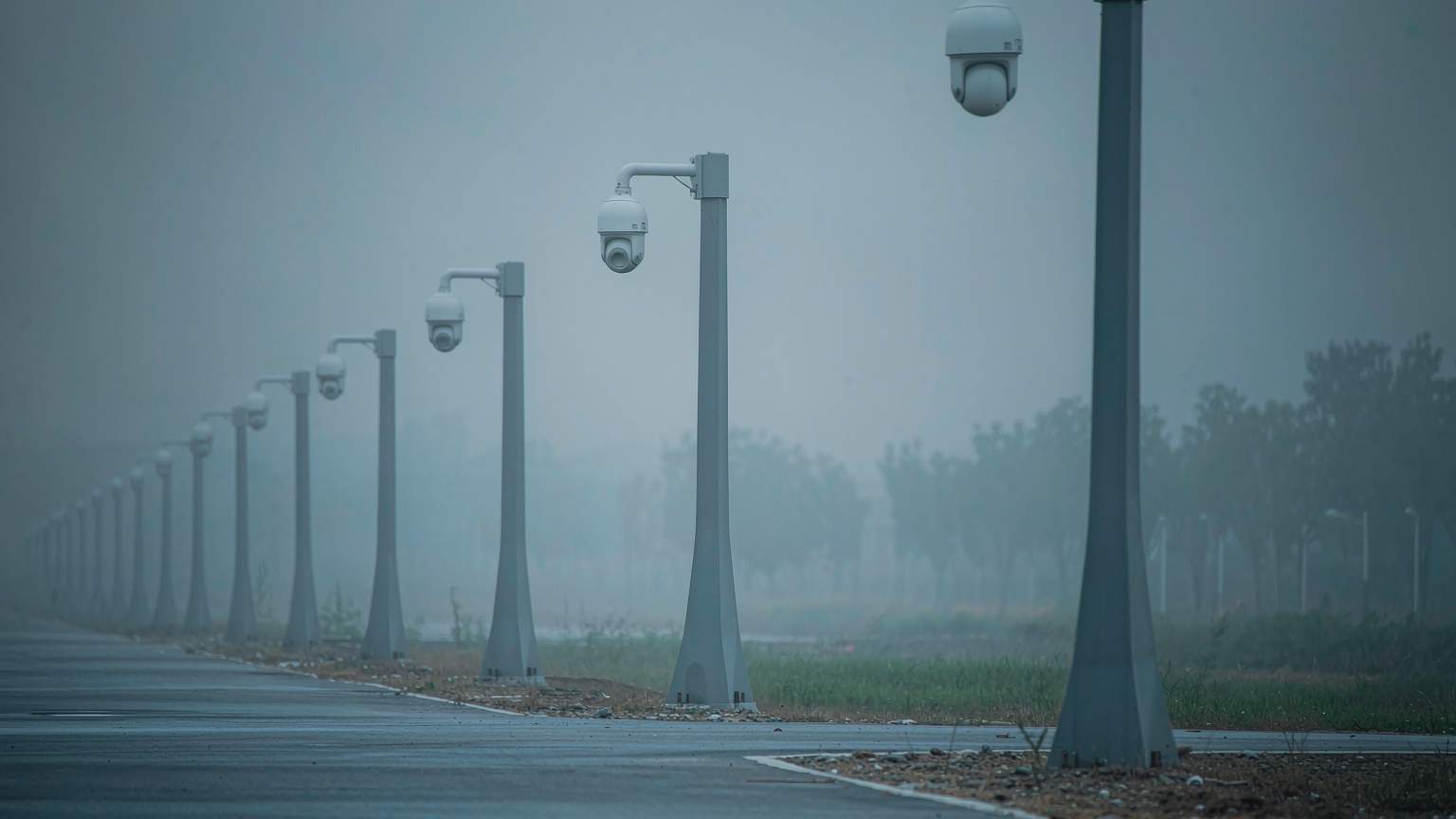
On October 1, US District Judge Sara E. Hill ruled that a Tulsa County sheriff's deputy violated the Fourth Amendment by searching a driver's license plate through automated license plate reader systems without a warrant. The ruling, in United States v. Kyle, suppressed the evidence that followed, and it questions a legal assumption that most courts have accepted for years.
The facts are unusually clean. Deputy Sheriff Freddie Alaniz was parked on the side of a road in May when he began following Melisa Kyle's Mazda SUV. According to the ruling, he started pursuing the vehicle for no apparent reason other than the fact that it had a California license plate.
What the search returned
The deputy had access to at least two license plate reader platforms, Flock and VehicleManager. Records show he ran the plate and retrieved more than 50 sightings of the vehicle across multiple states over roughly a month of movement, including a trip toward the California and Arizona border and a return toward Missouri. He listed the reasons for the queries as "traffic violation" and "investigation," though at the time he knew only that the plate was from out of state.
He then observed two traffic violations, a failure to signal a lane change and following too closely. Hill found that the initial stop was justified, but concluded that the deputy lacked reasonable suspicion to extend it and investigate unrelated drug crimes. He detained the driver for a drug-sniffing dog after she refused consent to search. Officers searched the vehicle and reported finding 91 pounds of methamphetamine and $7,000 in cash.
Hill suppressed the evidence obtained after the license plate search, applying the exclusionary rule. Because the government did not identify an adequate exception, she wrote, the evidence was suppressed as fruit of the poisonous tree.
Why the reasoning matters more than the outcome
Courts have generally held that license plate readers do not constitute a search under the Fourth Amendment, because plates are visible on public roads where there is no expectation of privacy. That position rested on individual observations: a camera reading a plate at a moment in time.
Hill distinguished that from what the networks now do. The systems continuously collect information about all vehicles that pass any network-connected camera at all times, she wrote, and serve it up to law enforcement on demand. She called it a type of indiscriminate mass surveillance. The camera in the deputy's own patrol vehicle fed the same network, which means the observer and the database are the same apparatus.
She also weighed how much time has passed since the Supreme Court's 1983 decision in United States v. Knotts. More than 40 years, she noted, and the technology now approaches the dragnet practice the Supreme Court warned about. "Freedom from persistent, dragnet-style surveillance while in public is not a foreign concept in our society, and it is a reasonable expectation that society already accepts," she wrote. "But it becomes constitutionally problematic when law enforcement can indiscriminately and passively catalogue your whereabouts over an extended period of time and then use that information for any purpose whenever convenient."
The judge acknowledged the benefits of the technology, which she said the court cannot ignore. Her conclusion was about where to draw a line. "The Fourth Amendment requires courts to draw a line when the cost is too great."
Flock's response and the split in the courts
Flock was not a party to the case. A company spokesperson said the ruling goes against the weight of authority in similar cases across the country, including other recent decisions in Oklahoma, and that the company expects it to be appealed and ultimately overturned. The spokesperson also stressed that the ruling is limited to the specific facts of the case and does not set controlling precedent.
That last point is accurate, and it is where the legal picture gets complicated. In January 2026, a federal district court in Virginia rejected a constitutional challenge in Schmidt v. City of Norfolk, finding that the city's network of 176 Flock cameras did not provide sufficiently comprehensive tracking to constitute a search. That decision is under appeal. Neither the Supreme Court nor the Tenth Circuit has settled the question, and most courts that have considered it have found that license plate reader use does not constitute a search.
The disagreement is about aggregation, not about cameras. A single observation of a car on a public road reveals little. A searchable archive of every observation of that car over a month, drawn from cameras owned by many different agencies, reveals patterns: where someone works, where they sleep, which clinic they visit. Hill's ruling treats the aggregate as qualitatively different from its parts. The Virginia court treated it as a bigger version of the same thing.
The political pressure is running in parallel
The legal question is being contested alongside a political one.
Two Republican governors, Greg Abbott of Texas and Ron DeSantis of Florida, have moved in the past two months to limit the technology's use in their states. A growing number of municipalities have ended contracts with Flock. Senators Bernie Sanders and Jeff Merkley, along with Representative Alexandria Ocasio-Cortez, unveiled legislation that would prohibit federal agencies from using the technology and pause federal grant funding for local agencies that contract with license plate reader vendors.
That is an unusual coalition, and it is worth noticing why. License plate reader networks raise a version of a concern that does not split along the usual lines: a system that logs every vehicle, everywhere, indefinitely, is suspicious to people who distrust federal agencies and to people who distrust local police for different reasons. Both groups end up describing the same database.
What to watch
The case will be appealed, and an appellate ruling would carry more weight than a district court opinion. In the meantime, the practical effect is likely to be narrower than the headline. Agencies will keep running queries, and defence attorneys will start citing Hill's reasoning to challenge stops that rest on historical plate data.
The more durable question is about the access threshold. If a court eventually holds that reconstructing a month of movement requires judicial authorisation, the design of these systems changes. Retention limits, audit logs and inter-agency data sharing become compliance questions rather than policy preferences. If the ruling is reversed, the current arrangement stands, and the only real limit on how far back a query can reach is how long the vendor chooses to store the data.
There is a further technical point the opinion raises without resolving. Flock sells a vehicle signature that includes a car's make and model alongside the plate number, but the cameras do not collect biometric data about a vehicle's occupants. That distinction has carried weight in earlier cases, because a plate is tied to a registered owner rather than to a person's body. It also means the privacy interest runs through the registration record rather than through the camera, which is why the argument about aggregation is harder to settle than an argument about faces would be.
For agencies that rely on these networks, the practical takeaway is procedural. A query that produces a single sighting is one evidentiary question. A query that returns a month of travel across several states is a different one, and the ruling says the second requires more justification than the first. Auditing logs that record why a query ran, rather than only that it ran, is the cheapest way to be ready for whichever way the appellate courts go.
Related articles
Federal Prosecutors Say $300 Million in Nvidia Servers Went to China Through Malaysia
Enforcement cases measure the flow rather than stop it, and the transit route is the part policy has not solved.
Supabase Bought Turso Because Agents Need a Database Per Task
One database per agent only makes sense once the smallest unit of storage gets cheap enough to hand out like a session token.
Actors Got a Contract That Regulates Their Digital Replicas. The Hard Part Is Enforcement.
A contract can define what a digital replica is. Proving that one was made without consent is a different problem.
Seven Universities Jointly Open-Source OpenWAM: Robots Need More Than "Seeing"—They Need to "Predict the Next Second"
Recognizing what is in front of it is not enough for a robot; it also needs to know where an action will push the world.