
Boston Dynamics Cut a Finger Off Atlas and Called It Progress
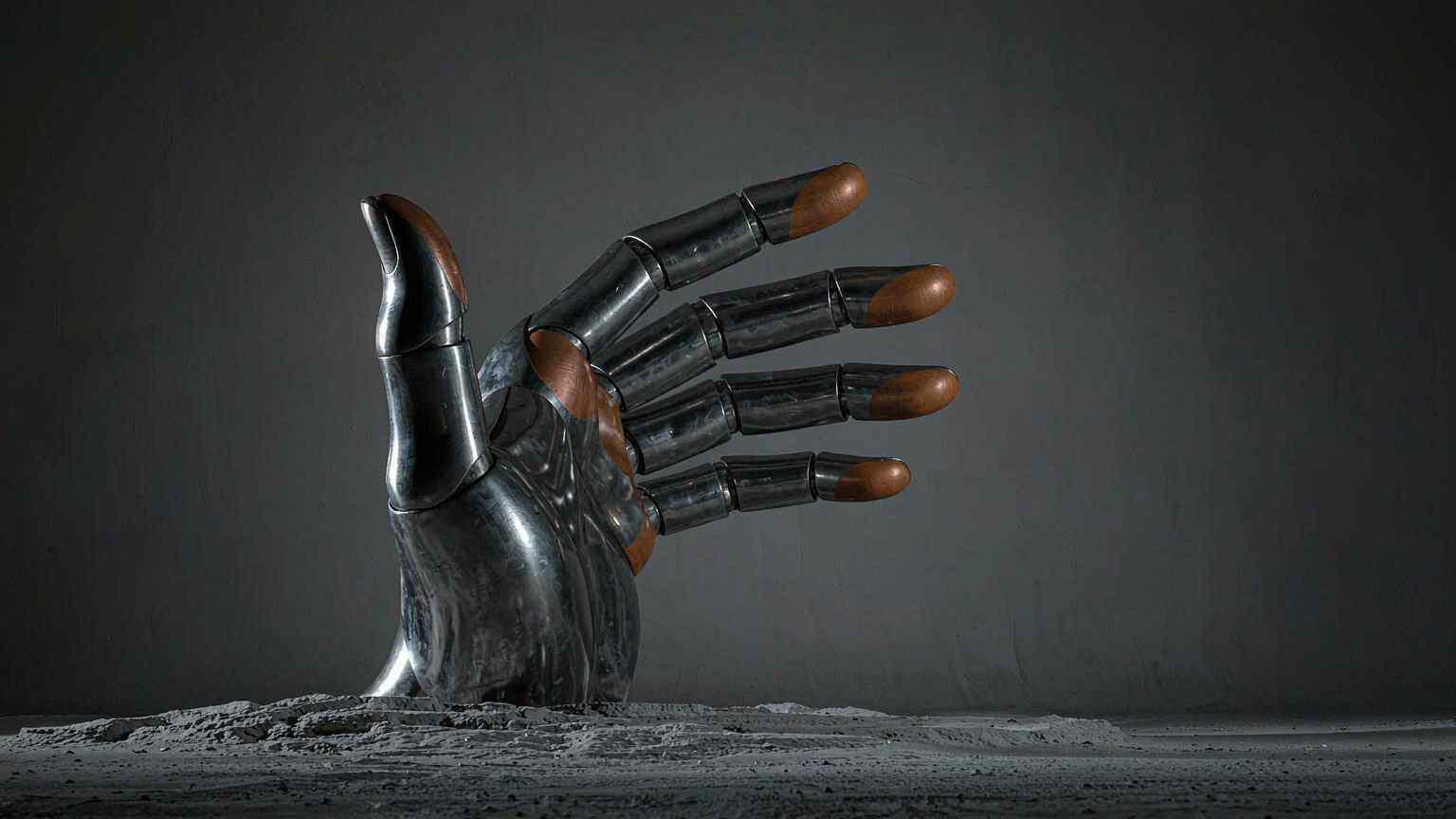
Boston Dynamics published a new hand for Atlas on October 1. It has four fingers, no pinky, and 13 degrees of freedom, up from seven on the previous gripper. The design brief was to survive a factory and be cheap enough to build by the hundred thousand, rather than to look like a human hand.
That trade-off is the story. Humanoid makers have spent years chasing anthropomorphic hands, and the result has often been a mechanism that is delicate, expensive and hard to repair. Boston Dynamics went the other way.
Where the missing finger came from
The decision to drop the pinky was not a compromise forced by cost. It came out of an experiment. Chief technology officer Zack Jackowski asked team members to tape their pinkies to their ring fingers and spend a day that way. The conclusion was that the fifth digit did not earn its keep.
The arithmetic behind that conclusion is straightforward. Many of the current hand designs give up reliability and manufacturability, according to Alberto Rodriguez, Boston Dynamics' director of robot behavior. A five-finger hand adds three more degrees of freedom, more actuators, more size, more cost and more possible failure points. For a machine that has to be maintained and operated repeatedly on a factory floor, that is a bad trade.
The hand that shipped instead gives the thumb four degrees of freedom and each of the other three fingers three. That split supports a pinch that can slide a small part against the thumb, a three-finger grip that still lets the object move, and a wrap around a tool handle that leaves a finger free to press a trigger. The fingers can also splay apart, which the company says, combined with reinforcement learning, could unlock dexterity well beyond what a human hand manages.
Actuators in the joints, and nothing crossing them
The mechanical approach is direct drive: one actuator type throughout, each mounted in the joint, with no tendons or cables crossing between joints. The actuators are enclosed, and the transmissions are backdrivable, so an unexpected force can move a joint instead of stripping a gearbox.
That choice has two payoffs. The first is ruggedness and simpler repair, which matters for logistics and manufacturing deployments where a hand that has to be sent back to a lab is a hand that is not working. The second is proprioception. A backdrivable joint can report contact force through the joint itself, so the controller learns something about what it touched without relying entirely on vision or on a separate sensor skin.
Tactile sensors are still present, on the fingertips and the palm. They monitor contact forces and help the controller adapt a grasp to an object's shape and material. The combination is deliberate: proprioception estimates where the hand is, and tactile feedback reports what is happening at the interface between the hand and the part.
The payload and the tool list
Boston Dynamics says the broader Atlas platform is rated for an instantaneous payload of 110 pounds and a sustained payload of 66 pounds. The new hand can hold a loaded mini-fridge weighing more than 100 pounds. Those are reported capabilities rather than a general guarantee of safe operation in any setting.
The tool list is where the industrial intent shows. The hand is designed to grip the handles of drills, electric torque drivers, grinders, nail guns and welding torches, and to operate their triggers while doing so. In the demonstration video, Atlas seats a drill bit into a chuck, bores a hole in wood, turns a small nut with its fingertips, rotates thin sticks, and handles two golf balls in one palm at once.
The shift in framing is in how the company describes the change. The previous hand was designed to grasp a wide variety of objects. The new one is designed to manipulate them. Reorienting an object inside the palm while keeping control of it is a harder task than holding it steady, and it is the difference between a machine that can move a part and one that can use a tool.
Simulation is the production plan
Boston Dynamics is unusually clear about why the mechanism looks the way it does. In the same video, engineers list three things a simulator has to get right before a policy trained in software is worth running on metal: the geometry of links and joints, the dynamics of friction, torque and backlash, and the contact behaviour when a finger meets a part.
The team says it worked the match from both directions, changing the hand so it could be simulated rather than only tuning the simulator until it flattered the hand. That is a different claim from showing a robot using a drill. A hand that can be modelled cleanly is a hand a learning system can practise on overnight. A hand full of cable stretch and tendon slack has to be taught on the physical robot, one slow grasp at a time.
What the announcement does not say
There is no third-party performance data, no pricing, and no date for commercial availability. The demonstrations are controlled tasks, not a published cycle time, yield rate or count of hands in service.
The deployment timeline sits further out. Hyundai Motor Group, which now owns Boston Dynamics outright, has said it plans to mass-produce Atlas by 2028, with parts sequencing at Hyundai Motor Group Metaplant America in Georgia targeted for that year and a wider parts-assembly role aimed at 2030. Training for automotive work is tied to a Robotics Metaplant Application Center at the same site. Neither date is a start of production for this hand.
The manufacturing target is the part that reframes the whole announcement. The company is aiming for up to 100,000 units a year. A hand built at that volume with a single actuator type and enclosed joints is closer to a component business than to a research prototype, and the unit economics of a replaceable module are different from those of a bespoke mechanism. If a finger fails on a factory floor, the relevant question is how fast it can be swapped and how much the part costs, not how closely it resembles a human digit.
There is also a data argument for the simpler design. Training data from human demonstrations transfers more easily to a hand that stays near the human form factor, and the company says this one does. The fingers splay, the thumb opposes, and the overall size is close to a large human hand. What it drops are the cosmetic features that make a robot look familiar in a video but add nothing to a grasp.
The hand also arrives into a live debate about what a robot hand is for. Some labs argue that matching human anatomy is the only way to use the enormous corpus of human video and demonstration data. Others argue that a hand optimised for the specific tools a factory uses will outperform a general-purpose copy. Boston Dynamics has effectively placed a bet on the second position, and it did so with a physical experiment, taping fingers together, rather than with a benchmark.
What the disclosure does change is the manufacturing argument. A four-finger hand with one actuator type, encapsulated joints and a geometry that can be simulated cleanly is a bet that reinforcement learning will close the skill gap that the missing pinky opens. The company says it expects the hand to do everything it needs for the foreseeable horizon. Whether that holds is the thing a factory will settle, and no launch post can do it for them.
Related articles
JetBrains Put an Agent Orchestrator Inside Every IDE It Ships
JetBrains is not competing on model quality. It is competing for the layer where agents are launched and reviewed.
AI Product Photography Is Turning Into a Template Business
The uncomfortable question in AI product imagery is not whether it looks good, but whether it still depicts the thing being sold.
Spira Maxima Skips the Clip and Ships the Whole Video
Generation got cheap. Finishing stayed manual. That gap is the market Spira Maxima is aiming at.
Cloudflare Shipped a 27B Decision Model That Beats Jev at Its Own Job
Some model calls should return a number, not a paragraph. A category is forming around that idea.