
Draw It and It Appears: Scribble-to-Object Editing Comes of Age
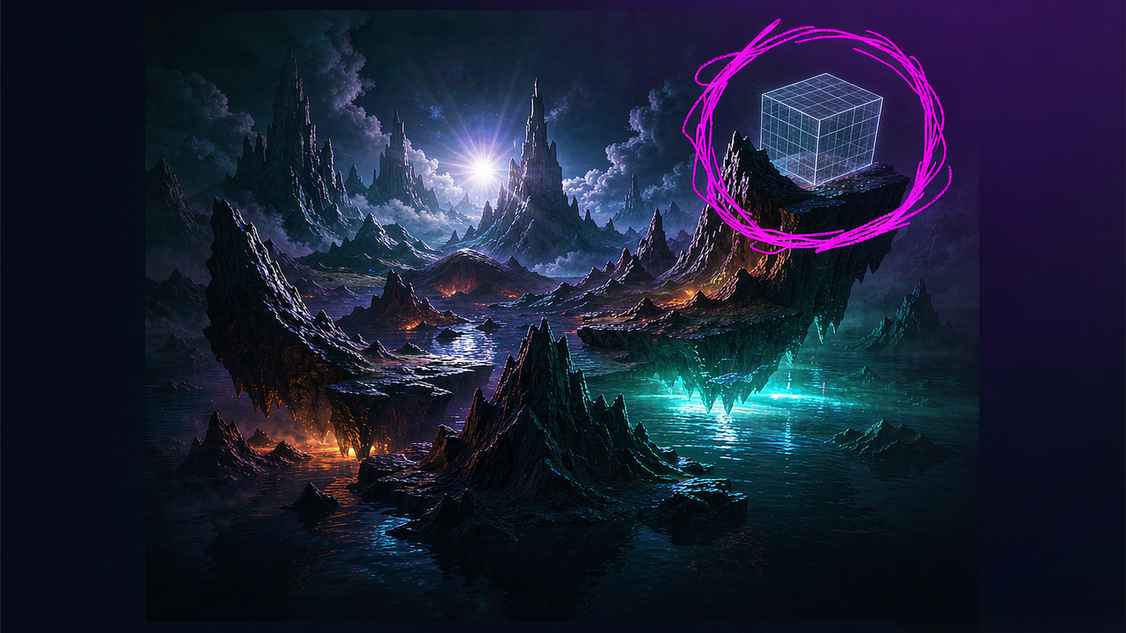
Somewhere on Hugging Face in early October, a small research release quietly showed where image editing is heading. A team at ML-Intern-lab published a LoRA for Alibaba's Qwen-Image-2.1 called Doodle-in. You take a photo, draw a rough magenta scribble over the region you want to change, name the object, and the model replaces whatever is under the scribble while keeping the lighting and the rest of the scene intact. It was trained on a little over 6,000 pairs built from Open Images V7.
It is a niche tool with an unglamorous name. It is also a clean example of the shift that has been building all year: the interesting part of image AI stopped being generation and became editing.
The real work was never the first image
Ask anyone who uses image models for a living what they actually spend time on. The answer is rarely the first render. It is the second, third and twelfth revision. Change the label on the bottle. Keep the person's face. Move the product two inches to the left without changing the shadow. Put the jacket on a different background without touching the collar.
Those edits are why a generator that produces a beautiful image is not the same as a tool a designer can hand off. The gap is control, and the whole market has been reorganizing around it. OpenAI split its flagship image model into a fast tier and a precise tier and pitched the precise one at edits that keep a face, a label or a layout exactly. Seedream's Pro model made a point of editing one element while holding the rest of the frame. Ideogram 4.5 was built around the specific problem of artifacts accumulating after repeated edits. Grok's image model framed its whole pitch as "editing is the real work."
Why a scribble beats a paragraph
Describing a local edit in words is harder than it looks. "Change the plant on the left shelf to something smaller" invites the model to reinterpret the whole left side, or to adjust the lighting, or to quietly re-render the shelf. The more precise you try to be in language, the more surface area you create for the model to change something you did not mention.
A scribble removes that ambiguity. It points. The region is drawn, the object is named, and the instruction collapses to two inputs instead of a paragraph. That is why the technique is spreading even though the implementation is fiddly. It borrows the oldest interaction in visual work, the hand, and uses it where language is a poor fit.
The practical case, especially for products
Regional editing matters most where repetition does. A product catalog needs the same item shown in dozens of contexts, each with consistent lighting and materials. An agency adapting a campaign needs one hero image adjusted per market without reshooting. An indie designer needs to iterate on a layout without regenerating the parts that were already right.
In each case the value is not creativity. It is not having to start over. That is precisely the kind of value that does not make a good demo and does show up in a budget.
The pattern is worth noticing because it runs against how most people first learn to use these tools. Beginners write long prompts and hope. People who do this for a living write short instructions and point, because they have learned that the fewer things you ask the model to change, the fewer things it changes that you did not want. A scribble is that habit turned into an interface, and that is why it feels less like a feature and more like an admission of how the work was always done.
The tools that get this right tend to disappear into the process. Nobody describes their day by saying they used a regional editor. They say they fixed the label and shipped the batch. When an editing tool reaches that point, it has done its job, and the fact that a research LoRA with an awkward name helped get there is the least interesting part of the story.
What else the technique implies
A scribble is one input among several, and the interesting question is which one a given job needs. When the change is spatial and local, pointing beats describing. When the change is stylistic and global, a reference image beats both, which is why so much of the year's progress has been about feeding models more references instead of longer prompts. When the change is subtle and the whole image must stay steady, a mask plus a precise instruction still wins. The skill is not mastering one of these. It is knowing which one fits.
There is also a deeper point about how people and models divide labor. The model is good at producing a plausible image and bad at knowing which image is correct. A scribble lets a person supply the part the model cannot infer, which is intent, and leaves the model to do the part it is good at, which is synthesis. That division is why the technique feels natural almost immediately. It is not a new interface. It is an old one, the hand, applied where language kept failing.
The same logic is showing up across the tools released this year. Magnific One added an art-direction step before generation for exactly this reason: deciding the direction is a human act, and doing it up front saves the model from guessing. A scribble is the same idea at the scale of a few hundred pixels.
A short field guide to editing tools
If you are choosing what to use for a given edit, a rough ordering helps. For a local change where you can point at the region, use a scribble or mask tool: it is the least ambiguous instruction you can give. For a global change to mood, lighting or style, use a reference image and let the model match it. For a change that must not disturb anything else, look for tools that advertise consistency across repeated edits, because that is the property you need and the one most tools are weakest at. And for anything headed to a client, settle the licensing question before you fall in love with the result.
The parts to keep honest about
Scribble-to-object editing is not magic, and the failure modes are predictable. Occlusion is the hard case. If the object you want to change sits behind something else, or is partially hidden, the model has to imagine the missing parts, and it will sometimes imagine them wrong. Repeated edits still drift, which is why multiple labs have been releasing fixes aimed at holding the untouched pixels steady.
There is also a licensing wrinkle worth checking. Qwen-Image-2.1 shipped under a research-oriented license, and community fine-tunes inherit whatever restrictions their base model carries. For personal experiments that is fine. For commercial work it is the kind of detail that should be settled before a client deliverable depends on it, not after.
What to take away
If you use image models in real work, the skill worth building is not prompting. It is decomposition: deciding which parts of an image should stay frozen and which should change, then choosing the lightest tool that changes only those parts. Sometimes that is a local edit from a scribble. Sometimes it is a mask, a reference image or a dedicated editor.
Doodle-in is a research LoRA, and it may be forgotten by next month. The direction it points at will not be. The tools that win the next year of image work will be judged on how well they keep everything you did not ask about exactly the way it was.
Related articles
AI Short Drama Hit the Hot Search, and Live-Action Shoots Fell 70%
Only one of the top 20 titles on a major Chinese drama chart was made with real actors. AI costs about a tenth as much to produce, and it is rewriting the whole pipeline.
Decagon's PACT Protocol Wants Consent to Be a Standard
Decagon open-sourced a protocol for verifying a personal agent's identity and the permissions a customer granted it. It is plumbing, and it decides whether the agent economy works.
The AI Reunion Wave China Can't Decide How to Feel About
AI tribute films brought departed public figures back to Chinese screens and pulled in hundreds of thousands of likes. Then the backlash arrived, and it was about consent.
Apple Published an Open Multimodal Model and Barely Told Anyone
Apple's research-first release slipped past the mainstream, but the model's fine-grained visual grounding says a lot about where its AI stack is heading.