
AI Slop Has Become the Thing It Was Mocking
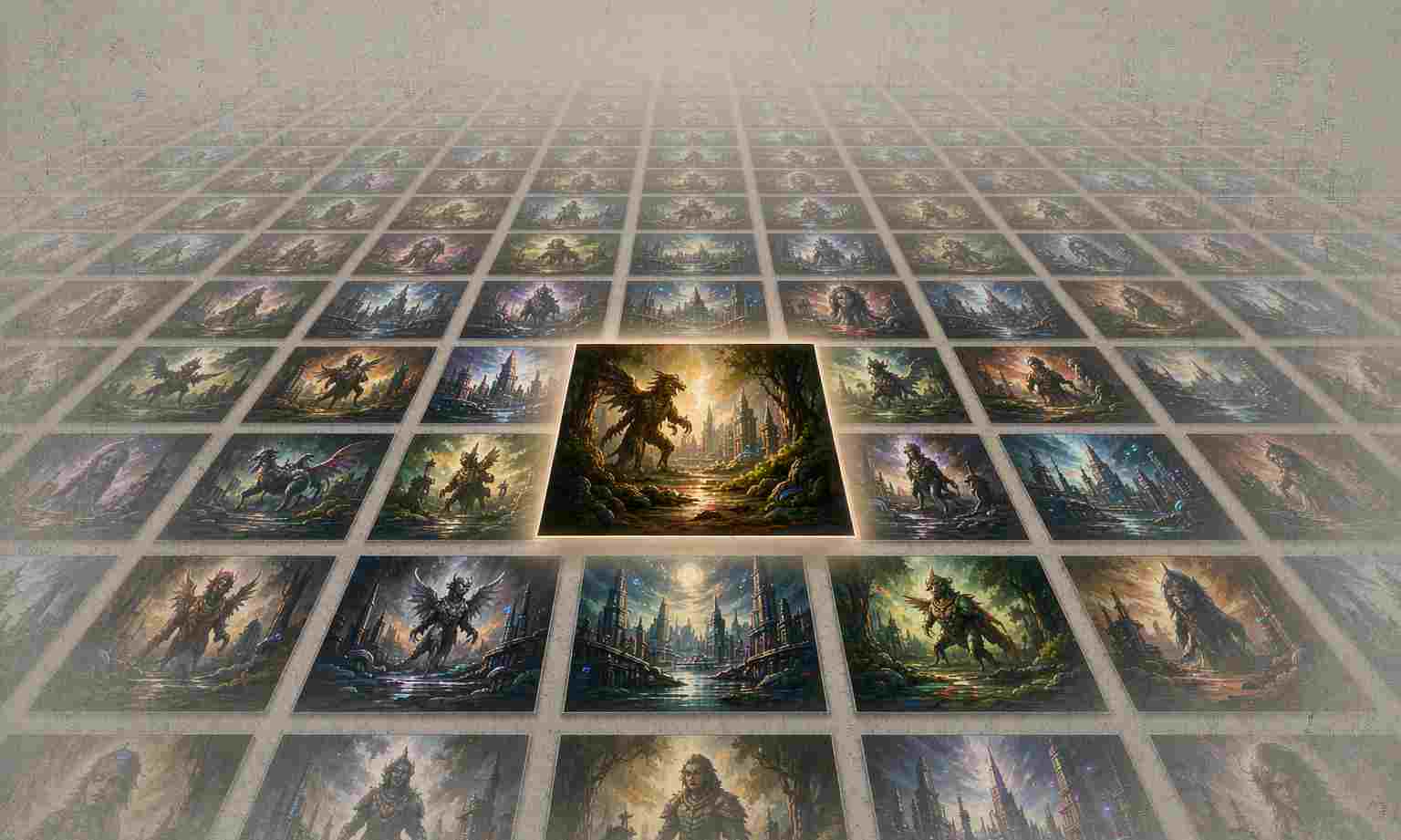
There is a Reddit post making the rounds this week with a title that says more than its body: the term "AI slop" has become more derivative than the content it is trying to dunk on. The author's point is simple and a little exhausting. We had a duct-taped banana that sold for six figures and the discourse was "the death of culture." Before that it was Photoshopped models with impossible proportions. Before that, mass-produced landscape paintings of the same three mountains. Every new tool gets the same panic, and every panic gets recycled.
The label lost its edge
"Slop" was useful once. It named a real thing: low-effort, high-volume AI output flooding feeds and search results. But the word now gets applied to anything AI-made regardless of effort, which makes it a stand-in for "I don't like it." When everything is slop, the word stops doing any work. It becomes a way to dismiss a whole category without engaging with the specific thing in front of you.
The fatigue is showing in the places that used to be the loudest. The restaurants story is the clearest example. A Wall Street Journal piece this month reported that restaurants are using AI to generate food images for their ads, and the reaction was not shock. It was mostly annoyance that the photos were misleading, which is an advertising problem, not an AI problem. The headline even framed it as making people sick, but the actual complaint underneath was about honesty.
The real issue is honesty, not the tool
What actually bothers people, when you read the threads, is the gap between the picture and the plate. A burger ad that looks nothing like what arrives is dishonest whether a photographer over-lit it or a diffusion model dreamed it. The AI label is a red herring. The same complaints about misleading food photography existed for decades before anyone typed a prompt, with food stylists painting glue on burgers to make them look glossy.
That is the conversation the "slop" crowd keeps skipping. The tool is not the moral. A well-made AI image used truthfully is fine. A real photo used to lie is not. Most of the anger is really about volume and deception, and those are moderation and labeling problems, not model problems. Conflating them lets everyone avoid the harder question of what honest disclosure looks like.
The pushback is arriving from both sides
On one side, people are pushing back against the anti-AI pile-on. The r/singularity post about the term's decline captures a growing impatience with the reflex. The author's point, made through a list of every past moral panic about art, is that the outrage is a loop, not a conclusion. The banana, the Photoshopped models, the mass-produced landscapes, all of it was supposed to end culture, and none of it did.
On the other side, a new crop of AI-detection tools, including image detectors, is trying to give people a way to tell at a glance. There is even a viral game, "can you tell which images are AI," that turned the whole argument into a scoreboard, pulling in over a hundred points on Hacker News. People play it, get about half right, and walk away a little humbler.
None of that settles anything. Detection tools are unreliable in both directions, and the game mostly proves that people overestimate their own ability to spot a good fake. But the existence of all three signals the same thing: the conversation has moved from "is AI art art" to "how do we live with a firehose of images we can't easily verify."
The deeper question the discourse avoids
There is a point buried under all the dunking that almost nobody states directly. The panic about AI images is partly a panic about abundance. When images become cheap and infinite, the value of any individual image drops, and a lot of people who built careers on scarcity feel that in their livelihood. That is a legitimate concern, but it is not a moral failing of the tool, and calling everything "slop" is a way to avoid saying the quieter thing: the economics changed, and the change is permanent.
The people making AI art, the ones actually in the trenches, mostly ignore the label war. They are too busy iterating on prompts, fixing hands, and shipping. The outrage lives in the comments, not in the work. That gap between what people say and what people do is itself a data point about how much of the "slop" discourse is performance.
The people making things have already moved on
There is a useful data point hiding in the noise: the actual creators do not seem to care about the label war. The r/aiArt and r/StableDiffusion communities are busy making things, sharing workflow tips, and asking for criticism on their tools. One recent post in r/aiArt, a themed gallery built entirely with AI, pulled in hundreds of points and almost no outrage. The comment section was about the art, not about whether it counted as art.
That is a bigger shift than it looks. The loudest voices in the "slop" debate are usually not the people making images. They are the people watching, and the gap between the two groups has grown. The makers have internalized that the tool is here, the debate is settled enough to ignore, and the work is what matters. The watchers are still relitigating a question the makers stopped asking.
The same pattern shows up in the tools people build. This month alone saw people shipping a free open-source desktop GUI for ComfyUI aimed at total beginners, a crowdsourced inference network relaunch, and a wave of prompt techniques for getting models to respect visual hierarchy. None of that energy is going into the label fight. It is going into making better images, faster. If "slop" were the existential crisis the discourse claims, the actual behavior of the community would look very different.
What a healthier conversation would look like
If you strip away the name-calling, there is a real conversation underneath that almost never happens. It is about disclosure and consent, not about whether AI images are valid. The useful questions are concrete: should AI-generated content be labeled, and if so, where is the line between "obviously generated for fun" and "deceptive if unlabeled." Those are answerable questions, and they do not require anyone to take a side in a culture war.
The restaurant story is actually a decent test case. Nobody is angry that a restaurant used AI to make an ad. They are angry that the ad misrepresented the food. The fix is not "ban AI food images." It is "do not show me a burger that is not the burger." That is a disclosure and truth-in-advertising problem, and it has a boring, workable answer that has nothing to do with the model.
The "slop" discourse, at its worst, is a way to avoid that boring work. It is easier to declare a whole category worthless than to figure out the specific rules for honest use. The conversation we actually need is narrower and duller, and it will be won with labels and standards, not with insults. The people who keep shouting "slop" are, in a sense, holding the door open for the very thing they claim to oppose, because shouting does not build standards. It just fills the space where standards should go.
The label is the problem now
The term "AI slop" was supposed to be a shortcut. It became a cudgel, and now it is a cliché. The moment a label gets used to dismiss rather than describe, it has stopped being useful and started being noise. Which is, if you think about it, exactly what it was complaining about in the first place. The discourse became the thing it set out to name.
Related articles
Grandparents Are Making AI Images of Their Grandkids. The Parents Are Not Happy.
The cutest AI image of the year is also a privacy dispute. Grandparents press the button, parents read the terms of service.
Grandparents Are Making AI Images of Their Grandkids. The Parents Are Not Happy.
The cutest AI image of the year is also a privacy dispute. Grandparents press the button, parents read the terms of service.
AI Slop Has Become the Thing It Was Mocking
The label was supposed to name low-effort output. Now it dismisses everything, which makes it exactly what it was complaining about.
Your AI Video Hit 500K Views and the Comments Turned Ugly: A Field Guide to the New Creator Backlash
A field guide to the new AI creator backlash, covering creators, families, and businesses and the disclosure moment.