
Runware Wants to Build Data Centers the Way Detroit Built Cars
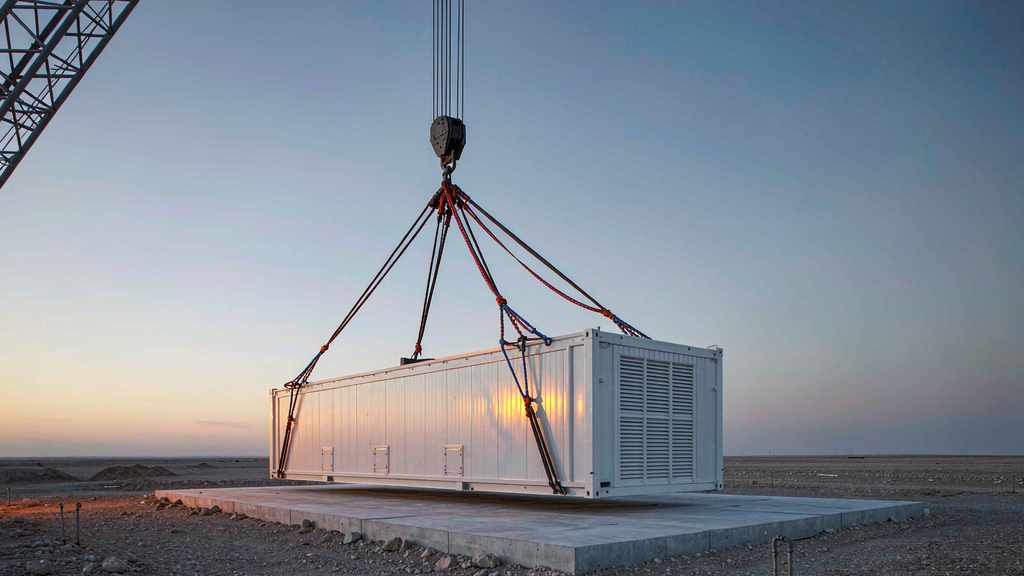
The pitch sounds like a joke until you look at the numbers: build data centers the way Detroit built cars, on an assembly line, and have them running 48 hours after delivery.
Runware is serious about it. The company already sells the Sonic Inference Pod — a modular data center built in a factory and shipped ready to install, unveiled earlier this year. Now it says it wants a factory that assembles those pods on a production line, and it has a target: 30 megawatts of capacity per day by 2028. That works out to nearly a gigawatt a month.
To put that in perspective, the entire United States was expected to add about 10 gigawatts of data center power this year. Runware is claiming that at full production, one factory would produce roughly a year's worth of national buildout in twelve months.
Where the bottleneck actually is
The reason this pitch lands isn't that factories are novel. Crusoe sells prefabricated pods. Schneider Electric does too. Nvidia announced its own Vera Rubin AI factories and DSX POD designs this year. The industry has broadly agreed that building data centers one at a time on a construction site is too slow.
The difference Runware is claiming is that it has actually built the factory, not just the design for one. It has two: one it's used for a few years, and a second it started building earlier this year that should come online in early 2027. Founder and CEO Flaviu Radulescu told TechCrunch the goal is to have pods running within 48 hours of arrival — and that 48 hours covers installation and setup, not manufacturing.
A pod that used to take three weeks to build will soon take one day, according to the company.
The part that makes it credible
The detail I keep coming back to is the timing argument. Radulescu says pod delivery times are shorter than GPU lead times, which means the infrastructure can adapt to the hardware that's actually arriving. That's a genuinely smart inversion of the usual problem. Normally you commit to a building and then wait eighteen months for the chips and the switchgear to line up.
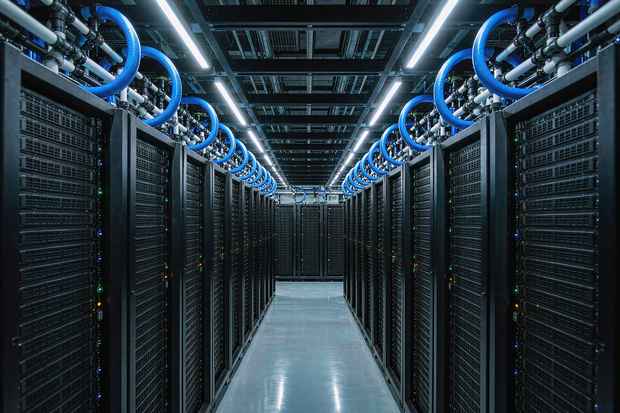
The second credible detail is the physical footprint. The pods use closed-loop liquid cooling with air-cooled radiators, so they don't need a water connection — just power and internet. They run, per the company, silently up to 86°F. They're deployed on sites much smaller than a hyperscaler's, typically sites that already have power, which sidesteps a lot of the grid interconnection fights that have stalled larger projects.
If that holds, it changes who can build a data center. Not just Amazon and Microsoft, but a regional colo provider, a university, a manufacturer who needs inference capacity next to the factory floor.
The commercial shape
Two ways to buy. You can rent compute from Runware, or bring your own GPUs and pay a monthly fee for the pods and operations. Power and internet are billed separately in both cases.
Runware says it has received $1 billion in committed interest since it started offering pods to outside customers a month ago, representing over 20 megawatts it's now working to deliver. There's a site pipeline of 397 megawatts, with potential to expand to 1.2 gigawatts.
It has raised more than $60 million to date, including a $50 million Series A in December 2025 from Dawn Capital and Comcast Ventures. A Series B is planned, but the factory is being finished on the Series A.
The obvious comparison, and why it's fair
TechCrunch made the Arrival comparison, and it's the right one. Arrival was the electric vehicle startup once valued at over $13 billion that tried to reinvent automotive manufacturing with microfactories, and discovered that mass production is a discipline, not an idea. It went bankrupt.
The parallel isn't just rhetorical. Both companies proposed to build complex hardware in small factories using cheaper labor and standardized parts, and both argued that the incumbents' cost structures were bloated. The difference, Radulescu argues, is that Runware's product has a much higher value per unit of labor. A pod that unlocks megawatts of inference revenue can absorb factory wages that a $30,000 van cannot.
He's also hired a plant manager out of the automotive industry, which is either the most reassuring detail in the story or the most ominous, depending on how you feel about automotive industry veterans.
Who is actually buying this
The interesting thing about the 48-hour promise is who it unlocks. A hyperscaler plans in years and buys in bulk. A regional provider, a research lab, or a company that wants inference sitting next to its own factory plans in months and buys in units. Those customers have been effectively locked out of the market, not because they can't afford compute, but because they can't afford the schedule.
There's a cost dimension too that rarely makes the press release. Conventional data center construction has a long tail of permitting, interconnection studies, and utility negotiations, all of which accrue interest on capital before a single GPU earns anything. If you can drop a pod on a site that already has power, you skip most of that tail. The pods' smaller footprint also means less community resistance, which has become a real schedule risk for large projects.
What could go wrong
Sourcing. Runware designs its own cooling and pod systems, but some components — pumps, fans — come from Germany, and it still depends on Nvidia for networking. A factory is only as reliable as its supply chain, and a single-source pump is a single point of failure.
Demand timing. A billion dollars in "committed interest" is not a billion dollars in orders. The gap between interest and signed contracts is where infrastructure startups go to die, particularly when the customers are themselves trying to figure out whether they'll need the capacity in eighteen months.
And the underlying assumption: that AI demand keeps growing fast enough to absorb a gigawatt a month. There's a growing chorus of people arguing the spending boom is showing cracks. If it does crack, the factories are the worst place to be holding inventory.
Why it matters anyway
Even if Runware fails, the thesis it's testing is probably correct. The constraint on AI deployment has moved from chips to power to time — specifically, the two to four years it takes to bring a conventional data center online. Anything that compresses that timeline is worth real money, because a GPU that's waiting for a building is a GPU that isn't earning.
Modular pods are the obvious answer, and the industry knows it. What's not settled is whether the manufacturing can be done at automotive scale by a company with $60 million and a plan. That's a bet worth watching, and the 2028 production target is the number to check it against.
Related articles
The Last Link in the H3 Pipeline Is Now Open Source
A new open-weight refiner takes MiniMax H3 drafts from 768P to 2K locally, in three denoising steps — and it beats the official API on perceptual quality.
Meta Is Testing Its Strangest AI Apps in Southeast Asia First
An AI fitting room in Indonesia, Singapore and Thailand. A pet journal in the Philippines. Neither was announced, and that is the point.
Ollie Had SOC 2 and $7.5 Million. It Still Couldn't Outship Muse.
A privacy-first family assistant with a Khosla-led seed round and a real SOC 2 audit is closing on November 6. The lesson is not about privacy. It is about distribution.
Genspark Turned a Film Crew Into a Menu
Three language models direct, seventy model versions execute, and your job becomes thirty-five approvals in a row. A hands-on look at what orchestrated video production actually feels like.