
Genspark Turned a Film Crew Into a Menu

The most interesting thing about Genspark's new Media Studio isn't that it makes video. Plenty of things make video now. It's that when you use it, you're not choosing a model. You're choosing a director, and the director chooses the models.
That's the actual product. The interface offers three language models for the planning role — DeepSeek V4.1 Flash, Claude Opus 5.5, and Claude Fable 5.1 — and behind them a roster of more than 70 model versions from over 20 vendors. Seedance 2.5, Kling and Veo do video. GPT Image and Nano Banana do stills. ElevenLabs and MiniMax handle voice and music. There's 3D in there too.
The pitch is "all in one, anyone can use it," which is the kind of phrase that usually means "we bolted six tools into one tab." This is different in one specific way: the intermediate artifacts stay in the same canvas, so the agent can pick up the last step's output and keep going without you re-uploading anything.
What it feels like to use
The Chinese tech outlet QbitAI published a hands-on the day it launched, and the details are more useful than the marketing. The reviewer started with a rap template from the home page's "Magic" section, uploaded photos of Sam Altman and Dario Amodei, and asked for a duet.
Two things happened that are worth noting. First, the video model refused the real-person images outright and the system asked whether to use a semi-realistic or cartoon style. That's a content policy surfacing as a UX decision — you don't get a rejection, you get a fork in the road. Second, the estimate said 8 to 14 minutes and the render took two or three. Seedance 2.5 did the generation.
The first output had no music. The reviewer asked for accompaniment, got three candidates laid out side by side on the canvas, rejected all three for lacking lyrics, and asked for an original rap beat, which ElevenLabs produced. Then came lip sync so the two of them could perform together.
That sequence — generate, notice what's missing, ask for it, get options, pick, adjust — is the workflow the product is built around. It's not "type a prompt, get a film." It's a conversation with a production assistant who has access to a studio.
The 480p draft decision
Every first pass comes out at 480p. You iterate at 480p. Only when you approve the cut does it upgrade to 1080p.
This is the single most sensible engineering decision in the product, and it's the kind of thing you only learn by watching people burn money. Video generation is expensive per second, and most of the cost is spent on shots that get cut. Iterating at draft resolution means the expensive renders happen once, on the shots that survived.
The same logic shows up in the story mode, which builds a 3D white-model previs of a scene — where the characters stand, where the camera sits — before any video model is called. Blocking is cheap. Rendering is not.
The approval queue is the product now
Here's where it gets genuinely interesting, and where the hands-on report is most valuable.
The reviewer used the "Story Bible" feature, which takes a title and expands it into a full production: characters, wardrobe, props, sets, and a shot list. The system asked for approval on 35 separate items before rendering. Then it broke five scenes into 84 shots, grouped them into 12 video units, wrote prompts for each, generated them, and flagged the ones that contradicted the established design for a re-run.
Thirty-five approvals. That's the job now. Not writing prompts, not operating a camera — approving. And the report notes a real usability problem: some approval items were hard to find, and any edit reverted already-approved items back to pending, which meant clicking through the queue again.
This is what "AI filmmaking" actually looks like in 2026. The creative work doesn't disappear. It compresses into a long series of yes/no judgments about consistency, and the tool's quality is measured by how well it presents those judgments. A good approval queue is a product moat. A bad one is a reason people go back to doing it by hand.
Two different technologies wearing the same name
The detail I found most surprising: the "knowledge explainer" mode doesn't use a video model at all, at least not for most of its runtime. It uses code-to-video — the model writes code that lays out text, charts and animation, then renders the result. According to Genspark, the code rendering itself doesn't consume credits; narration and a few atmospheric shots are billed separately.
That's a meaningful architectural choice. If you're explaining what a black hole is, you don't need sixty seconds of generated pixels. You need typography, a diagram, and motion. Rendering that as code is faster, cheaper, and far more legible than asking a diffusion model to draw a caption.
The hands-on review is honest about the first attempt: the script was flat, the visuals looked like slides. A second pass with instructions to add hooks and suspense, plus a six-segment original score, produced something the reviewer called acceptable. Still slide-like, but coherent.
Which raises the real question about this category. The bottleneck for explainer video was never rendering. It was the script. Genspark's answer is to have the same language model write the script and the code, which is cheap and fast, and then hope the visual design keeps up. Sometimes it does.
The economics
The reviewer spent about 45,000 of an initial 50,000 credits on three projects: the rap video, the explainer, and a Super Mario–style pixel game that the system also produced from a single prompt for a few hundred credits.
So roughly 15,000 credits per short project. Genspark was running a 50% credit discount for Plus and Pro subscribers from October 27 to November 4, which tells you two things: the company wants usage data more than it wants revenue this month, and the unit economics are still being figured out.
For comparison, hiring a motion designer for a week costs more than a year of any of these subscriptions. That's not the right comparison either, because what you get here is not a motion designer's output. It's a first draft that a motion designer could fix in an hour instead of starting from zero.
The honest caveats
The finished short film had problems the review didn't hide: audio drifting out of sync in the back half, occasional dropped frames, and a character whose glasses vanished between shots. Lip sync was applied, subtitles were generated in Chinese and English without being asked, and the overall consistency was better than expected — but "better than expected" is not "shippable."
There's also the export path. You can send the result out as a PSD, a Premiere project, or a CapCut draft, which is the right concession to reality: nobody finishes a video inside the tool that generated it.
What this means
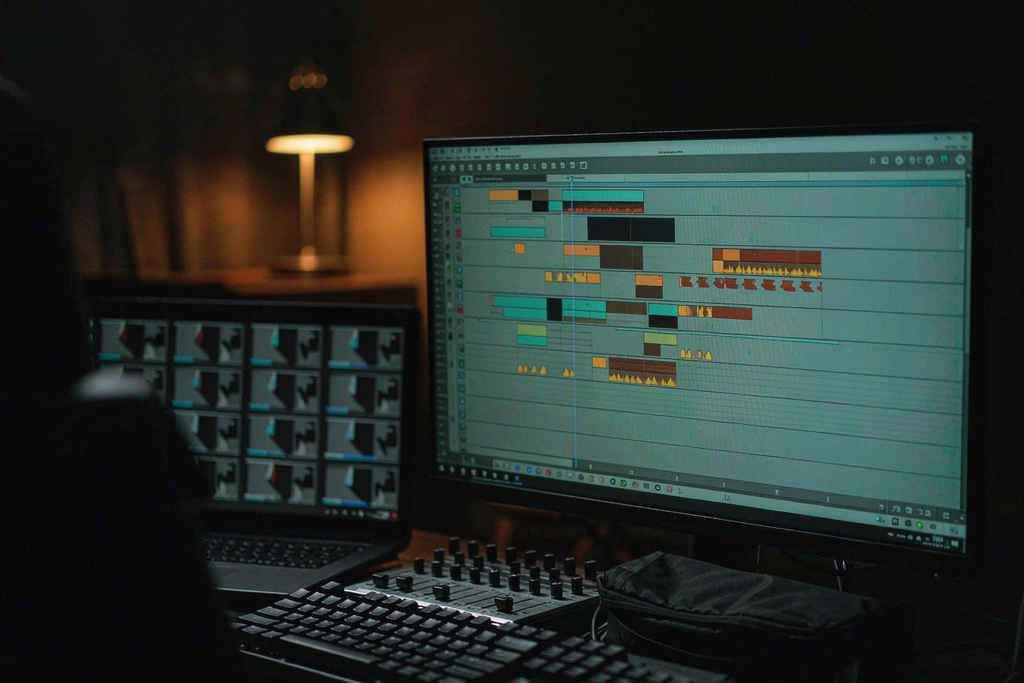
The orchestrator layer is becoming the product, and the models are becoming components. Genspark isn't competing with Seedance or Veo. It's competing with the timeline in your editing software, the folder of stock footage, and the five browser tabs you keep open while assembling a cut.
Whether it wins depends on something unglamorous: whether the approval queue gets better. Right now it's 35 decisions with a confusing UI. If it becomes 35 decisions with a good UI, that's a real tool. If it stays confusing, people will keep using it for the templates and go back to Premiere for anything that matters.
Related articles
The Last Link in the H3 Pipeline Is Now Open Source
A new open-weight refiner takes MiniMax H3 drafts from 768P to 2K locally, in three denoising steps — and it beats the official API on perceptual quality.
Meta Is Testing Its Strangest AI Apps in Southeast Asia First
An AI fitting room in Indonesia, Singapore and Thailand. A pet journal in the Philippines. Neither was announced, and that is the point.
Runware Wants to Build Data Centers the Way Detroit Built Cars
Thirty megawatts a day by 2028, pods online within 48 hours, a gigawatt a month. The constraint on AI capacity stopped being chips and became the two years it takes to build a building.
Ollie Had SOC 2 and $7.5 Million. It Still Couldn't Outship Muse.
A privacy-first family assistant with a Khosla-led seed round and a real SOC 2 audit is closing on November 6. The lesson is not about privacy. It is about distribution.