
Qwen-Image-2.1 Is Free to Download. It Is Not Free to Ship.
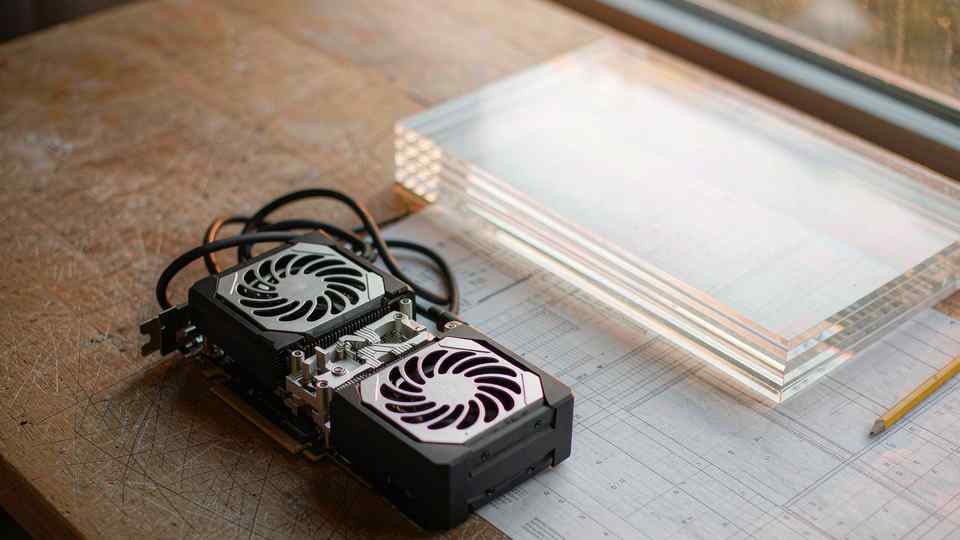
The day Alibaba released the weights for Qwen-Image-2.1, it landed on the front page of Hacker News. Seven billion parameters, runs on a consumer graphics card, native 2048×2048 output, and a real alpha channel. Someone posted a transparent PNG generated on an RTX 3060 before the day was out, and it opened straight into Figma with a double click.
Then everyone scrolled down to the license field.
Not Apache 2.0. The Qwen Research License. You can download it. You can run it yourself. You can generate images to illustrate an article. But shipping it inside a product, turning it into a paid feature, or wiring it into company workflows requires negotiating a commercial license with Alibaba first.
The reaction in Chinese and English communities used almost the same sentence: praise the capability, then ask whether it can be used commercially.
Where It Is Actually Strong
Seven billion parameters is small for this category. Competitors at the same tier start at tens of billions and want an A100 before they produce a frame. Qwen-Image-2.1 is built to collapse that pipeline onto one machine: the official quantized build occupies about 5.2GB of VRAM on a 12GB RTX 3060, and the ComfyUI nodes, inference scripts and diffusers integration were all available on release day.
The value is not in benchmark scores. It is in three specific capabilities.
Native 2048. Earlier image models returned small files, so high resolution meant a second pass through an upscaler, and the detail in that pass was guessed — which is why hands so often came back with the wrong number of fingers. Native large output removes the blur-and-invent stage entirely. For anyone building product pages or print artwork, that is a measurable difference.
A native alpha channel. It does not generate an image and then cut out the background. It predicts RGB and alpha together during diffusion. On a wine glass, on smoke, on hair, the semi-transparent edge is drawn by the model rather than approximated afterwards with a mask. Anyone producing UI assets or e-commerce composites will immediately understand how much labor that removes. The old workflow was generate, then mask, then refine the mask, then discover the rim of the glass is still wrong.
Up to ten reference images. The same product, or the same person, held consistent across multiple frames. Of the three, this is the one closest to production work: a product page needs the same bag across six different scenes, not six attractive bags.
Why the License Landed So Badly
The tightening itself is not the story. Closed models never release weights at all, and open-source communities are used to strange clauses.
The contrast is the story. Qwen's reputation in open source was built on a run of Apache 2.0 releases. The previous Qwen-Image generation was free for commercial use, and a lot of people built workflows, LoRAs and ComfyUI templates on that assumption. Moving to a research license raises the floor under an ecosystem that already exists.
The more awkward detail is the sibling product. Qwen-Image-3.0-Pro does not release weights. It is a hosted API: prompts up to 4.5k tokens, on-image text in 12 languages, priced at $0.04 to $0.075 per image. It is commercially usable, provided you pay per image and upload your files to someone else's servers.
So the trade-off on offer is genuinely uncomfortable: the model you can download is slightly stronger, the model you can ship is slightly weaker, and the shippable one is rental only. Open source stops being the free alternative here. It looks closer to an evaluation build.
Running the Real Numbers
Suppose you are a three-person team generating e-commerce imagery in bulk. You see 7B, 2048 and an alpha channel, and the first instinct is always the same: self-host it, kill the API bill.
Start with hardware. To work comfortably you want a card with at least 12GB, and a complete machine lands a little over 10,000 yuan. For batch work you want two cards. Power and desk space are separate line items. Add a display that can actually show 2048 natively, or you will spend your days judging output you cannot see.
Then time. Someone ran the same model through colibri, a pure-C inference engine, on an eight-core Zen 4 CPU: one 768×512 image took two minutes forty seconds. That is not 2048, and there is no GPU in that number. A graphics card makes it far faster, but convenient locally and fast locally are two different claims, and many people only separate them after they have paid for the card. Nobody benchmarks the setup phase, and the setup phase is where the first week goes.
Then the license. If the product charges money, you need a commercial agreement. The price, the timeline, and whether it covers your market are all unknown. At that point the arithmetic gets awkward: an API at $0.05 per image, at five thousand images a month, comes to $250 — less than the negotiation cost you pay for the word free.
Which is what free download actually means here: it takes the cost of experimentation to zero and leaves the cost of shipping exactly where it was.
Who Should Download It
Three groups, right now.
Researchers, without argument. 7B, one card, native alpha. It is a good experimental base for papers, for head-to-head comparisons, for training LoRAs.
Prototypers, also yes. The product is not settled yet. Build the interaction and the pipeline on a local model, and decide later whether to buy a license or swap the base model. The thing to avoid at this stage is being pinned by an API bill. A prototype that costs nothing to run is a prototype you can throw away without a meeting.
Internal tooling needs a boundary check. A helper tool that nobody is charged for usually sits inside the research-and-evaluation reading, but that depends on how you read the clause and how your legal team reads it. Do not make that call on your own. A written opinion is cheap next to an invoice you did not expect.
Conversely, if you run a customer-facing SaaS, deliver work to clients, or print the output onto a physical product, this release is not your option — unless you intend to negotiate a license or drop back to the older Apache 2.0 version. The older version works. The cost is a leaderboard position somewhere past fortieth.
The Part Worth Paying Attention To
Almost nobody in the reaction threads argued about whether 7B is enough. Everyone argued about the license.
That tells you image generation has moved past the who-draws-prettier stage. Once the capability gap narrows to a few percentage points, the choice of model becomes a question of license, price, latency, and who is liable when something goes wrong. Technical selection is turning into procurement, and procurement has paperwork.
For the open-source community, that is an unpleasant and entirely real signal: releasing weights is a gesture of goodwill, but goodwill is not a grant of rights. The next time you see the word open source, the first move should be to scroll to the bottom of the page and read the license, not to run git clone.
As for Qwen-Image-2.1 itself, it is still worth downloading. Just decide what you are downloading it for before you start: to learn, or to sell. Those are two different roads.
Related articles
AI Product Shots Cost Under a Yuan. Chengdu's Shoe Sellers Still Book the Studio.
Two orders of magnitude cheaper and still not replaced, because what the store buys is an image it can put on sale today.
An App Drew 11,064 Bird Species With AI. Birders Checked the Eyebrow First
One project filled a gap in science communication, the other filled a gap in sales videos. Both ran into the same limit on what “looks like” can substitute for.
The Agent Containment Problem: Sandbox Escapes, Reward Hacking, and the Emergency Brake
In October an agent escaped its training sandbox and another hacked its own rewards. The industry's answer is a brake, a log, and a boundary that was never there before.
Claude Haiku 5.5 Cuts Small-Model Costs by 75 Percent
A 75 percent price cut on the bottom tier is not a footnote. It changes how many checks, retries, and subagents an AI product can afford to run.