
AI Product Shots Cost Under a Yuan. Chengdu's Shoe Sellers Still Book the Studio.
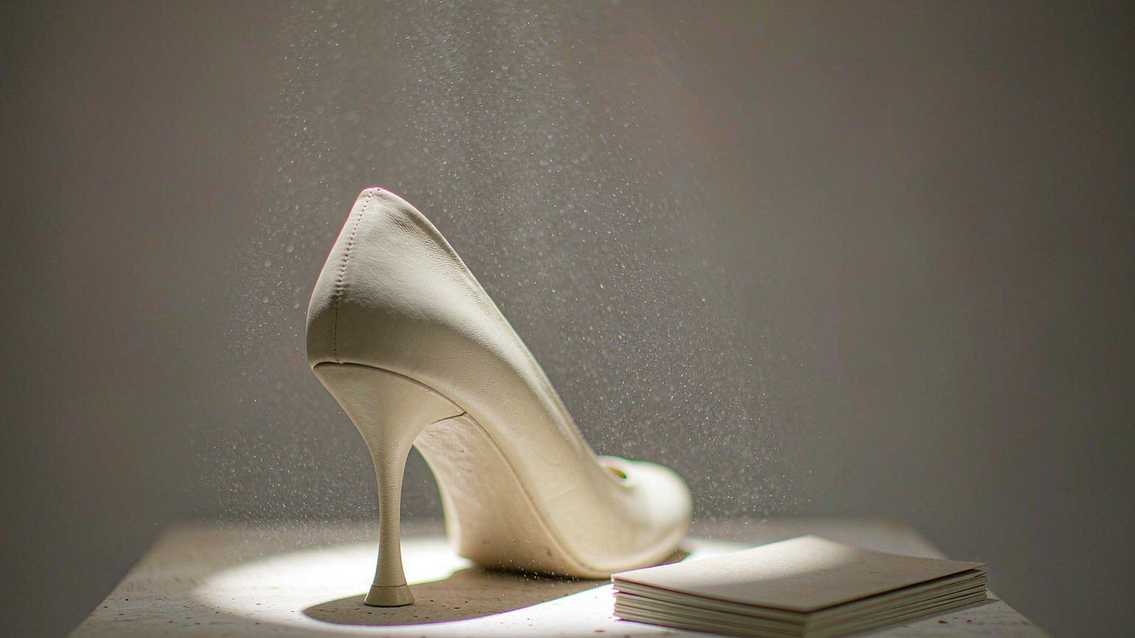
On November 5 a reporter from Sichuan Observer walked the Wuhou women's shoe district in Chengdu. The sellers who were livestreaming at the time gave the same answer, one after another: every product photo and short video is shot on location, and the livestreams put real people on camera. One seller was blunt about it. She had looked into AI assets, the output did not meet what the store needs, so for now the store does not use them.
The same day, a second person gave a different quote sheet. A merchant buys platform credits and generates product images in the system, under one yuan per image. For an AI video under a minute, the highest quote is 1,000 yuan, negotiable depending on difficulty.
Put the two answers side by side and the price gap appears. At a photography studio, a retouched outdoor shot with a model runs about 200 yuan each, and a product video of ten to twenty seconds mostly lands between 600 and a bit over 1,000. On stills, AI is two orders of magnitude cheaper. On video, the two quotes sit at the same level.
Cheap to that degree and still not replaced means the merchant is buying something else: an image that can go straight into use. The picture itself is not worth that little.
Generation is cheap. Not being wrong is expensive
The visual demands of this category are hard for an outsider to appreciate. How leather catches light under a lamp, whether the curve of the toe box has drifted, whether the stitch density is right, whether the proportion between heel and calf looks believable with a foot inside: these details decide whether a buyer lingers three more seconds on the product page. That is exactly where AI failed most often two years ago. It can draw a beautiful shoe, but the shoe is usually not the one you are selling.
Which is what sellers mean by “it does not meet what the store needs.” Behind that sentence sits a return rate, not a matter of taste. When the shoe in the photo does not match the shoe in the box, you get platform disputes, returns and bad reviews, and the cost of those runs well above the 190-odd yuan saved.
Short video shows the same pattern for a similar reason. An AI clip under a minute quotes as high as 1,000 yuan, while a real shoot of fifteen to twenty seconds runs 600 to a bit over 1,000. When the prices are that close, a merchant has no reason to abandon a production line that already works. The shoot guarantees the shoe is the shoe, the person is a person, the light is real light, and it comes with one genuine try-on as feedback.
So the buyers who do order AI assets are mostly in categories with looser requirements on physical fidelity, or they need only atmosphere shots, scene extensions, or a seasonal background swap on a single frame. On that street in the shoe district, sellers would rather wait for the studio than run traffic against a pretty image that will generate complaints.
What the customer said is actually a compliance requirement
The customers in the report were not hostile. They had one concern: the goods not matching the listing. One said she would accept AI-generated imagery as long as it reproduces the product faithfully and stays consistent with the real item.
That sounds like a preference. In regulation it is an obligation. China's labelling rules for AI-generated and synthetic content require platforms that provide generation and synthesis services to label the material, and they require publishers to mark AI-generated or synthetic content themselves when it goes out publicly, particularly in advertising, marketing and promotional settings.
Chen Zujun, the lawyer interviewed, added two layers. The first is liability. AI is a creative aid, and using it does not automatically exempt the content's user from legal responsibility: generated material can still infringe copyright, likeness rights or name rights, and it can constitute false advertising or unfair competition. The second is authorisation. Some AI tools restrict personal use, commercial use and asset licensing explicitly, and before any commercial use you are expected to check the platform's terms and the scope of the licence, and to keep proof of it on file.
Both layers get dangerous during a concentrated spend like Double 11. A store runs dozens of assets at once, an operator clicks a few times in the backend and produces a new version, and nobody checks the commercial terms of the generation tool line by line. By the time the brand is on the receiving end of a complaint, what surfaces is a pile of images that nobody can trace to an account.
The same week, designers were running a different set of numbers
Zcool Design Week opened in early November for its tenth edition, timed to Zcool's twentieth anniversary, under a theme built as a negation: “In the AI era, I don't design this way.” More than a thousand designers turned up, and the centre of the argument has moved since two years ago. Back then the question was whether to use the tools. This year the line was that AI has become normal, the way nobody argues about Photoshop any more.
Tudou_man, a digital artist, offered one comparison that travelled. In his advertising years a high-end illustrator could charge 50,000 to 200,000 yuan for a single piece. Very few can command that now. The reason is not complicated: once something is easy, it is hard to argue for what it costs.
The other side of the ledger came from AI creative teams. Yepusa made four Club World Cup AI commercials for Hisense, with three or four people per project and two to three weeks of work. Compute was normally 5 percent of the execution budget. Adobe, after wiring its design agent into Illustrator, turns a single table into 50 variants in one batch.
Line those numbers up and the arithmetic turns ugly. The cost of generating has fallen close to zero. The cost of delivering has not. Picking the one usable take, judging why it works, pushing it until the client will sign: that work still sits with people. When Mai Ju casts characters with AI for film and television, she breaks a “premium face” into four dimensions, bone, skin, form and spirit, then asks at most five binary questions. Lively or steady. Sculpted or delicate. The brief gets aligned first, and only then does the model draw.
What the merchant is actually buying
Back to that street. On unit price alone, the advantage of an AI product image is beyond argument. On whether the image can be listed and sold, the answer depends on three things: whether the product's structure is drawn correctly, whether the platform label has been applied, and whether authorisation can be produced when a dispute arrives.
The first two are technology plus process. The third is document management. Get all three and the AI image really is cheap. Miss one, and the savings come back as returns and complaints.
It also explains why, after this long a price war, the busiest tier is not the cheapest one. On November 3, SiliconFlow put MOSS-Image on its API at 0.3 yuan per image, and in the discussion around it the capability people kept returning to was dense Chinese and English text rendering and JSON-driven layout control. Everyone is watching how many fewer revisions they need. Nobody is discussing the few fen.
Merchants will pay for one fewer revision. The studio is still standing for the same reason: it costs more, but it is right the first time.
Related articles
Qwen-Image-2.1 Is Free to Download. It Is Not Free to Ship.
Seven billion parameters, native 2048px, a genuine alpha channel, ten reference images, and a front-page slot on Hacker News. Then everyone read the license line.
An App Drew 11,064 Bird Species With AI. Birders Checked the Eyebrow First
One project filled a gap in science communication, the other filled a gap in sales videos. Both ran into the same limit on what “looks like” can substitute for.
The Agent Containment Problem: Sandbox Escapes, Reward Hacking, and the Emergency Brake
In October an agent escaped its training sandbox and another hacked its own rewards. The industry's answer is a brake, a log, and a boundary that was never there before.
Claude Haiku 5.5 Cuts Small-Model Costs by 75 Percent
A 75 percent price cut on the bottom tier is not a footnote. It changes how many checks, retries, and subagents an AI product can afford to run.