
Chinese AI Video Models Enter Hollywood: 73 Shots in That Amazon Series' Visual Effects

In the past, when people talked about Chinese film and television going global, the picture was usually one work after another being sent abroad, with subtitles in new languages and release slots in new markets. This year, a new branch has appeared along that path: what's going global isn't the series, but the tools for making series.
According to The Wall Street Journal, the first season of Amazon's flagship streaming series House of David has a total of 850 visual effects shots, 73 of which were completed by generative AI, and the key tool handling that portion came from a video model developed by a Chinese company. That number isn't large—73 out of 850 is less than one-tenth. But its placement is subtle: it's not a concept demo in a trailer, not marketing material on social platforms, but finished footage in the actual episodes that has to blend with live-action shots.
From Green Screen to Prompt: Several Steps Are Skipped in Between
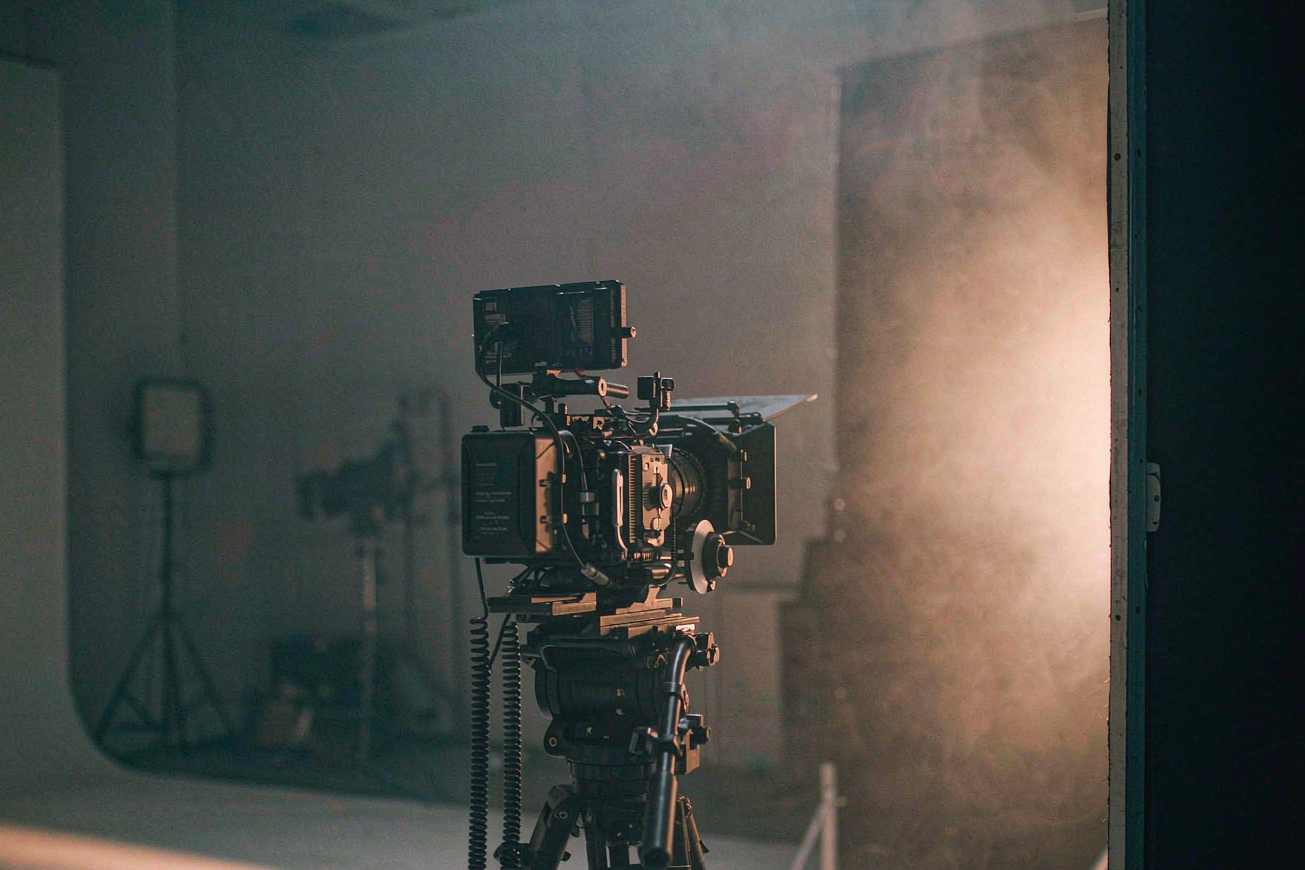
In a traditional VFX workflow, a shot of an explosion behind a character has to go through green-screen keying, particle effects rendering, and multi-layer compositing, and every step requires human supervision. Generative AI compresses these steps into a single input: write a clear description, and the system produces several versions within tens of seconds; the production staff picks one and then refines it.
Put it into the production rhythm of short dramas, and the gap gets magnified. Short-drama producer Sun Tianze puts it bluntly: generative AI is cheaper—it might cost only a few dozen yuan to complete something—and it cuts out quite a few steps in process, speed, and cost. For teams that need to put out several episodes a day, what's saved isn't just money, but also waiting time.
Series like House of David represent another consideration. It doesn't lack a production budget; what it lacks is the cost-effectiveness of getting certain shots made. When AI can produce a usable version within tens of minutes, producers will reassess which shots are worth deploying full manual work on, and which can pass with generation.
The Other Side of the Cost Equation on North American Short-Drama Sets
A Reuters report offers another set of numbers: in some action micro-short dramas in North America, full-process AI assistance has already compressed the production cycle to three to four weeks, with costs kept under $60,000. That range used to support only very rough works; now it can produce action sequences.
It should be noted that these productions are not purely machine-made. Real actors still participate in facial capture and model training, and production staff then control the visuals with prompts, as film and television production shifts from an assembly-line division of labor to a way of working in which humans and models are present at the same time.
Chinese teams' role in this shift is that they first got an AI short-drama production line running domestically, and then took the accumulated workflows and tools abroad. Chinese video models such as Kling, Jimeng, and Hailuo already serve a large number of short-drama creators who publish daily. When a model is used repeatedly across hundreds of thousands of short dramas in China, the failure cases it encounters, the flaws it fixes, and the prompt experience it accumulates all become the product's parameters and features. This kind of experience can't be exported, nor can it be copied quickly.
What's Going Global Has Changed
A report from CRI Online sums it up rather accurately: the underlying tone of this round of change is that Chinese self-developed technical tools are beginning to integrate into the global creative ecosystem, and the focus of going global has expanded from stories on the screen to the toolbox behind the screen.
This shift has its own logic. Works going global must pass the language barrier, the cultural barrier, and the distribution barrier, each with its own human-imposed resistance. Tools going global face a different set of criteria: Can they deliver footage in the same amount of time? Can costs be pushed down? Can they connect with existing editing, dubbing, and color-grading workflows? These criteria are technical, making them easier to compare across countries—and easier to replace. In other words, competition in tools going global is more direct, and the positions won are less secure.
Shots Can Be Generated, but Decisions Are Still Made by People
It's worth emphasizing that the deployment of this technology has not turned into a simple replacement of real people. American director and screenwriter Tristan McKenzie's judgment is that such tools can help creators tell a more engaging story, and they break the old notion that “only a big budget can make a good work.” The emphasis in that statement falls on the story, not the tool.
From script logic and shot control to the aesthetic verdict on the final version, the core authority still rests with the creators. AI is responsible for turning into images the imaginings that once, constrained by budget and schedule, could only remain on storyboard paper. But which version is good, which shot stays, and whether the emotion is right still require people to make judgments. Behind those 73 shots are 73 choices made by someone.
For Chinese model companies, the value of entering the Hollywood production chain is not just orders. It means their output is placed in the most demanding review environment, tested on the same screen as live-action footage. The feedback from this kind of scrutiny is closer to the real battlefield than any leaderboard score. And for the industry as a whole, one signal worth paying more attention to is this: the division of labor in the global film and television industry is shifting from who owns the soundstage to who owns a usable generative pipeline.
Related articles
Agility Digit 5 Ships With a Safety Case, Not Just a Spec Sheet
A warehouse floor is not a lab. Certification is the gate, not the demo.
Frontier Agents Finished 30 Percent of a Research Workflow. That Is the Number.
Agents can run research. Inventing the procedure is still out of reach.
Figure AI Locked In $3.5 Billion of Compute Before It Has a Product to Sell
The bet is that generalisation is a compute problem. The field has not settled that.
OpenAI Finally Put Transparent Backgrounds in the Image API
A small feature that deletes a whole step from the pipeline.