
A Video Model From a Biology Company Costs Half a Cent a Second

On October 30, a model called mischief 1 appeared on OpenRouter with a description that reads like it was written by someone who wanted to start an argument: "the world's first neuron-derived video model from The Biological Computing Co."
That's the entire claim. There's no whitepaper linked, no architecture diagram, no explanation of what "neuron-derived" means in practice. What there is, on the model page, is a set of numbers that are much more interesting than the marketing line. mischief 1 costs $0.005 per second. In OpenRouter's video benchmark set, it ranks first out of 27 models on cost and first out of 27 on speed. It generates 854×480 clips, five seconds by default, and the example on the page — an 11.7-second clip — cost $0.025.
For context, Veo 3.1 is listed at $3.20, Sora 2 Pro at $2.40, Seedance 2.5 at $1.86. A five-second clip on mischief 1 costs about two and a half cents. The same clip on Veo costs roughly six hundred times that, though not on the same resolution or the same quality tier.
What you actually get
Image-to-video, not text-to-video. You supply a first frame, a prompt, a size and a duration. The playground defaults are 854×480 and five seconds, which is roughly the resolution of a 2010 YouTube upload. Latency is the striking part: P50 end-to-end is about 13 seconds. Most video models measure their queue times in minutes.
The benchmark section is where the product's honesty shows. On OpenRouter's "steaming mug" test prompt, mischief 1 generates a clip in 23.7 seconds for $0.05, and the rubric field says "No rubric yet." It hasn't been scored on whether the mug steams correctly. It was ranked on cost and speed, and those are the only two leaderboards it tops.
Availability over three days is 92.59%, with uptime at 100% and 24-hour availability at 99.56%. Only one provider hosts it: Ambient. There's no routing fallback. If Ambient has a bad hour, you have a bad hour.
The numbers that describe a use case
The model page has an activity chart showing video duration generated per day. On the day I looked, it was 0.7 hours. Not 700 hours. Zero point seven. Across every app on OpenRouter sending traffic to this model.
That number is the most honest thing on the page. It tells you what this model is actually being used for right now: a handful of people testing it, a few prototypes, some tooling experiments. The apps listed as sending traffic are small — a German site, an open-source CLI, a couple of startups. Nobody has built a business on it yet.
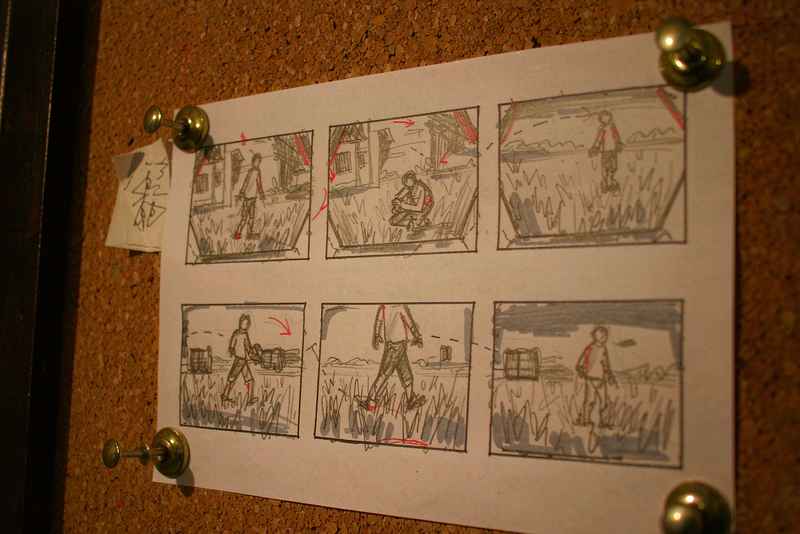
Which makes sense, because at 854×480 and five seconds, you can't ship this as finished content. You can use it to decide whether a shot works. That's the previsualization market, and it's a real market that has historically been served by storyboards and by whatever the director can sketch on a napkin.
What "neuron-derived" might mean, and why it matters
I can't verify the claim, and I'd be suspicious of anyone who says they can. The company name — The Biological Computing Co. — suggests a research angle rather than a product angle. There's a long history of "biological" language in AI marketing that turns out to mean "we used a spiking neural network" or "we were inspired by cortical columns" or, occasionally, "we named our layers after brain regions."
But the claim matters for a reason beyond hype. If a video model is genuinely built on a different substrate than a diffusion transformer, the interesting question isn't whether it's better. It's whether it's cheaper per second by a structural margin, one that won't disappear when the big labs optimize their inference stacks. Right now, $0.005 per second is roughly what you'd pay for a very cheap image, spread across five seconds of motion. That price only makes sense if something about the architecture is unusually efficient, or if the company is buying market share.
Either way, the practical advice is the same: don't build a product on a price that might be a promotion.
The uncomfortable comparison
Here's the thing about cheap video. The market has spent two years arguing about whether AI video is good enough for film. Meanwhile, the actual demand from working people is mostly for something much smaller: "I need to see this shot before I spend money on it." A commercial director wants to know if the camera move works. An animator wants to check timing. A game studio wants a mood board that moves.
For those jobs, 480p is enough. Five seconds is enough. Two and a half cents is more than enough — it's cheap enough to be careless with. You can generate twenty variants of a shot for fifty cents and throw away nineteen. That's a behavior that doesn't exist at $3.20 a clip, where every generation feels like a purchase.
That's the real bet mischief 1 is making, whether or not the company would describe it that way. Not "we're better than Veo," but "we're cheap enough that you'll use us differently."
How you'd actually wire it up
The integration is the standard OpenRouter video flow, which is worth knowing because it's different from the chat completion pattern most people are used to. You POST to /api/v1/videos with the model slug, prompt and first frame, and you get back a job id plus a polling URL. Then you poll until the status flips to completed, and the response hands you URLs to download. No streaming, no tokens, no partial output. It's batch, dressed up as an API.
That shape tells you what the model is for. Interactive tools want streaming. Production pipelines want a queue. mischief 1 sits firmly in the second category, and at two and a half cents a clip you can afford to fire off a dozen jobs and sort through them later.
Should you try it
If you storyboard for a living, yes, immediately. The economics change what you can afford to explore. If you're producing final deliverables, no — you'll spend more time upscaling than you saved.
And if you're the kind of person who reads "neuron-derived" and wants to know what's actually going on inside, you'll be disappointed. The page gives you a price, a resolution, a latency and a benchmark slot. It doesn't give you a method. In a market where every other model ships with an architecture diagram and a paper, that silence is either a moat or a marketing department working overtime. There's no way to tell from the outside yet.
Related articles
The Last Link in the H3 Pipeline Is Now Open Source
A new open-weight refiner takes MiniMax H3 drafts from 768P to 2K locally, in three denoising steps — and it beats the official API on perceptual quality.
Meta Is Testing Its Strangest AI Apps in Southeast Asia First
An AI fitting room in Indonesia, Singapore and Thailand. A pet journal in the Philippines. Neither was announced, and that is the point.
Runware Wants to Build Data Centers the Way Detroit Built Cars
Thirty megawatts a day by 2028, pods online within 48 hours, a gigawatt a month. The constraint on AI capacity stopped being chips and became the two years it takes to build a building.
Ollie Had SOC 2 and $7.5 Million. It Still Couldn't Outship Muse.
A privacy-first family assistant with a Khosla-led seed round and a real SOC 2 audit is closing on November 6. The lesson is not about privacy. It is about distribution.