
A LoRA Turns One Photo Into a 360° Panorama on Qwen-Image 2.1
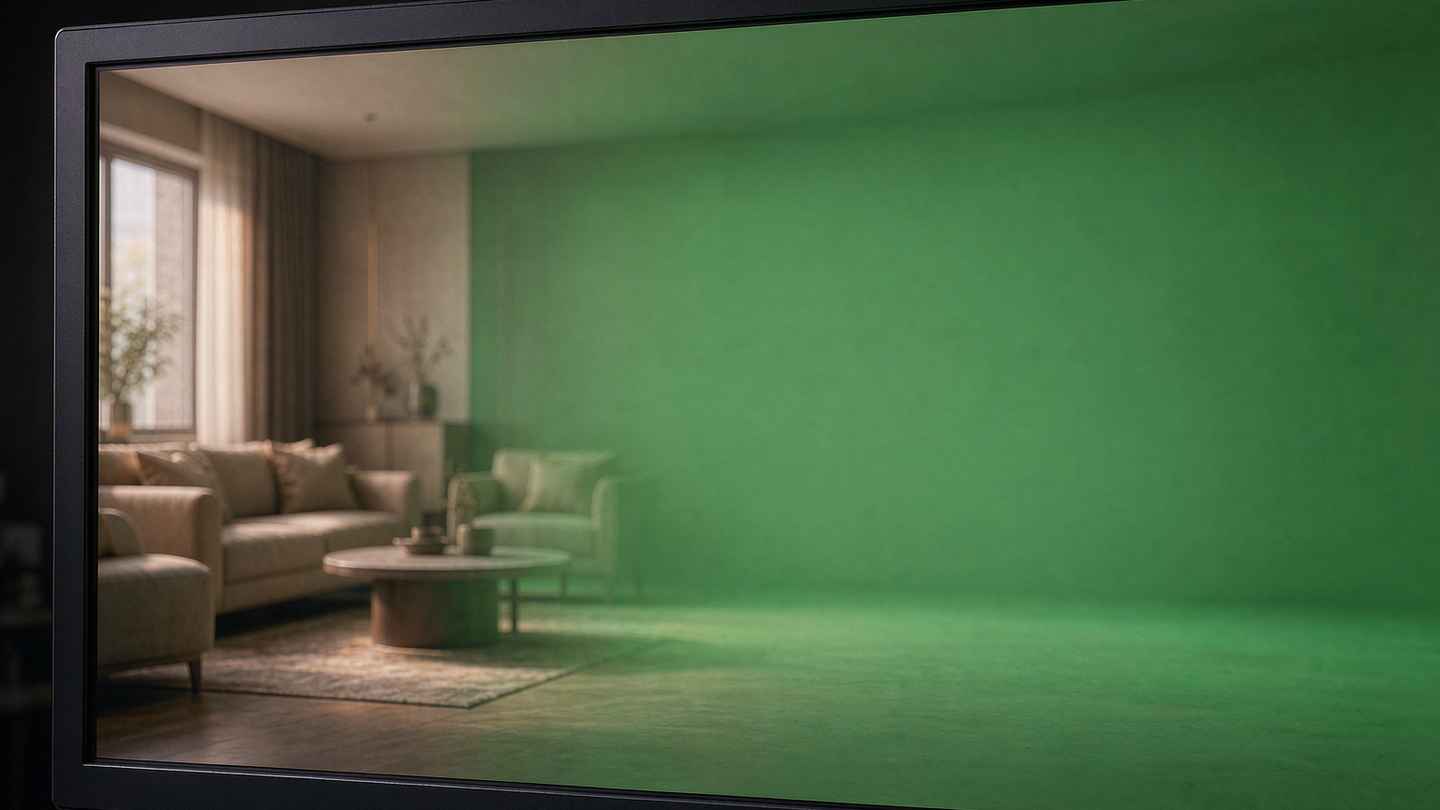
On October 30, a model with a name long enough to wrap onto a second line appeared on Hugging Face: qwen-image-2.1-360-panorama-outpaint-lora. The author is nomadoor. The method is plain. Take Qwen-Image 2.1, attach a LoRA, and teach it to push an ordinary photo outward in all directions until the frame closes into a full 360-degree panorama. A photo becomes a sphere you can stand inside.
The scenario it serves is specific. You shot a guesthouse living room and want it inside a VR headset so a viewer can turn their head. Or you need a skybox for a game, or an environment map to light a 3D scene. Each of those wants the same asset: a 2:1 equirectangular image whose left and right edges meet. You have the photo. What is missing is the other 300 degrees, everything behind you, above the ceiling line and below your feet.
The old route was to outpaint one image, then stitch the seam by hand. The author removes the guesswork. Open the canvas at 2:1, drop the photo in, paint every empty pixel pure green, and start the prompt with a fixed trigger sentence. The green is not decoration. It is a boundary marker: this region is empty, that region has already been photographed.
What it actually does
People hear "panorama completion" and picture a model inventing an entire room out of nothing. This LoRA does not do that. It treats the photo you supply as the anchor and extends sideways, up and down, until the image closes into a loop on the sphere. The author's own settings: strength 0.8, 25 steps, output at 2048×1024.
The 2048×1024 output deserves its own paragraph. It is exactly 2:1, and it is exactly the size that most panorama viewers, game engine skyboxes and 3D environment maps accept without complaint. Pushing resolution higher does not add depth to the space; it only makes the seam harder to align. That choice says the author was building something that goes into a pipeline, not something made for a demo post. It is the difference between a picture of a room and a room you can navigate.
The hard part is not drawing. It is making the edges agree
By the author's test notes, most of the work went into one problem: making the left and right edges meet without a visible seam. The geometry explains the difficulty. Once a panorama is unwrapped into a flat rectangle, the leftmost column and the rightmost column are the same meridian in world space. The model, however, reads them as two separate pictures and paints each on its own. A tree appears in the sky on one side. A railing goes missing on the other. The join lands wrong.
That is why the green fill and the fixed trigger sentence are requirements rather than suggestions. Leave one patch unpainted and the model will treat it as real content to continue, and the semantics at the edges stop matching. Drop the trigger phrase from the prompt and the model may never understand that it is completing a panorama at all. It will fall back to ordinary outpainting.
Put another way, the ceiling on this LoRA is not set by the weights alone. A large share of it is set by how clean the canvas in your hands happens to be.
The license deserves a pause
The repository carries the Qwen Research License. That is neither Apache 2.0 nor MIT. It sits in the "usable, but read the terms first" family, which matters if you intend to put generated panoramas into a client project, a game release build, or an asset pack you sell. The author flags the point in the model card as well.
The open-weight ecosystem has a bad habit: if the weights download, people assume they can ship. The gap between a research license and a commercial one usually becomes visible on the day legal asks. Panoramas touch that wire often, because they turn up in property sales offices, scenic-area guides, VR apartment tours and game maps. Commercial settings, all of them.
Why panoramas, and why now
Stretch the timeline out and the placement looks deliberate. Image models spent two years getting single frames to look good. Spatial consistency stayed the weak spot. You can generate a beautiful room, then swing the camera 90 degrees and watch the furniture change places. Panorama completion shrinks that into a problem a LoRA can hold: the model does not need to understand 3D, only to stay coherent along one closed boundary.
It also explains why small LoRAs of this kind have multiplied over the past six months. Base models already cover image quality and prompt semantics. What remains is teaching a specific geometric relationship. A weight file of a few tens of megabytes, one fixed canvas size and one trigger phrase can absorb an entire category of requests. That is a cheaper ask than it sounds, and it is why the format keeps winning.
The price is brittleness. Upgrade the base model and the LoRA needs retraining. Change the canvas ratio and the edges stop matching. Shift the tone of the prompt and the output drifts. It is closer to a single-purpose wrench than to a toolkit. You keep it for the one bolt it fits.
Practical notes
If you plan to try it, keep the order straight. Set the canvas to 2:1 first. Place the source photo slightly below center, that is where the vanishing point sits in most interior shots, and extending from that height keeps the seam least visible. Fill the empty area with pure green. No partial transparency. No gradients. Any pixel left unpainted, or painted in a washed-out green, becomes an instruction the model will follow.
Lead the prompt with the trigger sentence, then describe the scene. The most useful detail is light direction, because the two sides of a panorama have to share one lighting setup. Tell the model the light comes from the front left and it knows the right side should fall off. Start at strength 0.8 with 25 steps, check the seam, and only then think about raising the count.
Finally, do not chase a seam by rerolling the model. Ten rerolls are worth less than cropping 128 pixels off each side and doing one mirrored blend in an image editor. The model draws the content. A deterministic tool closes the loop. That division of labor holds up far better than hoping the model works it out on its own.
For now the panorama line probably stays where it is. Base models handle image quality, small LoRAs handle geometry, and a person in the middle smooths the boundary. Not elegant. But it produces frames you can use, and for most production work that is the only test that matters.
Related articles
Chinese text in video always turns to mush. Dreamina handed the typesetting to code
Dreamina launched Motion Studio on November 10. It no longer generates frames; the model writes code that lays out text, shapes and pacing. Chinese titles stop blurring, but whether the content is right is still on you.
A community spreadsheet of taps that turns off the ads inside Chinese Android builds
A no-root tool that switches off the ads Chinese phone makers ship inside the system UI. Its method is a hand-written tap script per phone model, maintained by volunteers every time a ROM moves. It works, and the maintenance is the point.
GPT Image 2.6 held the token price and raised the bill
GPT Image 2.6 kept every token rate from 2.5 and still costs more per image, because more of the work now happens in output tokens. Eleven days into the ramp, the pricing structure says more than the leaderboard does.
Someone rebuilt IDM from the outside and wrote down what they did not touch
A Rust reimplementation of Internet Download Manager claims 5x the speed and 86 languages. The more interesting document is the paragraph explaining how it was built without copying anything.