
Tencent Broke Into OpenRouter's Image Top Ten With 20 References and 4K Output
Scroll down the OpenRouter image leaderboard far enough and you hit a name that doesn't fit the pattern. Between Google's third and fourth Nano Banana variants sits Hy Image 3.5 Preview, from Tencent, with 1.59 billion tokens processed in a week.
That's ninth place. Not bad for a model that launched on October 5 with almost no English-language coverage, and that most people in this industry would struggle to place on a map of vendors.
The ranking data is worth reading carefully, because it's easy to misread. OpenRouter's image board is ordered by tokens, which correlates with volume but not with quality. Nano Banana 2 at the top with 5.76B is there because it's the default that a hundred thousand apps reach for. Hy Image at 1.59B is there because enough people building pipelines chose it on purpose, at a price that isn't the cheapest on the board.
$1.60 per million tokens sits between Google's Flash tier at $0.50 and OpenAI's GPT Image 2.5 at $8. That's the awkward middle, and a model doesn't hold a middle position by accident. It holds it by doing something the cheap tier can't.
What it claims
The model card describes a unified image model — one endpoint for text-to-image, image-to-image, and multi-turn editing. The parts worth underlining:
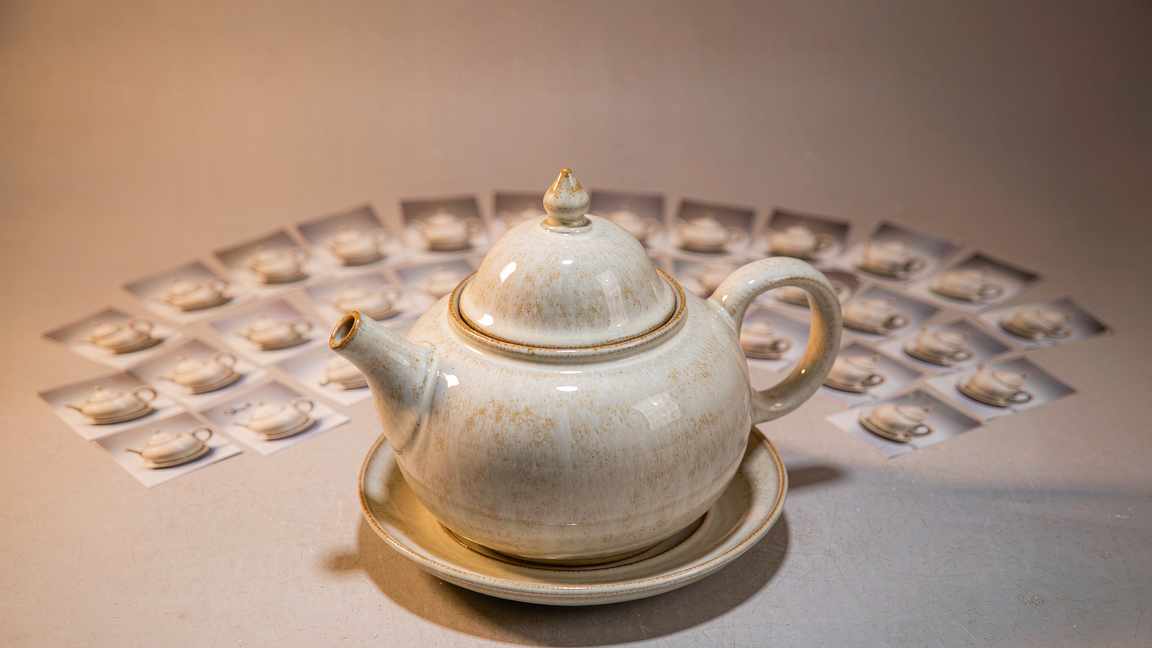
Up to twenty reference images per request. That's the number that stands out. Most image APIs accept one to four references, and beg you not to ask for more. Twenty is not an incremental improvement; it's a different category of task. Product catalogues. Character sheets. A brand's entire visual system, handed over in one call.
Output up to 4K. Standard for this tier in 2026, but worth confirming given the price.
Chinese and English text rendering. This is where the model gets interesting, and I'll come back to it.
Built on the 80B mixture-of-experts Hy Image 3.0 base. A large base by the standards of the Flash-tier models it's competing with, which explains the price and, if the claims hold, the subject consistency.
The twenty-reference claim, in practice
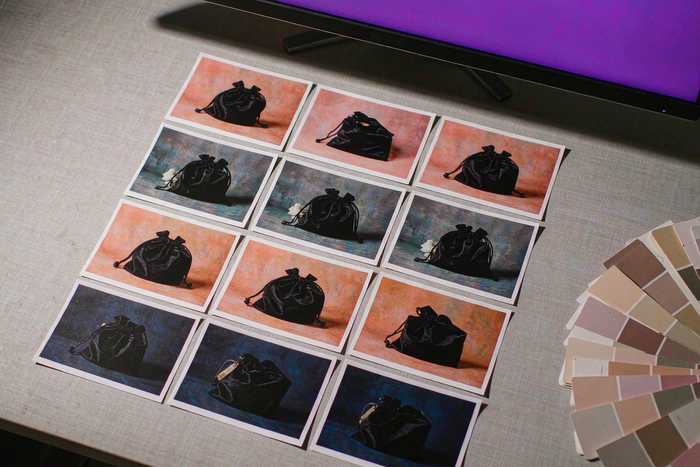
Think about what breaks when you feed an image model many references. Typically the model averages them. Give it five photos of the same jacket and you get a jacket-shaped blur with the collar from one and the buttons from another. Subject consistency across a series is a genuinely hard problem, and it's hard for a structural reason: the model has to track identity across separate conditioning signals instead of merging them into a single style.
Twenty references is the kind of number that suggests Tencent solved this at the architecture level rather than the prompt level. The model card's phrasing — "particularly strong at subject consistency across edits, prompt-faithful composition" — is exactly the language a lab uses when it has an internal benchmark that shows a gap.
Whether that gap survives independent testing is another matter. There are no third-party evals of Hy Image 3.5 that I'd trust yet. What we have is a leaderboard position based on usage, a model card's claims, and the fact that the model is a preview release — which is a hedge, not a promise.
The text rendering angle
Latin typography inside generated images became table stakes somewhere in 2025. Every serious model can now render a legible sign, mostly. Chinese text is a different problem, and it has been for a decade.
CJK glyphs are dense, have thousands of members, and their correctness is binary in a way Latin letterforms aren't. A slightly malformed "a" still reads as "a." A malformed 粤 is just a wrong character. Western labs have improved here, but the failures are still common enough that anyone doing Chinese-language design work has learned to composite the type afterwards.
Tencent claiming both languages, at this price, is a claim aimed at a specific market: the enormous Chinese e-commerce and marketing sector, where a product poster with the wrong character in it is not a charming artefact — it's a rejected deliverable. That's also why the token volume is plausible. A model that fixes Chinese typography removes an entire post-processing step from thousands of production pipelines.
Why it shows up on a Western aggregator at all
There's a structural story here that matters more than any single model.
Two years ago, the way you used a Chinese image model was: you found the vendor's console, you learned its auth scheme, you accepted that latency would be worse from outside the region, and you wrote a bespoke client. That was enough friction to keep most Western builders out.
OpenRouter flattened it. One key, one schema, one bill. The result is that model quality now travels across borders more or less instantly — and the leaderboard has become the actual competitive arena. Tencent doesn't need a developer-relations campaign in San Francisco if it can hold ninth place on a board that every founder checks.
This is the same dynamic that put ByteDance's Seedream in fourth and fifth position on the image board, and four different ByteDance video models in the video top ten. The "which country makes the best model" conversation is mostly over; what's left is a price-and-capability grid that anyone can inspect.
What's actually unknown
Several things, and they're not small.
Token pricing for images is opaque. $1.60 per million tokens tells you nothing until you know how many tokens an image costs, which depends on resolution and, often, on the vendor's internal accounting. The comparison with "from $0.018 per image" on Seedream 5.0 Flash is not a comparison you can make from the price column alone.
Preview means preview. Behaviour can change, endpoints can be repriced, and the model you benchmarked in November may not be the model you get in January.
Licensing and data terms aren't visible from the model card. For anyone doing commercial work with reference images — which is the entire use case for twenty inputs — that's the question that needs an answer before the trial, not after.
How I'd test it
Not with a pretty prompt. With the thing it claims to be good at.
Take twelve photos of one object from different angles, put them in a single request, and ask for the object in a scene it has never been in. Then repeat with four references and see how much worse it gets. The delta between those two runs tells you whether twenty inputs is a real capability or a padded parameter.
Second test: a poster with a Chinese headline and a Latin subhead, at final size, zoomed to 100%. Count the wrong characters. That's the test that decides whether this belongs in a production pipeline or in a demo folder.
The leaderboard says people are already doing this. Ninth place on a board where the top three are Google and the fourth is ByteDance is not a marketing position — it's a lot of developers deciding, quietly, that the middle price tier is worth it.
Related articles
Chinese text in video always turns to mush. Dreamina handed the typesetting to code
Dreamina launched Motion Studio on November 10. It no longer generates frames; the model writes code that lays out text, shapes and pacing. Chinese titles stop blurring, but whether the content is right is still on you.
A community spreadsheet of taps that turns off the ads inside Chinese Android builds
A no-root tool that switches off the ads Chinese phone makers ship inside the system UI. Its method is a hand-written tap script per phone model, maintained by volunteers every time a ROM moves. It works, and the maintenance is the point.
GPT Image 2.6 held the token price and raised the bill
GPT Image 2.6 kept every token rate from 2.5 and still costs more per image, because more of the work now happens in output tokens. Eleven days into the ramp, the pricing structure says more than the leaderboard does.
Someone rebuilt IDM from the outside and wrote down what they did not touch
A Rust reimplementation of Internet Download Manager claims 5x the speed and 86 languages. The more interesting document is the paragraph explaining how it was built without copying anything.