
Pika Distilled a 50-Step Video Model Down to Six and Gave the Weights Away

Fifty denoising steps is a number nobody outside this industry should have to care about. It is also, quietly, the number that decides whether a video model is a demo or a tool.
Pika's new release is built on that number. Pika H3 Flex takes MiniMax's H3 model, fine-tunes it, distils the teacher's 50 steps down to 6 with projection distribution matching distillation, and then gives away the adapter weights and the inference code. Six steps, and the picture and the sound come out together.
That last part deserves emphasis. Most "audio-video" models generate a clip and then a soundtrack that roughly matches it. Joint generation means the audio is denoised in the same loop as the frames, so a door slam and the flinch are the same event rather than two things that happen to line up.
What is actually open
Two LoRA adapters. One handles text and first/last-frame conditioning; the other handles multimodal reference input. Alongside them, Pika published the MiniMax H3 base components and local inference tooling, plus a ComfyUI workflow and a Hugging Face Diffusers path.
Native output is 480P or 768P, five to fifteen seconds, with synchronised stereo audio. That sounds modest until you look at what the API adds: 1080P, 2K and 4K enhancement, and audio stem separation that splits the generated soundtrack into five tracks — dialogue, music, sound effects, foley and ambience.
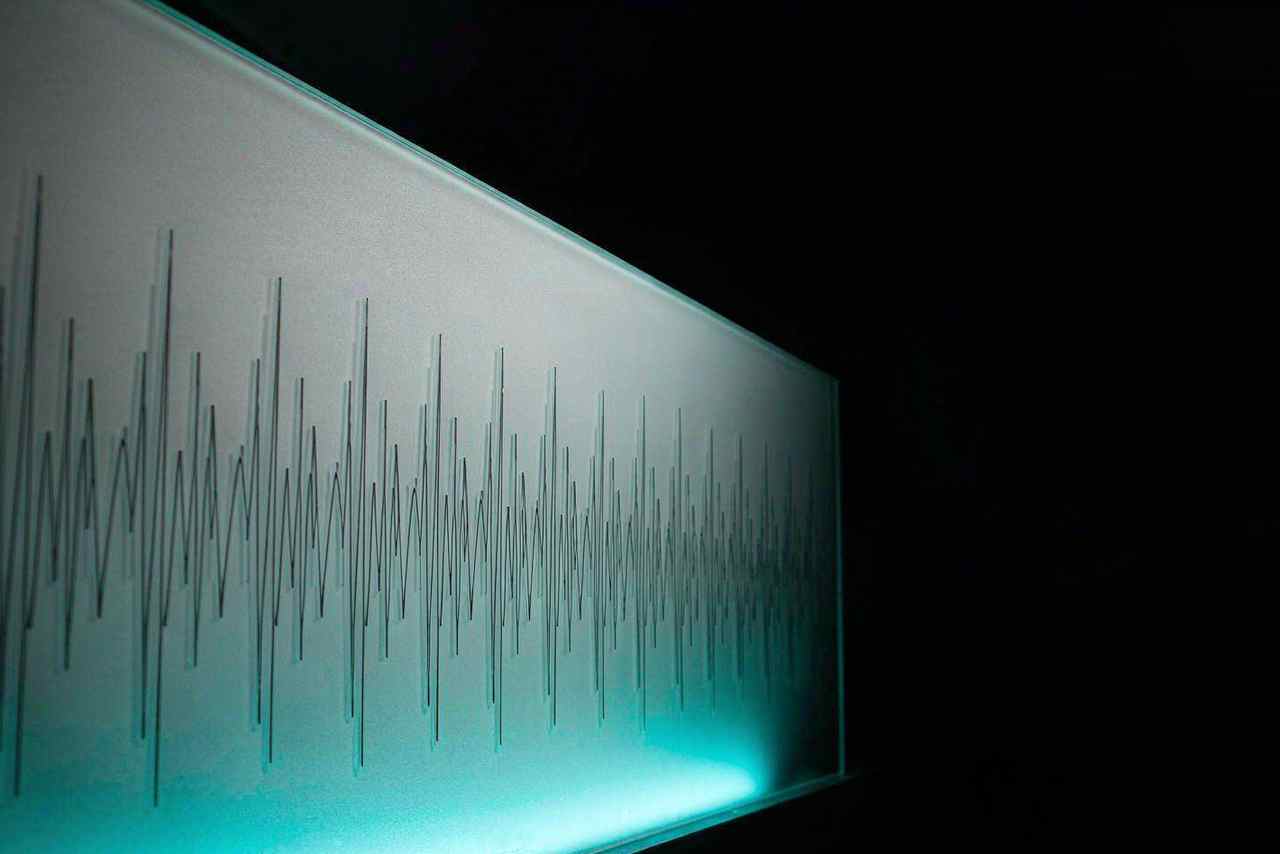
The stem separation is the feature I would actually pay for. Anyone who has tried to use generated video in a real edit knows the problem: the audio is one inseparable lump. You cannot duck the music under a voiceover, you cannot replace the dialogue with a different language, you cannot drop the ambience because it is fighting the room tone of the next shot. Five stems turns a generated clip into footage.
The intended workflow follows from that: generate at low resolution, pick the take you like, then enhance. Draft cheap, finish expensive. That is how every other part of filmmaking already works, and it is good to see a model vendor admit it instead of pretending every generation should be a final render.
The speed numbers, in context
Pika also published hosted-inference optimisation results. On 8 NVIDIA B300 GPUs, keeping the weights and the six-step sampler the same, generating a five-second 768P clip with audio went from 3.409 seconds to 2.129 seconds across conditioning, denoising and decoding. About 1.6x.
A 1.6x engineering win is not a headline. It is, however, the kind of number that decides unit economics when you are running millions of drafts, and it is refreshing that they published the before and after rather than a percentage against an unstated baseline.
The quality claims are less verifiable. Pika says H3 Flex scored highest on five visual and audio quality metrics among the models it compared against, and that it placed eighth on DesignArena's text-to-video board — the highest-ranked open video model there. Vendor-run comparisons are vendor-run comparisons. The DesignArena placement is the more useful signal because it is blind-voted by strangers who do not care about your architecture.
Prompting a model that hears itself
Joint audio-video changes prompt strategy in a way that is not obvious until you try it. If you describe only the picture, the model invents a soundscape to match, and it will usually pick something generic: room tone, a distant siren, an unspecified hum.
So write the sound explicitly. Name the source of every noise you want and, more importantly, name what should be quiet. "A single door closes at the two-second mark, no music, no birds" produces something usable. "A tense scene in a doorway" produces a stock-audio approximation of tension, which is worse than silence.
For dialogue, keep lines short and put them early. The model has five to fifteen seconds, and a sentence that takes nine of them leaves no room for the reaction shot you actually wanted. If a line matters more than the visuals, generate it as a separate take and cut it in.
And treat the first generation as an audio test, not a visual one. A clip with mediocre lighting and perfect foley is more useful than a beautiful shot where the footsteps arrive half a second late.
Why H3 is becoming a base layer
Two days before Pika's release, a team from NVIDIA and MIT published Open-H3-Regenerate-2K, an open implementation for re-generating low-resolution drafts at 2K, with 4K native regeneration and a reported 3.9x speedup on a single B200 after warm-up.
Two independent groups, one week, both building on the same Chinese base model, in opposite directions: one compressing the sampling loop, the other adding resolution. That is what a base layer looks like. Nobody is arguing about whose foundation model wins; they are arguing about who owns the layer above it.
For creators, the practical consequence is that the "which model" question keeps getting less interesting. If the strong open base is shared, differentiation moves to adapters, workflows, and whatever the API adds on top — which in this case is resolution and stems.
What is still hard
Five to fifteen seconds is short. It is enough for a shot, not a scene. Every model in this class still struggles with the same three things: hands doing fine work, text on surfaces, and continuity across a cut. Nothing in this release claims otherwise, which I appreciate.
768P native is also a real constraint if you are delivering for anything bigger than a phone screen. The 2K and 4K path exists, but it runs through Pika's API, which means the open weights get you the draft and the paid service gets you the finish. That is a business model, not a betrayal, but it does mean "open" here means "open enough to evaluate and build against".
And the six-step distillation has a cost that is easy to miss. Fewer steps means less room for the sampler to explore. Distilled models tend to be excellent at the distribution they were distilled on and slightly brittle outside it — unusual aspect ratios, dense prompt constraints, reference inputs that are not quite in distribution. If your work is conventional, you will never notice. If your work is strange, you will.
How to try it
If you have ComfyUI running, the workflow file is the fastest path: load it, point it at the adapters, generate at 768P, listen to the audio. Judge the sync first, not the picture. Lip flaps and impact sounds are where joint generation either works or does not.
If you are on Diffusers, the pipeline is conventional and the adapters merge into the base, so you do not pay extra steps at inference. Expect a reference image to roughly extend your generation time, since its tokens join the same sequence as the text and the target.
Then take one clip you actually like and run it through the API for stems. That is the moment the tool stops being a toy. Being able to mute the music, keep the foley, and drop in a different voice track is the difference between "AI generated this" and "I can use this".
The quiet argument this release makes
For two years the pitch was bigger models. Pika's pitch here is a smaller sampling loop, open adapters, and a post-production surface that respects how editing actually works.
That is a less exciting story, and it is the one that tends to survive contact with a deadline. Six steps is not a marketing number. It is a statement that the bottleneck moved from "can it generate" to "can I afford to iterate", and somebody finally priced the answer.
Related articles
Jimeng's Short Drama Studio Is Really About Re-versioning
Jimeng put script, character design, storyboard and post into a single studio. The interesting part isn't the models, it's a tool that re-versions a finished short drama for other markets.
WeChat Put a Meeting Recorder Inside Its Keyboard, and the Output Is a Web Page
The WeChat Input Method now records, transcribes and turns a conversation into a structured page with charts and prototypes. The feature is ordinary. The placement is not.
A Chinese Studio Runs a World Model on One RTX 5090 and Sells It by the Shot
Dawa built a 34B control layer, a 4B real-time path, and an 84,000 square metre film studio to feed it. Its pitch is not a better model, it is a lower retry count.
Superpowers Makes Your Agent Write the Spec Before It Writes Code
311,000 stars for a folder of Markdown. Superpowers is a development methodology for coding agents: spec first, chunked review, then subagent-driven work with red-green TDD.