
Jimeng's Short Drama Studio Is Really About Re-versioning
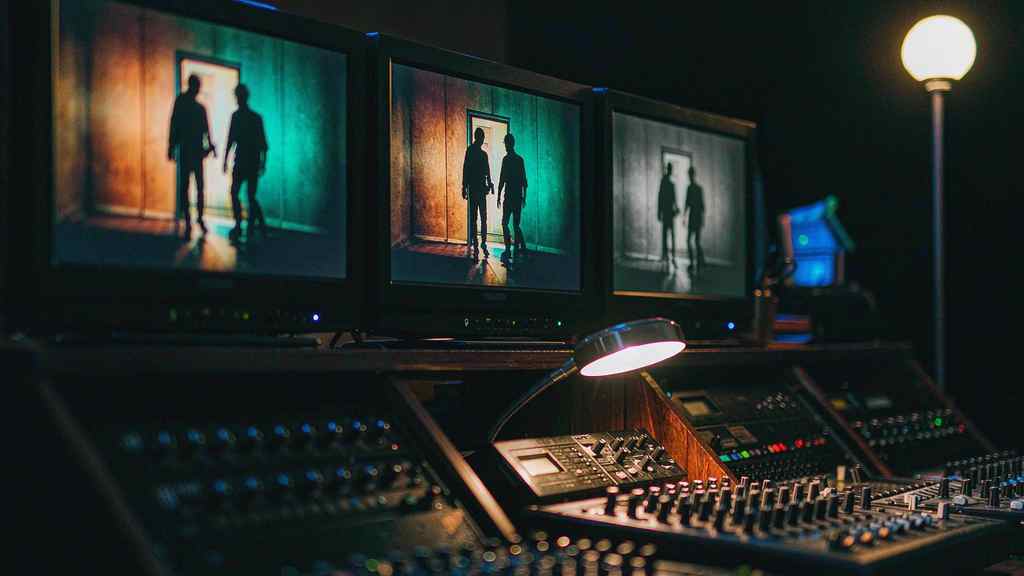
On October 26, Jimeng AI shipped something called "Short Drama Studio." The launch copy is restrained. The spec list isn't: a script model called DreamScript, an image model called Anycook, a storyboard model called DreamShot, on top of the Seedance video generation it already had. Script, character and set design, storyboard previz, final cut, post, all of it pushed into one pipeline.
This isn't another model release. It's a production line that was already running, packed into a web page.
The hard part of short drama was never how the frames look
Anyone who has made one knows the killer isn't an ugly frame. It's not being able to carry it. The man in the grey jacket from episode one turns up with a different face in episode three. Same living room, camera swings around, and now the sofa sits to the left of the window. The director says "everything else is fine, just make her getting up slower," and the whole segment gets redone, her shirt pattern changing along with it.
So the cost structure is odd: writing the script up front is cheap, and the real money burns on changes. Rerolling a single shot fifty or sixty times is a running joke in the trade. What you get back isn't the image you wanted, it's the least-wrong one.
Jimeng's approach is to split changing into separate models that can each be called on their own, so a revision only touches what needs touching. That is far more practical than training another, bigger model.
Three models, one stage each
DreamScript is the script layer. It covers original work, adaptation, overseas versions and recap-style narration, and the company says it can parse a 100,000-character text. The number isn't really about how much it can read. It's about whether it can hold the names, relationships and timeline of a long work, because the thing adaptation fears most is reaching chapter seven and forgetting who was who in chapter one.
Anycook handles the visual design of characters and sets. Short drama audiences have almost no tolerance here: one inconsistent face and the comments section goes off. So the job at this layer isn't to make something beautiful, it's to make it the same person.
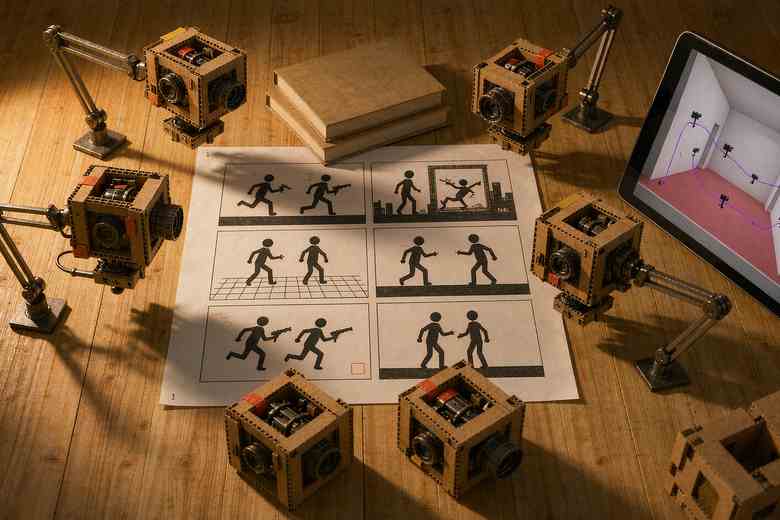
DreamShot is the storyboard layer, with a canvas, a storyboard, and a 3D director's stage for previz. The 3D stage deserves its own sentence: you can place cameras and watch blocking in space first, confirm it, and only then have the model generate. That nudges the work from rerolling toward shooting. You decide how it's shot, then it gets drawn.
Re-versioning is the sharpest tool in the set
If the first three models go from nothing to something, re-versioning goes from something to another version of it. It reads the characters, sets and shot structure of a drama that's already been shot, then regenerates a version in the style, aspect ratio and target market you specify.
The commercial implication is blunt. For Chinese short dramas going overseas, localisation was always the expensive part, and that meant more than subtitles: it meant whether the story still holds in another market. Same plot, different requirements: the Middle East needs different costumes, the US and Europe need a different pace, Japan and Korea need a different colour grade. That used to mean reshooting or recutting. Now you can turn out multiple versions in bulk with the structure left alone.
The post tools follow the same logic. If one clip is off, regenerate that clip alone. Split dialogue from background audio. Break out individual shots. Add automated previz, shot-by-shot breakdowns and upscaling to 4K, and the number of steps that force you back to the original footage drops to a minimum.
Why now
Two sets of numbers explain it. QuestMobile puts Tencent's Green Bubble Short Drama mini program at 143 million monthly users in August this year, and 89.68 million weekly users in the first week of October, up 44.1% over the first week of September. Hongguo sat at roughly 403 million monthly users across July and August. Distribution is already at war, and it's hundreds of millions of users colliding.
The content side is even clearer. Seedance, from ByteDance, took in more than 1 billion yuan in June alone. Which tells you video generation is no longer a tech demo. It's being sold by the second.
When demand runs to hundreds of millions of users and supply is billed by the second, capacity becomes the only bottleneck. Gathering capabilities scattered across separate products into one studio is the cheapest way to add capacity. Xiaoyunque merging into Jimeng while keeping its own entry point is a footnote to the same move.
Now the cold water
A pipeline can fix consistency. It can't fix whether the thing is any good. When everyone can run the same process and produce structurally sound drama with stable characters, what audiences get is a lot of work that looks alike. That isn't a technology problem, it's what overcapacity does. Once capacity arrives, the scarce thing stops being "can it be made" and becomes "is it worth making."
The other point that's easy to miss is the limit of previz. A 3D stage can confirm camera placement and blocking. It can't confirm performance. What people actually remember from a short drama is usually something off-spec: a glance that wasn't needed, a pause someone couldn't help. None of that is in the storyboard, and none of it is in the prompt.
Then there's the rights chain. Re-versioning takes an existing drama as input and puts out another version. Who authorises what, how far the authorisation reaches, how the output gets credited: there's no industry consensus yet. If you plan to build an overseas business on this, settle those questions before you start.
If you want to try it
Go in reverse order. Don't start with the script. Take a finished drama you already have and run it through re-versioning, and see how firmly it holds "same characters, same structure." That test surfaces fastest whether it works on your kind of story.
Once the structure holds, use DreamShot's 3D stage to lock camera positions for the key scenes. Once the camera is fixed, the reroll count drops noticeably, because you're no longer waiting for a correct image, you're waiting for an image that matches a camera you already chose.
Only then hand long text to DreamScript. Its value is in adaptation, and adaptation assumes you already know which shots can't move. Get the order backwards and you'll end up with a beautiful script you can't shoot.
The competition in short drama has stopped being whose model is stronger. It's who can push the defect rate down on a production line. By putting three models side by side, Jimeng is essentially selling defect rate. It isn't a sexy pitch, but the people who make content understand it.
Related articles
WeChat Put a Meeting Recorder Inside Its Keyboard, and the Output Is a Web Page
The WeChat Input Method now records, transcribes and turns a conversation into a structured page with charts and prototypes. The feature is ordinary. The placement is not.
A Chinese Studio Runs a World Model on One RTX 5090 and Sells It by the Shot
Dawa built a 34B control layer, a 4B real-time path, and an 84,000 square metre film studio to feed it. Its pitch is not a better model, it is a lower retry count.
Pika Distilled a 50-Step Video Model Down to Six and Gave the Weights Away
Pika H3 Flex generates picture and sound in the same six-step loop, then splits the audio into five stems through its API. The distillation is the headline; the stems are the product.
Superpowers Makes Your Agent Write the Spec Before It Writes Code
311,000 stars for a folder of Markdown. Superpowers is a development methodology for coding agents: spec first, chunked review, then subagent-driven work with red-green TDD.