
Hallmark Refuses to Ship a Page That Looks Like AI Made It
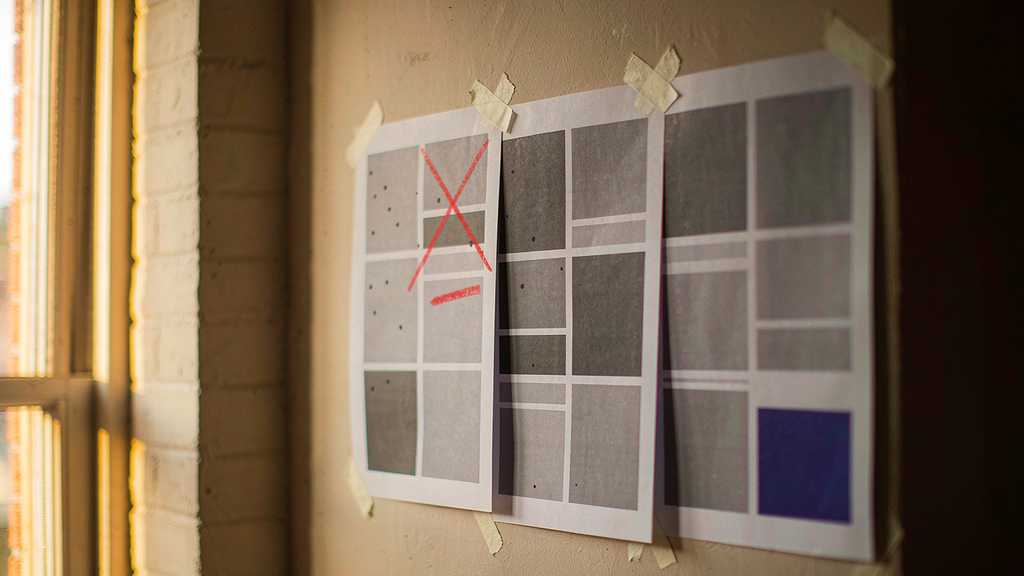
You can spot an AI-built landing page in about four seconds, and it's rarely the copy that gives it away. It's the small green eyebrow label sitting above every single heading. The label above a section that says "FEATURES" in tracked-out capitals. The one colored word in a headline, always the same shade of indigo. The testimonial wall made of empty frames. The newsletter box at the bottom of a page that has nothing to subscribe to.
Hallmark is a design skill built specifically to refuse those things. It comes from Together AI, ships for Claude Code, Codex, Cursor and OpenCode, and picked up roughly 14,400 stars in its first month of trending. The pitch is blunt: it will not ship a page that looks machine-made.
What it does differently
Most "make it beautiful" prompts fail for a boring reason. They describe a feeling, and the model translates that feeling into the same eleven visual clichés every time. Hallmark's approach is to invert that. Instead of asking the model to be tasteful, it hands it a small set of materials and a list of things it is not allowed to do.
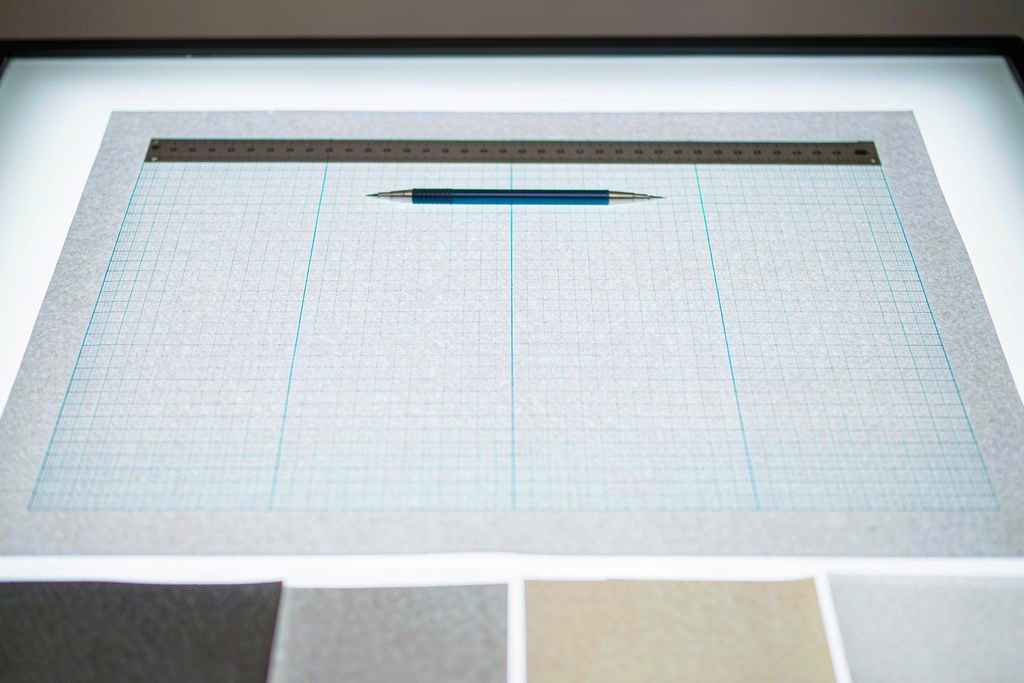
The materials are 50 themes. Each one is a single file, capped at 8 KB, containing paper textures, type scales, color, surface treatments, components. Each theme also has a picture of a finished page so the model can see what "done" looks like. The important part is that a theme is a material, not a template. It doesn't say what the page contains or in what order. Two prompts in the same theme produce two different pages.
The gates are the product
Hallmark runs its checks in a real browser, not against a prompt. That detail matters more than it sounds. A model can be told "make sure the hero fits the viewport" and still produce a hero that overflows on a 1366×768 laptop, because it never rendered anything. Hallmark opens the page, looks at it, and fails the build.
The gates come in three tiers, and the tiering is the smartest part of the design.
Floor gates never ship. Contrast failures, missing focus states, no reduced-motion handling, a broken phone layout, and — this is the one I didn't expect — invented facts. That last gate treats hallucinated claims as a design defect rather than a content problem. If the page says "trusted by 4,000 teams" and nothing in the brief supports it, the build stops.
Reflex gates catch the defaults a model falls into. These can be overruled, but only on the record: the build has to state a reason. That's a subtle piece of design. It doesn't forbid the AI-looking move, it makes the model justify it, which in practice kills most of them.
Finish checks are craft details — spacing rhythm, optical alignment, the kind of thing a senior designer fixes in the last ten minutes. They never block a ship.
A fresh-context reviewer gets the final word, which is a nice trick: a model reviewing its own output in the same context will defend its choices. A model seeing the page cold will not.
How you use it
Three commands, and the split between them tells you who it's for.
/hallmark builds a page from your prompt. /hallmark redesign <path> rebuilds an existing page while keeping its content and its wiring — the forms still submit, the links still go somewhere. /hallmark audit <path> only reports, which is what you want when someone else's page is already live and you just need to know why it feels off.
It can also point at a URL, a dev server or a running app and capture its own screenshots, so it's designing around your real product instead of an imagined one. And the photography is real: 755 openly licensed photos, picked by subject and credited on the page. No generated hero image of a smiling person holding a laptop.
Why this exists now
The timing is the interesting part. A year ago, the complaint about AI-generated interfaces was that they were broken. Now they're competent and still wrong. That's a harder problem, because competence removes the obvious failure signal. You can't point at a bug. You can only point at the feeling that a human didn't make this, and feelings are hard to put in a bug tracker.
Hallmark's answer is to turn the feeling into a checklist. Eyebrow above every heading. Tracked capitals. One colored word. Empty frames standing in for content. A hero that misses its screen. A sign-up form at the end of every page. A "thanks" state that doesn't send anything anywhere. Every one of those is a specific, testable pattern, and every one of them is something a model does because it saw it ten thousand times in training data.
That reframing is the actual contribution. "AI slop" is not a style problem, it's a specification problem. The model produces the average of its training set because nobody told it what not to do, and because nothing in the pipeline was capable of checking.
The obvious objection
Fifty themes is still fifty themes. If Hallmark gets popular, you'll be able to spot a Hallmark page the same way you can spot a Tailwind template, and the whole exercise resets. The team seems to know this, which is why the themes are materials rather than layouts, and why there's a custom mode that designs from the prompt alone under the same gates.
The second objection is that the gates encode someone else's taste. A tracked-out label is not inherently bad. Sometimes a page genuinely needs a newsletter box. The tiering answers this partially — Reflex gates can be overruled if you write down why — but it's still a house style, and house styles date.
None of that makes it useless. It makes it a good default for the 80% of pages that exist to do one thing: book the appointment, sell the object, get the email. For those, the failure mode isn't blandness, it's the uncanny competence of a page that looks like it was made by a machine that has never used a website.
What to take from it
If you build with coding agents, the transferable idea here isn't the 50 themes. It's the structure: a small set of materials, a hard floor of things that cannot ship, a middle tier that requires justification, and a reviewer with no memory of the argument. That pattern works for far more than web pages. It works anywhere a model is producing something a human will judge in four seconds and can't articulate why.
And if you just want a landing page that doesn't look like a landing page generated at 3 a.m., it's a skill install and three commands. That's a low enough barrier that the 14,000 stars make sense.
Related articles
The Last Link in the H3 Pipeline Is Now Open Source
A new open-weight refiner takes MiniMax H3 drafts from 768P to 2K locally, in three denoising steps — and it beats the official API on perceptual quality.
Meta Is Testing Its Strangest AI Apps in Southeast Asia First
An AI fitting room in Indonesia, Singapore and Thailand. A pet journal in the Philippines. Neither was announced, and that is the point.
Runware Wants to Build Data Centers the Way Detroit Built Cars
Thirty megawatts a day by 2028, pods online within 48 hours, a gigawatt a month. The constraint on AI capacity stopped being chips and became the two years it takes to build a building.
Ollie Had SOC 2 and $7.5 Million. It Still Couldn't Outship Muse.
A privacy-first family assistant with a Khosla-led seed round and a real SOC 2 audit is closing on November 6. The lesson is not about privacy. It is about distribution.