
DALL-E Is Gone. Here's Why the Name That Started AI Art Faded Out
On August 30, 2026, OpenAI retired the official DALL-E GPT inside ChatGPT. Users were told to download any images they wanted to keep before then. Going forward, the button points to ChatGPT Images instead. It was a quiet, administrative change, and it closed a chapter that began in January 2021.
The change is narrower than the headlines made it sound. OpenAI did not remove image generation from ChatGPT. It retired one specific entry point: the standalone DALL-E GPT that had been sitting in the app as a separate destination. Custom GPTs built by third-party creators with image generation turned on still work. And ChatGPT Images, the newer pipeline running on the gpt-image family, is available across all tiers including free accounts.
Even so, the retirement matters as a symbol. DALL-E was the name that put AI image generation in front of a mass audience. Its disappearance is the end of the era when image AI was a novelty you went out of your way to try.
The lineage, briefly
The first DALL-E appeared in January 2021. It was a transformer that turned short text prompts into images, and it was one of the first demonstrations of generative AI to break out of research labs and into public conversation. The images were crude by today's standards, but they were surreal and surprising in a way that made people pay attention.
DALL-E 2 followed in 2022 with much better photorealism, and it arrived behind a waitlist after early concern about explicit content and bias in its outputs. DALL-E 3 landed in 2023 with far stronger prompt comprehension, and it was folded directly into ChatGPT. That folding was the turning point. Image generation stopped being a separate destination and became a chatbot feature.
From there, the writing was on the wall. OpenAI deprecated the underlying DALL-E 2 model in mid-2026 in favor of the gpt-image family. The retirement of the standalone GPT in August was the last visible piece of the DALL-E brand leaving the product.
What the retirement actually changed for users
For most people, very little. If you typed image prompts directly into ChatGPT conversations, you were already being routed through the newer pipeline. The standalone DALL-E GPT was the legacy front door, and it had been superseded for months.
The real friction landed on two groups. People who had generated and saved images inside the DALL-E GPT had to export their history before the deadline, because OpenAI did not commit to keeping that content accessible indefinitely. And a handful of GPT-store creators who had built companion tools or galleries around the original DALL-E GPT had to scramble to point their users toward ChatGPT Images or their own archives.
The vague guidance around old images was the one genuinely messy part. OpenAI told people to download anything they cared about, but did not state a firm deletion date or promise continued access. That ambiguity is what drove the wave of how-to coverage this week, walking people through exporting their history before the tool disappeared.
What DALL-E actually proved
It is easy to look back now and underestimate what DALL-E did, because the images it made look primitive next to what ships today. But the historical role is real.
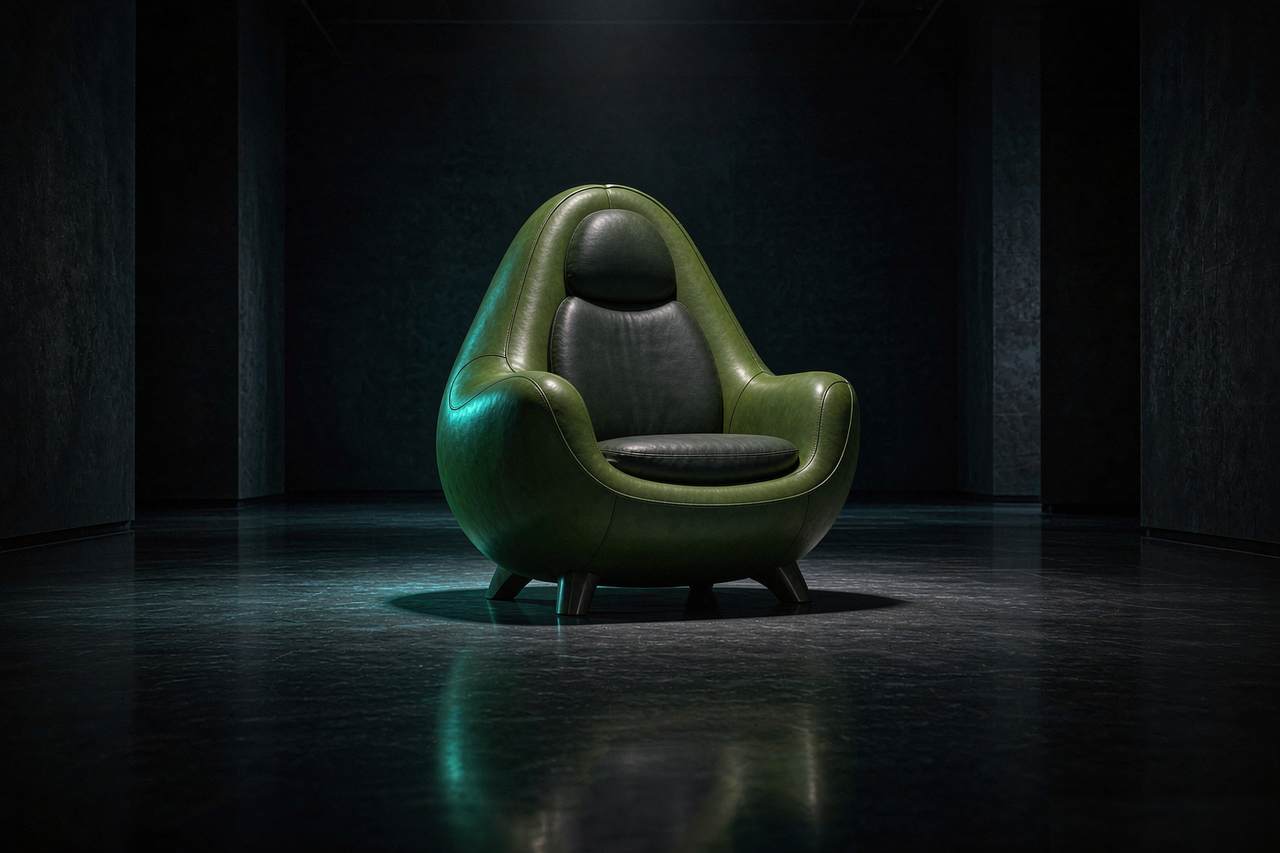
DALL-E was the proof of concept that broke out of the lab. Before it, most people's mental model of "AI" was text prediction or a chatbot that stumbled. A system that could take the sentence "an armchair in the shape of an avocado" and render it, badly but recognizably, was a genuine shock. It made the abstract idea of generative AI concrete, in a form anyone could see and react to.
That reaction is what fueled everything after it. The waitlists for DALL-E 2, the explosion of Midjourney and Stable Diffusion, the entire cultural argument about AI art and copyright, all of it traces back to that first crude image of an avocado chair. DALL-E did not just generate pictures. It generated the conversation that the whole field has been living inside ever since.
That is also why its quiet retirement is fitting. The tool that introduced the idea of AI images did not need to survive once the idea became the default. Every image generator that exists today is, in some sense, DALL-E's descendant, and the ones that won are the ones that stopped being a novelty and became a utility.
Why now
OpenAI's timing is not mysterious. The company is consolidating its interface. Having a legacy DALL-E GPT and a newer ChatGPT Images feature side by side created confusion, and confusion is a cost. When the built-in image pipeline can handle text-to-image requests typed into a normal conversation, there is no reason to keep a separate destination with an old name.
There is also a competitive angle. Google's Gemini, Adobe's Firefly, and a crowded field of challengers keep pushing on image quality and editing. Maintaining two overlapping surfaces while the market moves fast is a luxury OpenAI does not have. One actively maintained image surface is a cleaner bet than a legacy tool trading on a five-year-old name.
There is a small irony in the way it ended. DALL-E spent its life as the friendly front door to image AI, the thing that made the technology feel approachable. It retired because the technology got so approachable that a dedicated front door stopped being necessary. The sign came down, but only after everyone had already moved inside.
The name lingers, the era does not
DALL-E as a word will stick around in the culture. It is shorthand for AI-generated images the way Kleenex is for tissues, even among people who have never opened ChatGPT. But as a product, it is finished. The technology it pioneered has been absorbed into a faster, sharper, more integrated pipeline, and the name retired to make room.
The lesson is a familiar one in software. The thing that captures the public imagination is not always the thing that survives. DALL-E taught a generation what an AI image even was. Then the tools got good enough that nobody needed a special destination to use them, and the destination quietly went away.
Related articles
Meta's Muse Image Costs About a Cent a Picture, Aimed at Advertisers
About a cent per image, aimed at advertisers: what Meta Muse's pricing means for ad creative and the two-lane image market.
Google Pics Puts Nano Banana Inside Docs and Slides, and Canva Should Watch
Object isolation, in-image text translation and Workspace integration: what Google Pics means for Canva and Adobe Express.
Grok Imagine Image 2.0 Is xAI's Argument That Editing Is the Real Job
Image 2.0 ranks second on both image arenas with region editing, 5-image fusion and smart resize. The editing-first bet, explained.
ChatGPT Images 2.5 Is Faster, Sharper, and Finally Lets You Sketch
Images 2.5 cuts latency up to 50%, adds Sketch, and stabilizes multi-turn edits. What changed and who should care.