
Broadcom Will Lend Anthropic Up to $42 Billion to Rent Broadcom's Own Chips

Anthropic's IPO paperwork disclosed something that had not been public before. Broadcom has agreed to provide Anthropic with up to $42 billion in loans, and the debt can convert into Anthropic equity. The money is earmarked for leasing chips, which is to say chips that Broadcom supplies. The financing covers roughly a third of a five-year, $125.2 billion TPU compute lease commitment.
Read that structure slowly. A hardware vendor is lending its customer the money to rent hardware from the same vendor. Anthropic's own filing flags the conflict: Broadcom is both supplier and financier, and those roles can pull in different directions.
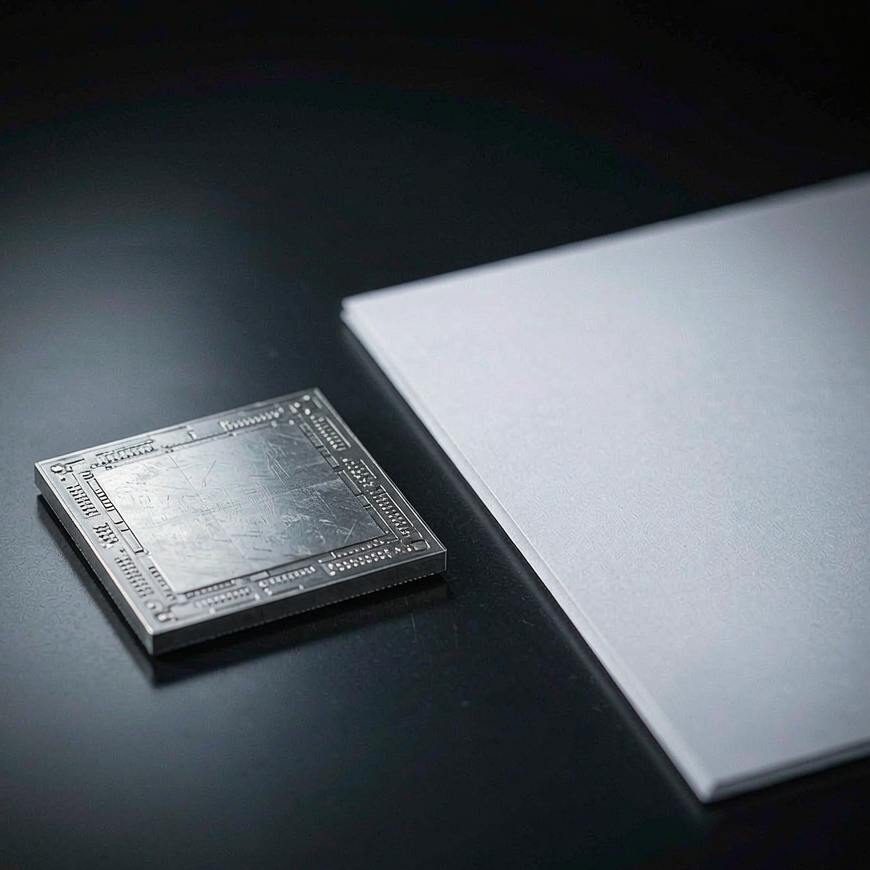
This is not a one-off. Australian neocloud Sharon AI announced a $356 million senior secured loan backed by GPUs. Amazon is in talks to move about $8 billion of Nvidia chips off its balance sheet through a sale-leaseback or special purpose vehicle. Reuters reports that Wall Street has started asking whether Nvidia's own chip-financing practices are sustainable. The AI buildout has grown a credit layer, and GPUs are the collateral.
Why the credit layer appeared
The arithmetic is simple. Training and serving frontier models requires compute commitments measured in billions of dollars and multiple years. Most AI labs do not generate enough cash to fund those commitments from operations, and equity rounds dilute founders and early investors. Debt against hardware looks like a middle path: it spreads the cost over the life of the asset and leaves ownership where it already is.
The lender's side is less obvious. Broadcom wants more than interest. A loan convertible into Anthropic equity means Broadcom participates if the IPO goes well. It also means Broadcom is lending against a customer whose ability to repay depends partly on Broadcom's own chips performing as promised and remaining competitive. If a rival accelerator is better in two years, the collateral thins and the borrower's revenue outlook weakens at the same time.
Anthropic's disclosure matters because it makes the circularity explicit. The company has committed to $517 billion in compute infrastructure contracts covering 14.8 gigawatts of capacity in the eleven months through August 2026. Its 2025 revenue was about $4.6 billion against a net loss near $42 billion, though more than $34 billion of that loss came from accounting items such as changes in the fair value of liabilities rather than day-to-day operations. Those are the numbers of a company spending well ahead of earnings, which is precisely when vendor financing becomes attractive.
What the credit layer changes about incentives
Vendor financing does more than solve a cash flow problem. It changes what each party is optimizing for.
A company that borrows against hardware has an incentive to keep that hardware productive, because idle capacity still services the debt. A company that buys the hardware outright can afford to wait for a better model or a better workload. The difference shows up in utilization rates, and utilization is where the returns on AI infrastructure are decided.
The lender faces the mirror image. Broadcom now has an interest in Anthropic succeeding beyond the value of the chips it sells, because a default would leave it holding conversion rights on a struggling company. That alignment is usually described as good for both sides, and it is, as long as the underlying demand holds. It becomes a source of fragility when demand softens, because the lender cannot easily exit a position it created to support its own sales.
There is also a disclosure effect. Once one such arrangement is public, every comparable deal becomes a question. Analysts will want to know how much of a chipmaker's reported revenue is financed by the same company that books it, and how much of a lab's compute is rented under terms that a lender could alter. Those questions did not exist a year ago, and they will not go away.
The precedent is not reassuring
Vendor financing has a history, and it is not a happy one. Telecom equipment suppliers in the late 1990s extended credit to carriers so they could buy more equipment. The arrangement worked while demand grew and collapsed when it stopped, because the lenders had financed their own order book and held the risk when customers defaulted.
There are differences. AI compute demand is real and currently exceeds supply. GPUs hold resale value. The deals are structured with collateral and conversion features that give lenders a claim on the upside. None of that removes the core exposure: a small number of vendors are financing a small number of buyers for an asset class whose value depends on a technology cycle that turns every few quarters.
The concentration is the part regulators will notice. If Broadcom lends Anthropic $42 billion, and other chipmakers extend similar credit to other labs, then the health of the AI capital cycle depends on a handful of lending decisions made by companies that also profit from the spending. When credit and sales are decided by the same boardroom, a slowdown reduces orders and impairs the lender at the same time.
What the buyers are really buying
Strip the financing away and the underlying transaction is a multi-year capacity reservation. Anthropic is securing compute it believes it will need, at a price it negotiated before demand pushed prices higher. Broadcom is locking in a customer and, through the conversion feature, a stake in the outcome.
Both are hedging. Anthropic is hedging against scarcity. Broadcom is hedging against losing a major customer to a competitor. Neither hedge addresses the question of whether the models built on this capacity will earn enough to service the debt.
That is why the disclosure is more interesting than a routine loan. It shows that the people closest to the business, the ones who know the hardware and the customer, have decided that the way to fund compute at this scale is to finance it themselves. If they are right, the credit layer becomes a normal part of AI infrastructure. If they are wrong, the losses land inside the companies that were also supposed to profit from the boom.
Where this goes
Three signals would show where this goes.
Whether other chipmakers copy the structure. Broadcom's convertible loan is a template, and the AI labs that cannot raise more equity at attractive terms will find it hard to refuse.
Whether the loans show up in credit markets. Sharon AI's GPU-backed loan is small, but it establishes a category. If GPU-backed securities start trading, the AI buildout becomes exposed to the same reflexivity that GPU prices already show.
Whether investors price the conflict. Anthropic's filing names the dual role as a risk. If the IPO prices at the $1.8 trillion to $2 trillion range that potential investors have discussed, then the market has decided the risk is acceptable. If it prices lower, the financing structure will be one of the reasons cited.
What is new is that the same company now appears on both sides of the invoice, lending the money, supplying the hardware, and collecting the rent.
Related articles
Japan Put 101.6 Trillion Yen Behind AI. The Concrete Part Is a Data Center Near Tokyo
A power company is the anchor. JERA generates electricity, and its role means the first problem is solved at the generation layer.
Tencent Leased 100,000 AI Chips From Oracle. The Interesting Part Is the Route.
The chips did not move. That is why this deal is harder to answer than a shipment caught at a port.
China Started Writing Rules for Agent Identity, and the Question Is Who the Agent Works For
Identity is the easy half. The difficult half is attribution.
Unit1 Raised $20 Million to Put Avatar Concerts on a Tour Bus
The constraint is a signature on a licensing agreement.