
102,000 Stars for a WiFi Radar That Claims to See Through Walls
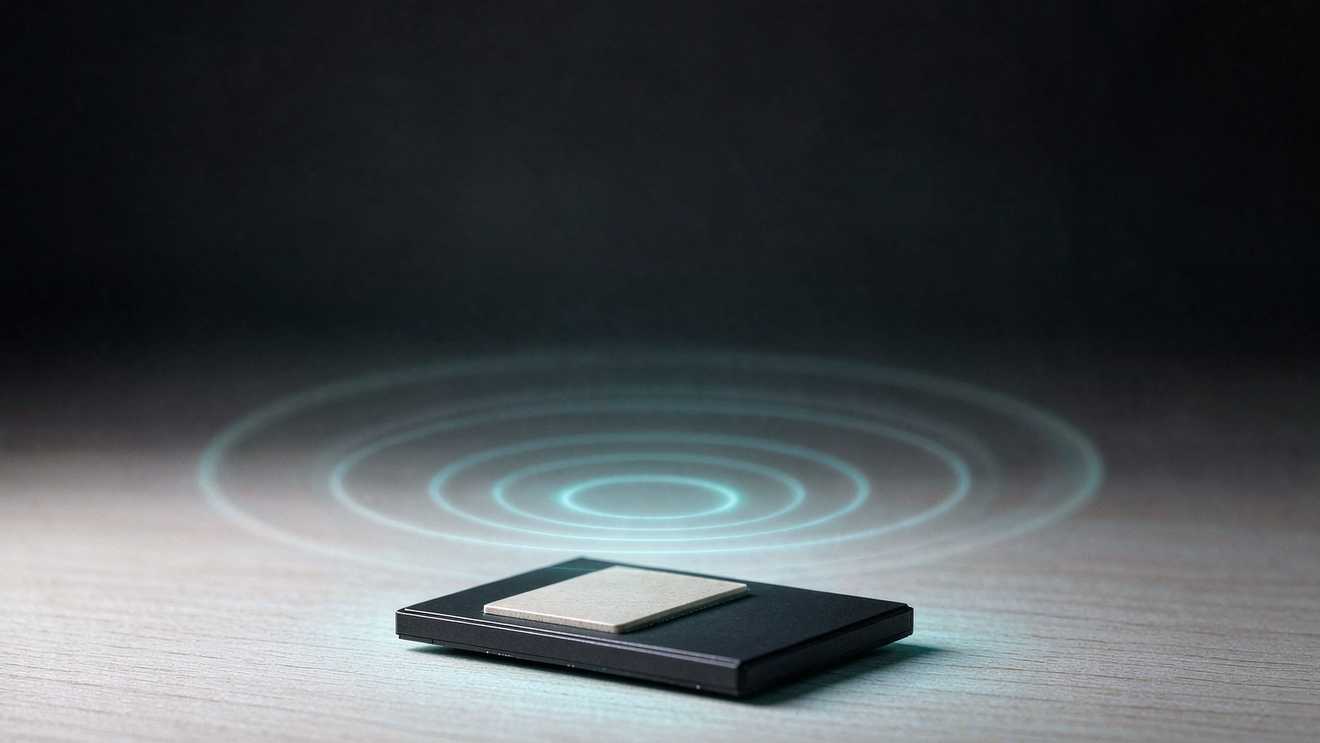
RuView has 102,000 GitHub stars, a project description that reads like a hardware pitch, and a README that is unusually candid about its own limits. Read both, because the project teaches more than the star count suggests.
The pitch: your WiFi signal is already a radar. When someone walks, breathes or pulses, their body scatters radio waves, and the resulting phase and amplitude changes show up in the Channel State Information that WiFi chips already collect. RuView reads that CSI data and turns it into presence detection, person counts, breathing rate, heart rate, fall detection and a 17-keypoint human pose estimate, with no camera and no wearable.
The stack is real. It is written in Rust, with an end-to-end pipeline that runs at roughly 18.47 microseconds per frame, about 810 times faster than the Python version it replaced. The pretrained encoder fits in 8 KB at 4-bit quantization. Pretrained weights are published on Hugging Face. It publishes 21 Home Assistant MQTT entities per node and bridges to Matter and Apple Home. A phase-variance fallback detects presence with no model at all.
There is also a phase-variance fallback that needs no model, which is the kind of detail you only see in projects where the author intends for people to actually run the thing.
The part that makes the hardware work
The reason two cheap boards can sense anything at all is a normalization layer. Consumer WiFi chips report Channel State Information on different subcarriers, in different orders, with different scaling, so raw CSI from an ESP32 and raw CSI from an Intel 5300 are not the same measurement. RuView's HardwareNormalizer maps all of them into a unified 56-subcarrier format using Fourier-domain encoding and dynamic resampling, which means a model trained on one chipset can be deployed on another without retraining.
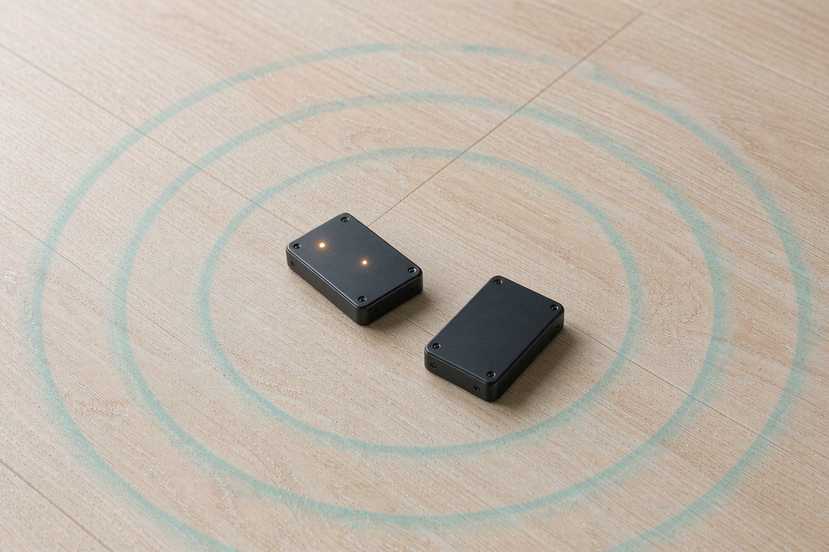
Above that sits signal processing built on Fresnel zone geometry and CSI phase dynamics, rewritten in Rust. The modules compile to WebAssembly and run natively on the ESP32-S3, so parts of the pipeline execute on the node rather than on a server.
The sensors are commodity and the normalization is the reusable piece. What makes the rest of it trustworthy is that the author documented the accuracy limits of each stage instead of quoting a headline number.
The hardware reality
Live sensing needs ESP32-S3 or ESP32-C6 boards flashed with CSI firmware. Nodes cost about $9 each. The project also works with Intel 5300 NICs for research-grade MIMO, and a laptop's plain RSSI signal will detect coarse presence, though nothing more.
Installation is Docker plus Compose. A GPU is optional. The Docker image runs simulated data, which is worth knowing before you spend an afternoon wondering why your readings look too clean.
What the README admits
The README retracts an earlier accuracy claim, and that is what makes the project worth an hour of your time. It flags that the vital sign figures and the synthetic radio-frequency accuracy are unvalidated by external parties. It notes that the committed on-device pose model scores PCK@20 of 3.0 percent and that its runtime path is a stub.
Three percent PCK@20 means the on-device pose model, as shipped, does not work. Not "works imperfectly". It does not work. The full pipeline on server-grade hardware is a different story from the model you can run on the node itself, and the README is clear about which is which.
The project also states that wall penetration runs about five meters and depends on signal conditions, that the feature surface is large enough that it is hard to tell which parts are production-ready, and that the README itself is very long. Accuracy claims in this field have a poor track record, so a project that publishes its own failure modes is doing something rare.
Why a 102,000-star project still needs reading
Star counts on this repo moved fast. The project passed 10,000 stars in February 2026, 50,000 in May and 100,000 on October 27. The repository tracker shows roughly 1,300 to 1,400 new stars per week over the last month, with a best day of 710 on October 29. Fifty of the contributors have touched it.
Growth like that usually means a mix of genuine adoption and something else. The something else here is a compelling premise that is easy to share: cameras are invasive, so replace them with radio. That premise is worth a lot of attention and it also glosses over the hard parts.
The hard parts are visible if you look. CSI support in consumer WiFi chips is uneven, and the whole approach depends on firmware that few routers expose. Multi-person tracking, occlusion and room geometry all change the signal in ways the models have to be retrained for. Heart rate detection through walls in a room with a running fan is a physics problem before it is a machine learning problem.
What to do with it
Before anything else, read the accuracy table rather than the feature list. This kind of project accumulates capability faster than it accumulates evidence, and the two lists are kept in different places in the README. The feature list is long and reads like a roadmap. The accuracy section is short and reads like a confession. Both are true, and the second one is the useful one.
If you are building smart home or security tooling, RuView is a serious reference implementation and a reasonable thing to run on a bench. Buy two ESP32 boards, flash them, watch the breathing trace. The cost is trivial and the understanding you get is not.
If you are evaluating it for healthcare or fall detection, treat the README's own caveats as the specification. The vital sign accuracy is unvalidated, the on-device pose model is a stub, and the wall penetration limit is real. There is no procurement decision to make here yet.
If you are looking for a privacy-preserving sensing alternative to a camera, the honest summary is that RuView moves the problem rather than solving it. It removes the image, not the data. What you get instead of a picture of someone's bedroom is a breathing rate and a position in the room, which is a different kind of record and in many settings a more sensitive one. The legal and ethical questions that come with camera-free sensing are not settled anywhere, and a 100,000-star repository is not where they get settled.
The best thing about this project is its README. Someone built an ambitious thing, then wrote down exactly how far it actually gets. More hardware and AI projects should do the same.
Related articles
Chinese text in video always turns to mush. Dreamina handed the typesetting to code
Dreamina launched Motion Studio on November 10. It no longer generates frames; the model writes code that lays out text, shapes and pacing. Chinese titles stop blurring, but whether the content is right is still on you.
A community spreadsheet of taps that turns off the ads inside Chinese Android builds
A no-root tool that switches off the ads Chinese phone makers ship inside the system UI. Its method is a hand-written tap script per phone model, maintained by volunteers every time a ROM moves. It works, and the maintenance is the point.
GPT Image 2.6 held the token price and raised the bill
GPT Image 2.6 kept every token rate from 2.5 and still costs more per image, because more of the work now happens in output tokens. Eleven days into the ramp, the pricing structure says more than the leaderboard does.
Someone rebuilt IDM from the outside and wrote down what they did not touch
A Rust reimplementation of Internet Download Manager claims 5x the speed and 86 languages. The more interesting document is the paragraph explaining how it was built without copying anything.