
Your GeForce Runs Half Its Tensor Cores. Someone Wrote a Patch for That
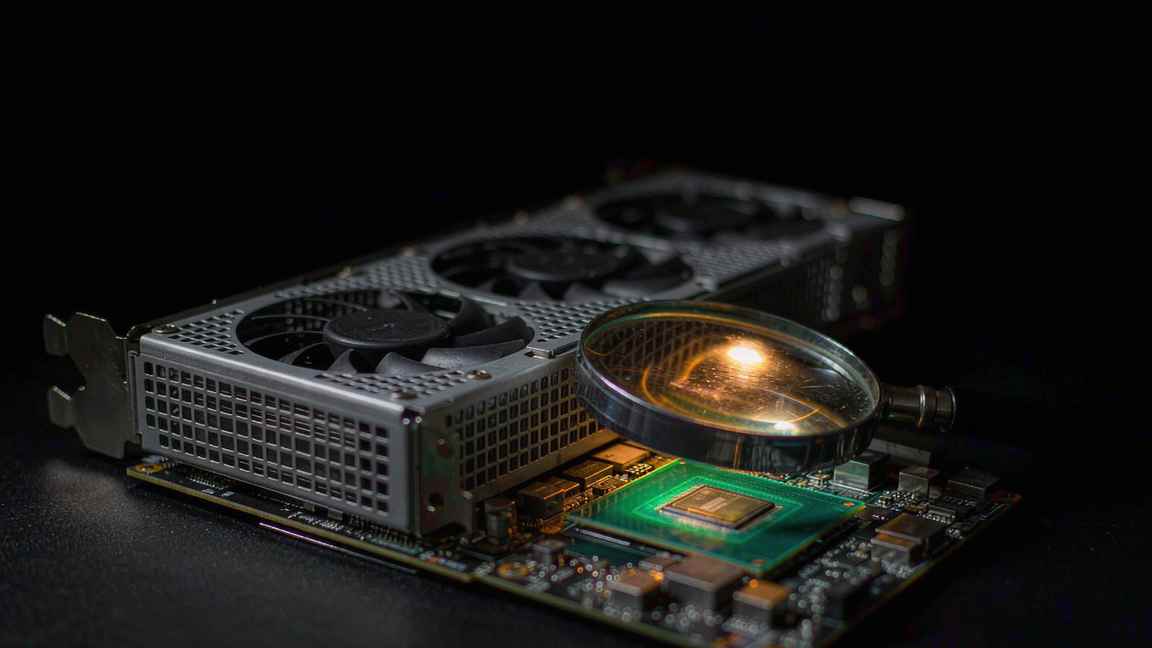
The claim is one sentence long and it is the kind that makes people angry before they finish reading it: NVIDIA ships GeForce cards with their tensor cores capped to half speed for FP16, BF16 and TF32 math with FP32 accumulation.
That is the math almost all training and unquantized inference uses. The same silicon sold as an RTX A-series or a professional card runs at full rate. A project called gpu-unlock says it removes the cap at boot, before the stock driver loads, and it picked up about 15,000 stars doing it.
Before going further: this is a boot-level kernel patch on Linux, GPL-2.0, and it is not something to try on the machine you get paid on.
Why the claim is not crazy
Product segmentation by firmware is not a conspiracy theory, it is a business model. Intel sold multiplier-locked CPUs for decades. GPU vendors bin chips, and the bins differ by more than clock speed. The interesting question is never "do they segment" but "which specific capability did they turn off, and is it off in hardware or in software."
The project's answer is software, and it is specific: FP16, BF16, and TF32 accumulation with FP32 accumulate. Its own FAQ answers the obvious question in one line — "market segmentation, they want businesses to purchase the professional cards without these limitations at significantly higher prices" — and then answers the second obvious question, whether it damages the card, with "very unlikely," noting that throttling and power management remain intact.
I would treat both answers as claims rather than guarantees. The mechanism is plausible and the motive is documented across the industry. The long-term thermal consequences on a specific SKU are not something a README can promise.
What it does to the numbers
The README publishes a table of expected gains: up to 2× FP16/BF16/TF32 tensor throughput, +25–55% LLM prefill, +25–50% fine-tuning, +30–55% image generation.
Those are unusually specific ranges, and the shape of them is informative. Prefill is a big matmul workload, so it benefits most from raw tensor throughput. Decode is memory-bandwidth-bound, so it benefits least — which is why the claim is about prefill and not about tokens per second overall. Fine-tuning sits in the middle. Image generation, which is a dense convolution-and-attention workload, lands near the top.
If you are doing LoRA fine-tuning on a 4090, that is the difference between a nine-hour run and a five-hour run. If you are generating images in batches overnight, it is the difference between 400 and 550 images. Neither is a rounding error.
The compatibility list is the real story
Here is where the project gets honest in a way that most hardware hacks do not.
Ampere, RTX 30 series: supported. The full list is spelled out — 3050 through 3090 Ti, plus specific laptop parts.
Ada Lovelace, RTX 40 series: experimental.
Turing, RTX 20 series: experimental.
Blackwell, RTX 50 series: not supported, and the FAQ adds "unlikely to happen."
That last line matters more than the supported list. The newest cards, the ones people are buying right now for AI work, are exactly the ones this does not work on. So the tool is not a general unlock. It is a rescue mission for a specific generation of hardware that a lot of people already own.
There is a laptop caveat that is easy to miss and will waste an afternoon: laptops only stay unlocked if the discrete GPU is never fully powered off. Many power it down when idle, which silently resets the unlock. Setting NVreg_DynamicPowerManagement=0x00 helps on some models. "Expect mixed results" is the README's phrasing, and it is the right expectation.
How the install actually goes
It is not a driver replacement. That is the design choice that makes it interesting.
You clone the repo, run make install, and then add gpu_unlock.targets=all to your kernel command line. On GRUB you edit GRUB_CMDLINE_LINUX_DEFAULT and regenerate. On Fedora you use grubby. On systemd-boot you edit the options line. Then reboot.
The unlock happens before the stock NVIDIA driver loads, which means it survives driver updates. The README is explicit that the driver version pinned in the build is only fetched to extract firmware the unlock depends on, not because the unlock is version-specific.
This is a meaningfully different risk profile from patching the driver binary. A driver patch breaks on every update and can leave you without a display. A boot-time firmware patch that the driver does not know about is more likely to either work or fail cleanly.
More likely is not the same as guaranteed. Have a way to boot without the parameter before you add it.
Who should care, and who should not
Care, if you have an RTX 3090 or 4090 doing fine-tuning or batch image generation, you run Linux, and you are comfortable editing a bootloader config. The economics are absurd: a 30% throughput gain for zero dollars, on hardware you already paid for. In a market where people are renting H100s by the hour, that is a strange kind of free lunch.
Do not care, if you are on Windows. There is a community port, and the README's own advice is to be "very careful" with the installers floating around. That is the correct advice. Kernel-level GPU unlocks from unofficial binaries are a bad category to trust.
Do not care, if you are on an RTX 50 series card. It does not work, and according to the author it probably will not.
Do not care, if your work is inference-heavy and bandwidth-bound. Decode speed will barely move, and you will have taken on boot complexity for a change you cannot measure.
The uncomfortable part
There is a version of this story where the lesson is "vendors are cheating you." I do not think that is quite right, and it is worth being precise about why.
NVIDIA sells a 4090 at $1,600 and an RTX 6000 Ada at roughly $6,800. If they were identical in every respect, nobody would buy the second one, and the second one is what funds the drivers, the CUDA ecosystem, and the support contracts that enterprises actually need. Segmentation is how that market clears.
The uncomfortable part is not that the cap exists. It is that the cap is invisible. Nothing on the box says "FP16 tensor throughput: half." Nothing in the spec sheet says it. You find out by benchmarking, or by reading a GitHub repo with a 15,000-star count and a FAQ that answers the question the spec sheet avoided.
That is a documentation problem more than a hardware problem, and the fix is cheaper than the hardware. Publish the number. Let people decide whether the professional card is worth it with the actual delta in front of them, instead of discovering it years later from a stranger's kernel patch.
Related articles
Chinese text in video always turns to mush. Dreamina handed the typesetting to code
Dreamina launched Motion Studio on November 10. It no longer generates frames; the model writes code that lays out text, shapes and pacing. Chinese titles stop blurring, but whether the content is right is still on you.
A community spreadsheet of taps that turns off the ads inside Chinese Android builds
A no-root tool that switches off the ads Chinese phone makers ship inside the system UI. Its method is a hand-written tap script per phone model, maintained by volunteers every time a ROM moves. It works, and the maintenance is the point.
GPT Image 2.6 held the token price and raised the bill
GPT Image 2.6 kept every token rate from 2.5 and still costs more per image, because more of the work now happens in output tokens. Eleven days into the ramp, the pricing structure says more than the leaderboard does.
Someone rebuilt IDM from the outside and wrote down what they did not touch
A Rust reimplementation of Internet Download Manager claims 5x the speed and 86 languages. The more interesting document is the paragraph explaining how it was built without copying anything.