
Why Katzenberg and the Ex-Sora Lead Are Building Video Models for Filmmakers

On September 15, a new AI video company surfaced without a name, a product or a demo. What it had was a founding team, and the names were enough to get the industry talking. Jeffrey Katzenberg, the producer who co-founded DreamWorks, had partnered with Bill Peebles, the former head of OpenAI's Sora team, and Sujay Jaswa, a former Dropbox chief financial officer. The company's stated plan is to train its own video models for filmmakers.
That last detail is the whole story. Almost every company shipping AI video right now is optimizing for something else: short clips for social feeds, ad variations, product shots, or the endless scroll of generated content. A startup that says its customer is a filmmaker, and that it will train its own models to serve that customer, is making a narrower and riskier bet.
A team assembled on purpose
Read the three names as a division of labor. Katzenberg brings the film business itself, decades of relationships with studios, directors and financiers, and a clear sense of what a production actually needs. Peebles ran one of the highest-profile video models in the world, which means he knows how these systems are built and, more usefully, where they still break. Jaswa brings the financial discipline that a compute-heavy company needs, because training video models burns money faster than almost anything else in software.
Katzenberg's record deserves a fair reading rather than a flattering one. DreamWorks was a genuine success. Quibi, his short-form streaming venture, was a high-profile failure that shut down within a year. The lesson people drew from Quibi was that he misjudged how people wanted to watch short video. The lesson worth drawing here is subtler: he is willing to place large bets on where media is heading, and he does not always read the market correctly. A new venture aimed at filmmakers is exactly that kind of bet.
The problem with most AI video today
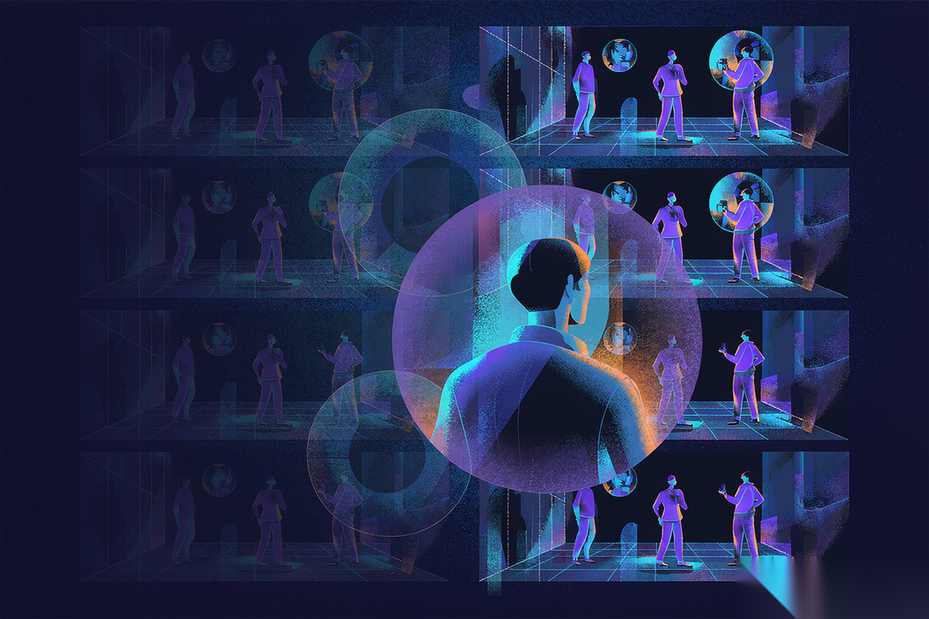
Filmmakers have a specific set of complaints about current video models, and they are not the same complaints casual users have. A creator posting a fifteen-second clip cares about whether the frame looks good. A filmmaker cares about continuity: does the character's jacket match between two shots, does the light stay consistent when the camera moves, can the same location appear in scene three and scene thirty without drifting. Those are the hard problems, and they are the ones that matter for a feature, not a clip.
There has been real progress on exactly these points. The newest generation of video models handles character consistency and camera movement far better than the tools of a year ago, and it can produce longer sequences. Filmmakers, in turn, have settled into hybrid workflows. They use AI to generate backgrounds, visual effects, storyboards or shots that would otherwise be expensive, while humans keep control of the script, continuity, editing and creative direction. The models serve the production. They do not replace it.
A company that trains its own models specifically for that arrangement is betting that the hybrid workflow is the destination, not a way station. If filmmakers keep wanting more controllability and better consistency, a model built for their needs could beat a general-purpose one that happens to be good at video.
It is also a bet on a market that is still forming. The tools that exist today serve a mix of advertisers, social creators and hobbyists. The professional film and television market is larger in budget but slower to adopt, and it demands things consumer tools can skip: predictable output, clear rights, support for existing pipelines, and a way to fit into a crew that already has a workflow. A startup that starts from those requirements is aiming at a harder customer, and a more defensible one, because a tool that satisfies a film crew is hard to displace once it is in the pipeline.
Why now, and why own the model
Owning a model is expensive and slow. Renting one is cheap and fast. So why train your own? The answer is control. A studio or a director needs predictable behavior, terms that allow commercial use in ways a hosted model might not, and the ability to fine-tune on a specific project's look. If your entire product is a filmmaker's tool, you cannot build it on someone else's model and hope the provider's roadmap aligns with yours. That dependency is exactly the trap that has bitten companies building on top of whichever video model was best that month.
The timing also reflects a broader boom. China's generative-video scene has turned into a genuine industry, with cities offering subsidies and computing support, and a national film body approving AI-assisted features for release. Festivals have handed out real money to AI work. The appetite for AI in film is no longer a curiosity. At the same time, the content problem is getting worse. More AI shows appeared on one major platform in the first half of 2026 than any audience could possibly watch, and only a small share found viewers. Supply has exploded, attention has not.
That is the gap a well-funded studio-tool company might exploit. If everyone can generate footage, the scarce resource shifts to scripts, direction and taste. A tool that lets good filmmakers work faster is more valuable than another way for anyone to make a clip.
What to watch
The details that would make this story concrete are missing. There is no product, no funding disclosed, no model announced, and no release date. A founding team is a promise, not a delivery, and the AI video field is littered with well-funded announcements that never shipped anything a filmmaker could use.
Three things are worth tracking. First, whether the company publishes anything about its model architecture or training approach, since a filmmaker-facing tool will live or die on consistency and controllability. Second, whether it names real production partners, because filmmakers adopt tools that other filmmakers vouch for. Third, whether it can survive the compute bill long enough to reach v1. Training video models is among the most capital-hungry work in the field, and a $1.4 billion valuation is not the same thing as a $1.4 billion check.
For now, the signal is the direction of travel. Talent that has run the biggest video model at the biggest lab, and talent that has run a major studio, are choosing to build together for a specific customer. That pairing is the news. Whether it produces a tool filmmakers actually use is the question the next year will answer.
It helps to remember how long film tools take to prove themselves. Cameras, editing systems and visual-effects software all took years to move from early adopters to standard equipment, and the ones that survived did so by fitting into how crews already worked rather than asking them to change everything. A company starting from a filmmaker's needs, with a founder who has run a studio, at least knows the difference between a tool that demos well and a tool that survives a production schedule. That knowledge is not a guarantee, but it is the right starting point.
Related articles
AI Short Drama Hit the Hot Search, and Live-Action Shoots Fell 70%
Only one of the top 20 titles on a major Chinese drama chart was made with real actors. AI costs about a tenth as much to produce, and it is rewriting the whole pipeline.
Decagon's PACT Protocol Wants Consent to Be a Standard
Decagon open-sourced a protocol for verifying a personal agent's identity and the permissions a customer granted it. It is plumbing, and it decides whether the agent economy works.
The AI Reunion Wave China Can't Decide How to Feel About
AI tribute films brought departed public figures back to Chinese screens and pulled in hundreds of thousands of likes. Then the backlash arrived, and it was about consent.
Apple Published an Open Multimodal Model and Barely Told Anyone
Apple's research-first release slipped past the mainstream, but the model's fine-grained visual grounding says a lot about where its AI stack is heading.