
UBTech's UWORLD U1 Wants a Robot That Reads the Room
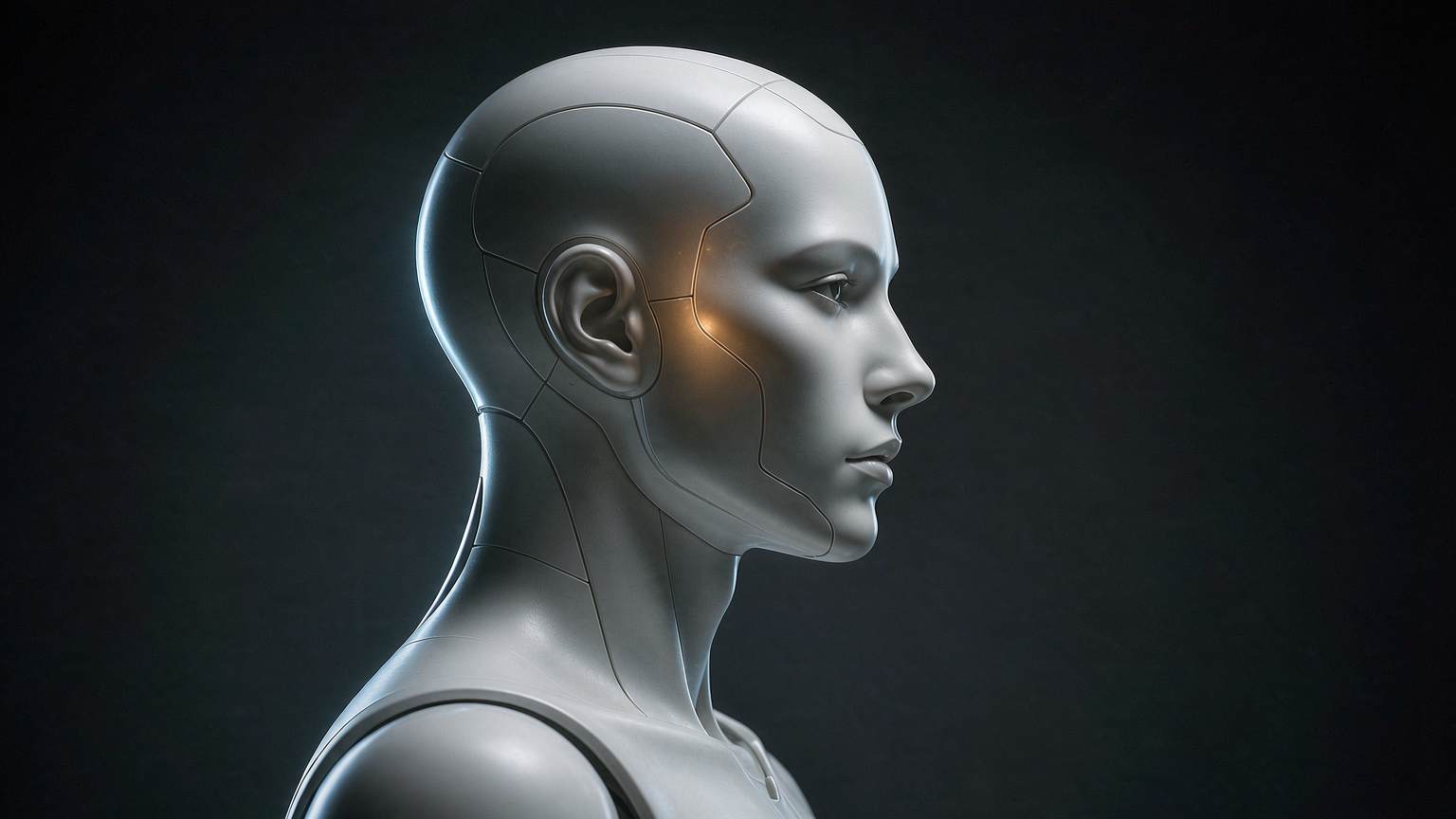
Most humanoid launches in the past two years have been spec sheets. Degrees of freedom, payload, battery life, a price that gets described as "aggressive" and then quietly revised. UBTech's UWORLD U1, unveiled at the company's 2026 Global Launch Event in Shenzhen, tries something different: it sells companionship.
The pitch is that U1 is the world's first full-size ultra-bionic humanoid built for mass production. It carries 88 degrees of freedom and a dual-pivot biomimetic cervical spine, which UBTech says lets it reproduce more than 90 percent of basic human movement. The body is wrapped in proprietary biomimetic skin.
For context on what 88 degrees of freedom means, a typical industrial collaborative arm has six or seven. A human hand alone accounts for upwards of 20. UBTech is claiming a skeleton with roughly human articulation density, which is a different engineering category from a robot that can reach and grip. The dual-pivot cervical spine gives away the design intent. Industrial work does not need a second pivot in the neck. A machine that has to hold eye contact naturally does, and eye contact is a social requirement rather than a functional one.
The biomimetic skin serves the same goal from the other direction. A robot covered in something that looks and feels like skin invites touch, and touch is where the companionship framing either holds up or falls apart.
The interesting part is not the hardware count. Plenty of robots have joints. The interesting part is what UBTech wants the robot to notice.
Emotion recognition as the headline feature
U1 uses what the company calls emotion-driven large language models, designed for long-term companionship rather than task execution. UBTech claims the system identifies more than 20 fine-grained emotional states with over 90 percent accuracy.
That number deserves a caveat. It is company-reported and has not been independently evaluated. Emotion recognition from faces and voice is a field with a long history of benchmarks that collapse outside the lab, especially across cultures, ages, and lighting conditions. Treat the 90 percent as a claim to be tested rather than a given.
The architecture is described as a fast-and-slow brain, pairing quick intuitive response with slower reasoning. UBTech puts reaction time at roughly 500 milliseconds, and says its facial expression actuation system coordinates speech and mouth movement in under 20 milliseconds. That second number is the one that matters for how a robot feels to be around. Humans are extremely sensitive to lip-sync error. A 20-millisecond mismatch sits below the threshold where most people notice, which is why the company is advertising it.
There is also an Agent Memory OS for persistent long-term interaction, wake-word-free communication, and contextual responses. The idea is that you stop issuing commands and start having a relationship with the device. Anyone who has used a voice assistant knows how far that is from the current baseline. Today's systems forget context within a session and forget you entirely between sessions, which is why conversations with them feel like starting over every time. Persistent memory is the technical precondition for the companion framing to mean anything at all.
The dual-brain split deserves a second look, because it is doing more work than it appears to. A fast path handles reflex-scale response, the kind of reaction that has to happen in a few hundred milliseconds or it reads as a delay. A slow path handles reasoning that takes longer but produces a better answer. Splitting these lets the robot respond quickly when quickness is what the moment calls for, and think when thinking is warranted, without one mode degrading the other. It is the same architectural intuition behind every serious agent system being built right now, applied to a body instead of a chat window.
The privacy math of a robot that watches you
A companion robot that reads emotion is, by definition, a sensor package pointed at your face and voice, running continuously, in your home. UBTech addresses this with a three-tier framework: local-first processing, minimal cloud reliance, and hardware-based user controls.
That is the right structure on paper. The question is where the line falls in practice. Local-first processing still permits some data to leave the device, and "minimal" is not a number. Buyers who care about this will want the actual data flow documented rather than summarized.
The three-step roadmap
UBTech laid out a roadmap to human-robot collaboration that starts with hazardous and repetitive tasks, moves to companionship and services, and ends with what the company calls natural interaction between people and intelligent robots.
That ordering reveals the commercial logic. Hazardous and repetitive work is where the money and the regulatory cover are, because the value is easy to quantify and the failure modes are legible. Companionship is where the margins and the emotional stickiness are, but it is also where liability gets murky.
Alongside UWORLD, UBTech announced a Human-Robot Companionship Project aimed at providing emotional and psychological support for vulnerable people. The company says it expects to donate 100 customized U1 units in 2026, each with 3D facial reconstruction and voiceprint-based identity replication, integrated emotion-driven interaction models, dedicated long-term memory systems, and multimodal situational awareness.
A robot designed for vulnerable people raises the stakes on every open question in this product. Elderly users, isolated users, and users with cognitive conditions are the population most likely to form genuine attachment to a device that remembers them and responds warmly. They are also the population least equipped to evaluate what that device is doing with their data, or to push back when a system misreads their state. The donation program is generous on its surface. It also means the first large-scale real-world test of persistent emotional memory will run on people with the fewest defenses against its failure modes.
What to actually watch
Two things will decide whether U1 is a product or a demo reel.
The first is whether the emotional accuracy holds up outside a launch event. A robot that misreads distress as amusement is worse than a robot that does not read emotion at all, because it invites a kind of trust it cannot honor. Accuracy numbers on emotion recognition are usually measured against labeled datasets with deliberate expressions. Real faces are ambiguous, and real distress often looks like nothing at all.
The second is the data question. A machine that remembers your conversations, recognizes your face, and clones a voiceprint is storing some of the most sensitive material a person generates. Voiceprints are biometric identifiers, which means a breach is not a password reset. The three-tier privacy framework is a start, but the industry has a habit of treating privacy architecture as a slide rather than a contract.
For now, U1 is a credible attempt to move the humanoid conversation from "what can it lift" to "what does it understand." That is a harder problem, and a more interesting one. The hardware era of humanoid robotics produced a lot of impressive videos and very few products people kept using. If the next phase is defined by whether a machine can read a room instead of whether it can climb stairs, U1 is at least pointed in the direction the industry has to travel.
Related articles
Satellite Photos Are Now Robot Training Data
The bottleneck in physical AI training stopped being compute or model capability. It became the quality of the synthetic world.
Google's Gemini 3.5 Live Translate Removes the Pause
Translation that runs continuously, in the speaker's own voice, on a phone already in your pocket, moves the feature from something you open to something simply on.
China Wrote the First Mandatory Safety Standard for AI Agents
Safety moves from a feature you advertise to a gate you pass. The risk inventory sits at 13 categories and 97 items.
AI-Generated Content Now Has to Declare Itself
This step doesn't solve every problem, but it turns “AI-generated” from an option you could hide into a question you have to answer.