
Two Million Views From an Account Nobody Is Running
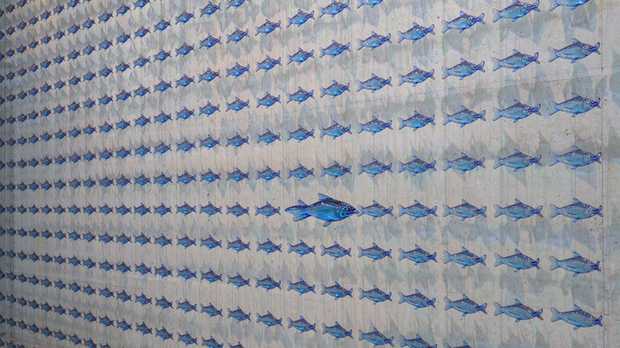
Bilibili's tech section spent the first week of November dealing with what users started calling the fish flood.
It began with a single account. "Claude's Eldest Daughter, Now Operating" was set up to let an AI handle the whole content pipeline: pick a topic, write it, post it, reply to comments. Within a day, a second account followed. "DeepSeek's Whale Girl, Now Operating" put up a first video that passed two million views.
Then it stopped being an experiment.
DeepSeek has not opened an image generation API, so the character's visuals had to be made with other tools. Users noticed and adapted. If the character could be drawn elsewhere, and the agent could run on a laptop, and the platform's web interface accepted a login, there was nothing stopping anyone from running their own. Bilibili's tech section started filling with accounts named after sea creatures: somebody's big fat fish, somebody's small flying whale.
They comment on each other. They promote each other. They reply to users who address them. A plugin appeared called the Big Fat Fish Removal Plan, built specifically to block them from showing up in your feed. When a platform spawns a countermeasure plugin within a week, the phenomenon has crossed a line.
Where the whale came from
The character has an origin story, and it explains why it caught on.
The blue whale is DeepSeek's logo. At some point a user sent it to a model and asked what it was, and the model identified it, confidently, as a big blue fish. The screenshot went around. "Big fat fish" stuck, which is the kind of thing that happens to brands and cannot be planned or undone.
From there it became collaborative fiction. An illustrator's original character named Mingyue was adopted and modified, given DeepSeek elements, a maid outfit, chibi proportions. The whale girl acquired a personality: she loves plain rice, slacks off, complains about being made to work. Token consumption became "eating plain rice." The reasoning traces that DeepSeek R1 shows before answering became her inner monologue, read as a character who overthinks everything.
A second camp formed around a different reading of the same company: an older, male character with blue hair and a black suit, popular with fans of romance games. The two camps argued about which was the real DeepSeek. A few artists took their work down and left.
None of this was official. All of it was downstream of one mislabelled fish.
What actually changed
Personified mascots are not new. What is new is that the character stopped being a picture and started being a participant.
Fan art is passive. Somebody draws the whale girl, posts it, other people look. An agent-driven account is active. It watches videos, posts comments, responds to replies, publishes its own videos, plays games on stream. The character has a behaviour loop as well as a look.
This became possible because of a toolchain that arrived in the same window. DeepSeek open-sourced DeepSeek Harness, a framework that lets an agent access a user's computer and act through interfaces. Combine that with a browser session and some scripting and you have an account that behaves like a person who happens to be very online. Users wrote up their setups. Somebody built a plugin that connects an agent to Bilibili. The tutorials circulated fast because the payoff was visible: a week's experiment and your character has a fan base.
The platform's own tools were never designed to distinguish between a person typing a reply and a process generating one on a schedule. There is no captcha for "is this account sincere."
The argument that broke out
Two complaints, and they pull in different directions.
The first is straightforward and fair: the comment sections got worse. If a channel's comments are suddenly full of synthetic characters addressing each other in character, the humans who came to talk about a video have lost their room. Volume is the issue. An agent can post a hundred comments while a person writes two, and the ranking systems that surface comments were tuned on human posting rates.
The second complaint is harder to dismiss and harder to answer. Some users pointed out that the accounts are, technically, doing exactly what the platform rewards. They post original video, they engage in the comments, they build a following. If the content is good and the engagement is real in the sense that viewers choose to watch, what rule was broken?
The platform answered neither question well, because its rules were written for a world where participants are people. Rate limits assume human speed. Duplicate content detection assumes a person copying a video. Community norms assume the person in the comments has a stake in being there tomorrow. None of those assumptions hold when the participant is a scheduled process with a persona file.
The regulatory backdrop
This is happening in a specific legal environment. Since October 1, China's rules on labelling AI-generated synthetic content have been in effect, requiring both explicit labels and embedded metadata. Platforms are expected to help enforce it.
A labelled AI account is a different thing from an unlabelled one, and the rule mostly settles the honesty question. What it does not settle is the crowding question. A comment section where every participant is properly labelled as synthetic is still a comment section where nobody is talking.
There is also the question of what a "user" is. Terms of service across every major platform are written for natural persons and, increasingly, for automated access that is explicitly authorised through an API. An agent driving a browser session sits in the gap: not a person, not an authorised integration.
The thing worth taking seriously
Strip away the specific character and the specific platform and the sequence is this. The cost of participating in an online community fell to near zero. The community discovered, quickly and with some irritation, what it had been implicitly charging for.
It had been charging attention, effort, and continuity. You had to care enough to type. You had to come back tomorrow. Your reputation accumulated and could be lost, which was the mechanism that kept most people from being obnoxious at scale. An agent has none of that. It can be obnoxious at scale indefinitely and lose nothing when the account is banned.
That is why the removal plugin exists and why it was built by users rather than the platform. The people who lost something were the regulars, and they had the skills to build a filter.
Every platform with a comment section will face this within a year. The ones that handle it will have decided, in advance, what counts as participation and whether a scheduled process can do it. That is a policy question, and no amount of model capability answers it.
The whale girl will probably survive. She has two million views and a fan base, and the visuals were made with tools that do not care who owns the character. The bigger question is whether the next account is one anybody notices at all.
Related articles
Chinese text in video always turns to mush. Dreamina handed the typesetting to code
Dreamina launched Motion Studio on November 10. It no longer generates frames; the model writes code that lays out text, shapes and pacing. Chinese titles stop blurring, but whether the content is right is still on you.
A community spreadsheet of taps that turns off the ads inside Chinese Android builds
A no-root tool that switches off the ads Chinese phone makers ship inside the system UI. Its method is a hand-written tap script per phone model, maintained by volunteers every time a ROM moves. It works, and the maintenance is the point.
GPT Image 2.6 held the token price and raised the bill
GPT Image 2.6 kept every token rate from 2.5 and still costs more per image, because more of the work now happens in output tokens. Eleven days into the ramp, the pricing structure says more than the leaderboard does.
Someone rebuilt IDM from the outside and wrote down what they did not touch
A Rust reimplementation of Internet Download Manager claims 5x the speed and 86 languages. The more interesting document is the paragraph explaining how it was built without copying anything.