
Three Deals in Three Days Moved Nvidia From Default to One Option Among Several

On October 2, Amazon and Synopsys announced a multi-year partnership worth more than $1 billion that gives Amazon exclusive licenses to Synopsys' AI-accelerated chip design tools. The same day, reports described OpenAI deploying Jalapeno ASIC processors alongside AMD EPYC Turin CPUs in rack-scale configurations, bypassing Nvidia's high-performance agentic chips. On October 3, General Compute signed a multi-year agreement to put Cerebras' wafer-scale processors into its GPU cloud.
Three separate companies, three different routes, one direction. The largest buyers of AI compute are building or buying alternatives to the vendor that has supplied almost all of it.
None of this means Nvidia is losing. It means the market is no longer single-sourced, and that is a different kind of risk.
Amazon buys the tooling behind the chip
The Synopsys deal is the least dramatic and possibly the most consequential. Amazon already designs its own silicon, including the Trainium and Inferentia lines. Owning the design tools is a step further upstream. Chip design software determines how quickly a company can iterate, and exclusive access to AI-accelerated design tools shortens the loop between an idea and a testable part.
Exclusivity is the key word. If Amazon holds licenses that competitors cannot get, its internal design cycles compound faster than theirs. That advantage is not about any single chip. It is about how many generations Amazon can produce in the time a rival produces one.
There is a cost to this approach. Designing accelerators in house means maintaining a software stack, a compiler, and a set of libraries that developers have to adopt. Nvidia's real moat has never been the silicon alone. It is CUDA, the years of tooling built on top of it, and the habit among engineers of reaching for Nvidia first. Amazon's $1 billion buys design speed. It does not buy that habit.
OpenAI bypasses the top tier on purpose
OpenAI's Jalapeno deployment is more pointed. Pairing custom ASICs with AMD EPYC Turin CPUs at rack scale means OpenAI is not waiting for Nvidia's next high-performance part. It is assembling inference capacity from components it can source on its own terms.
For inference, that is a reasonable bet. Training a frontier model demands the fastest interconnect and the largest memory pools, which is where Nvidia's top parts earn their price. Serving a finished model to millions of users is a different workload, and it rewards cost per token more than raw peak performance. If a custom ASIC plus a general-purpose CPU can serve the same traffic more cheaply, the savings scale with volume.
OpenAI has both the traffic and the engineering headcount to justify the investment. It also has a reason beyond cost. Every dependency on a single supplier hands that supplier influence, and no lab wants its roadmap set by someone else's allocation decisions.
Cerebras finds a distribution channel
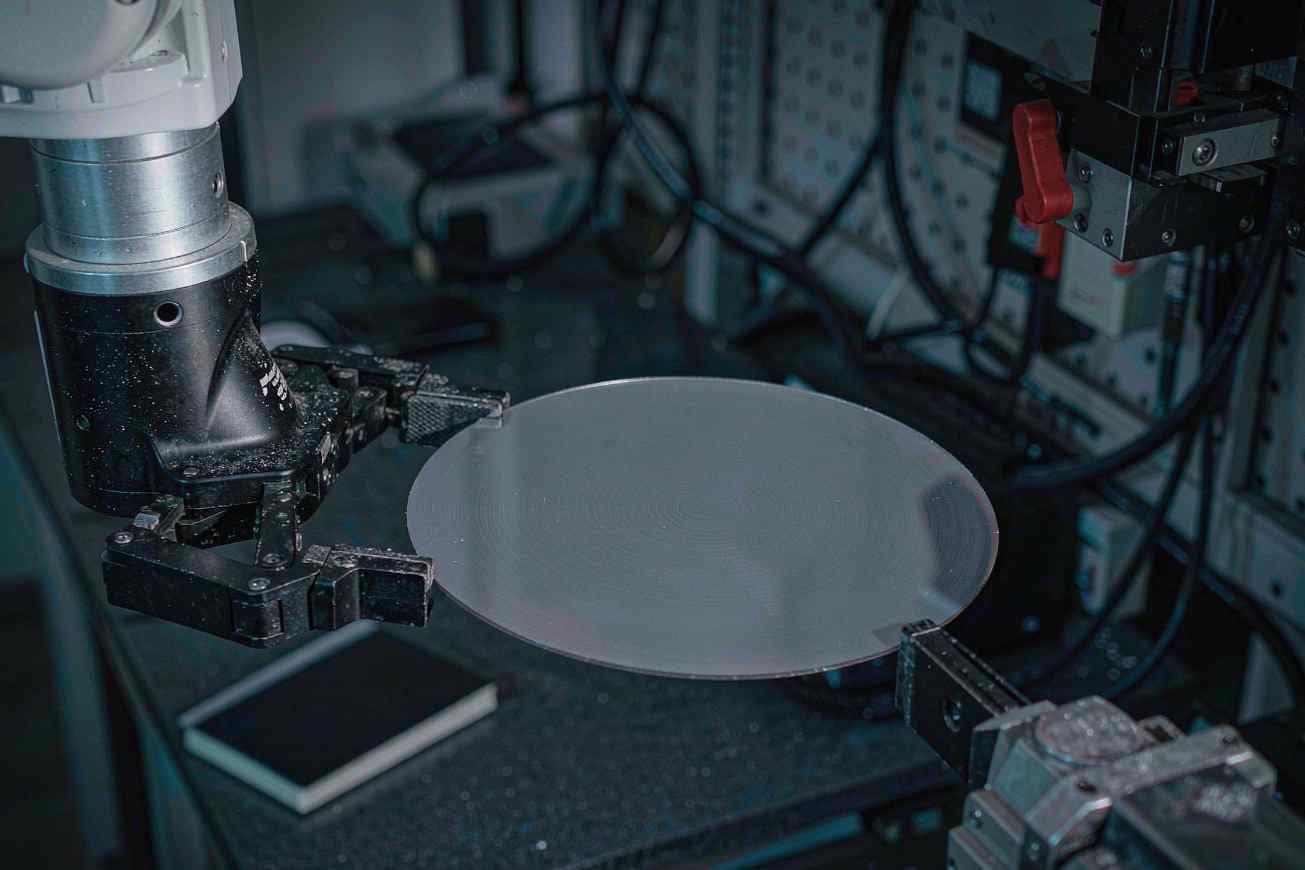
The General Compute agreement is the clearest sign that alternatives are moving from research to retail. Cerebras builds wafer-scale processors, which are genuinely different from a rack of GPUs. Putting them into a GPU cloud platform means customers who already rent compute can select a Cerebras instance the way they select any other machine type.
That matters because adoption has a distribution problem. A better accelerator with no way to rent it by the hour is a research project. A worse accelerator that appears in a dropdown menu is a business. General Compute is supplying the dropdown.
Whether wafer-scale silicon wins on real workloads is still open. The point is that inference capacity no longer has to come from one vendor's product line to reach customers.
Why the software moat is harder to buy
Every company pursuing an alternative accelerator runs into the same wall, and it is not made of silicon. Nvidia's advantage rests on a stack of libraries, compilers, and debugging tools that developers already know. Rewriting a training script for a new accelerator is a weekend task. Rewriting an entire production system, retraining a team, and accepting a period of worse performance is a decision that has to be justified to someone.
That is why the three deals focus on different layers. Amazon is buying design tooling, which reduces the cost of producing parts. OpenAI is deploying inference silicon, where the software surface is narrower than training. General Compute is adding a menu item, so customers can try an alternative without committing to a migration.
The most likely path for challengers is not to replace the incumbent for training. It is to win inference, where workloads are more standardized and the cost per token is easier to measure. Once a large volume of inference runs on alternatives, the tooling around them improves, and the gap narrows for the next generation.
There is a useful historical parallel. Linux did not displace Unix on the desktop, and it did not need to. It won servers, where the workload was standardized and the buyer cared about cost per unit of work. A challenger ecosystem only needs one workload category to establish itself before it can grow into the others.
The pattern is heterogeneous, not anti-Nvidia
Put the three moves together and the strategy is not to replace Nvidia. It is to stop depending on a single supply curve. Amazon wants design velocity. OpenAI wants inference economics. General Compute wants a differentiated menu. Each buyer is optimizing for a different constraint, and none of them is trying to win a benchmark.
That is how mature compute markets behave. Mainframes, x86, and eventually mobile all fragmented as volume grew and buyers gained bargaining power. The AI accelerator market has reached that point, and the fragmentation is showing up in procurement rather than in product announcements.
For Nvidia the implication is not lost share tomorrow. It is that prices and allocations will be negotiated rather than accepted. When a customer can credibly say it has a working alternative, the conversation changes.
What to watch
Whether Amazon's design tools produce parts that outside developers want to use. Exclusivity helps Amazon internally. A real alternative needs an external ecosystem, and that requires documentation, compilers, and patience.
Whether OpenAI's Jalapeno racks handle production traffic at the reliability its users expect. Custom silicon is easy to announce and hard to operate. A single high-profile outage would set the alternative strategy back a year.
Whether other clouds follow General Compute and list non-GPU accelerators. Distribution is the bottleneck for every challenger, and each additional storefront makes the next one easier.
The interesting detail is the timing. These three deals landed within about 72 hours of each other, from companies that do not coordinate. When independent buyers reach the same conclusion in the same week, the conclusion usually reflects a real change in the underlying conditions rather than a coincidence.
Compute procurement just became a portfolio decision, which is a quieter change than any single chip launch and one that will outlast the next generation of products.
Related articles
The Video Model Leaderboard Nobody Markets: Where the Requests Actually Go
Every week brings a new video generation ranking, and almost all of them are built the same way.
Ai2 Open-Sourced the Training Stack, Not Another Set of Weights
Weights are easy to give away and hard to learn from.
Alibaba's Qwen3.8-Max Claims It Can Code by Itself for a Fortnight
Parameter counts stopped being news a while ago. Twelve days is the number worth examining.
PixelUMM Throws Out the Two Components Every Visual AI Model Depends On
Pixel-level diffusion has been proposed before and has repeatedly run into compute.