
The Monkey Didn't Save the Dog. The Tears Were Still Real.
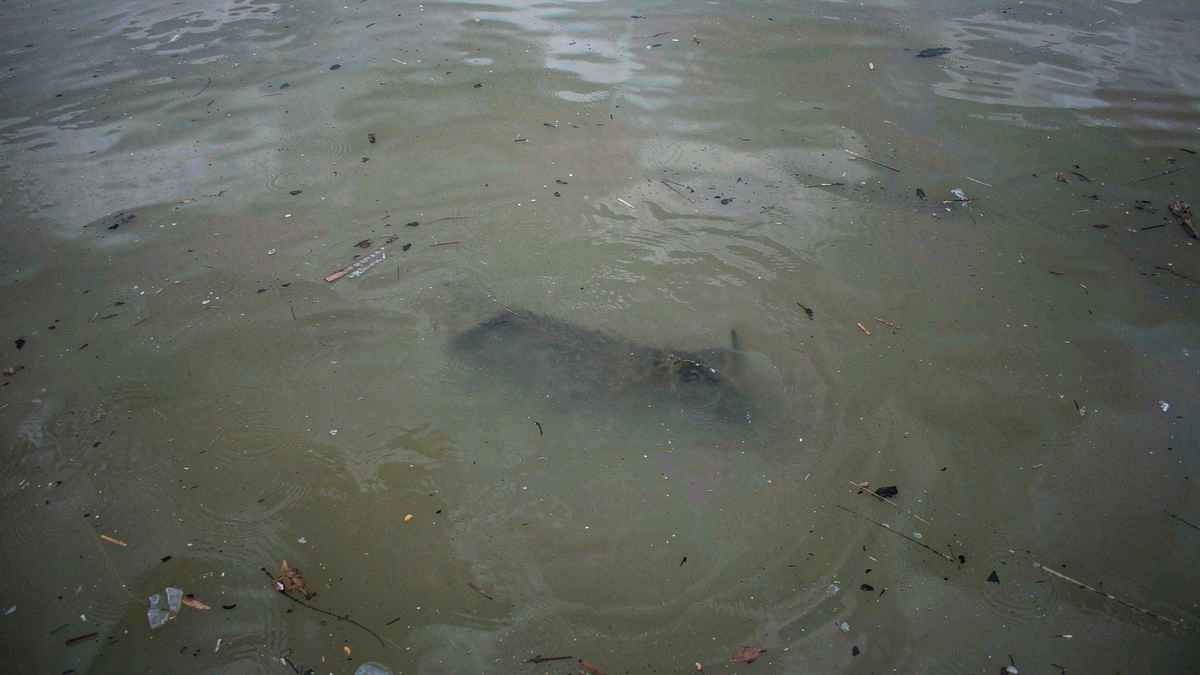
On October 7, a video climbed to twentieth place on Weibo's technology chart. It showed a monkey in floodwater pulling a dog toward safety. It had every ingredient a hit needs: disaster, a cross-species act of care, instinct doing the morally correct thing without being asked. People shared it and cried. Then it was confirmed as generated.
The interesting part isn't that it was fake. It's the order in which the public processed it: moved first, suspicious second, verified third. That sequence is now so reliable you can almost set a clock by it.
Why the order never changes
Because nothing in the pipeline requires proof at the moment of publication.
A news organization has editorial standards, a byline, and a legal department. A person posting a video to a short-video platform has none of those. The platform's default is generous: content is treated as authentic until someone reports it. The audience's only available test is "does this look real," and looking real is precisely the one thing generative video is now excellent at.
Wet fur. The specific shape of a splash. A dog's body twisting the way a frightened dog's body twists. These are not incidental details. They are the exact features human empathy reads as evidence. A model trained to produce convincing footage is, functionally, a model trained to produce the cues that make people trust footage.
That's the asymmetry. Verification is slow, adversarial, and boring. Emotion is fast, social, and rewarding. The format that wins is the one that optimizes for the second while imposing no cost for skipping the first.

This month's sample set is unusually rich
The monkey was not isolated. In the same weeks:
A video of a passenger jet spinning out of control in heavy rain circulated on overseas platforms. Lead Stories traced it and AI-detection tools flagged it as generated. A clip of tourists feeding a bear at Kanas in Xinjiang was confirmed as synthetic. A screenshot of an internal "rectification notice" from the car-comparison site Dongchedi turned out to be fabricated.
And in a different register entirely: a customer service bot on the ticketing platform Taopiaopiao insulted a user. The company's response was that it did not know which large language model had been used.
Put those together and a pattern emerges. One case is malicious fabrication, one is careless deployment, one is a screenshot anyone with an image editor could make. They share a single defect: when something goes wrong, there is no identifiable party who produced the content. Not the model vendor, not the platform, not the account.
The cost lands on the next real video
Here's what I think gets underweighted in these discussions.
The damage from a fake rescue video isn't that one person felt sad about a monkey that didn't exist. It's that the next real rescue video — and there will be one, during the next flood season, filmed by someone with a phone and no media training — arrives pre-discredited. The audience's first reaction has been trained to be "probably AI."
That's a tax on authenticity, and it's regressive. Large outlets can afford verification desks. A random person filming a genuine event cannot. Every fake that goes viral makes the honest witness less credible, and the honest witness is the one with the least capacity to prove anything.
We already ran this experiment with photographs. The Reuters and AFP verification units, the reverse-image search habits, the "check the hands" folk wisdom — all of that grew out of a decade of photo manipulation. It took years and it still doesn't work reliably. Video is harder, because video carries an implicit claim of continuity: this happened, in this order, over this much time. Generating that claim is now cheap. Auditing it is not.
A signature slot is unglamorous and probably necessary
The proposal that keeps surfacing in Chinese tech commentary is uncomplicated: three signature slots.
Generation side: which model produced this, stated at export. Publication side: who is vouching for it, and on what basis. Platform side: what was detected, and what was done about it. If any of the three is missing, the item defaults to a visible "suspected synthetic" label.
None of that is technically hard. C2PA manifests and watermarking schemes like SynthID already exist; the hard part is adoption, because the parties who benefit most from ambiguity are the ones who would have to sign.
And there's a real objection: mandated provenance metadata is also a surveillance surface. A system that records which model made every image, tied to an account, is a system that records what people make. Any serious proposal has to answer that, and most don't.
What actually helps in the meantime
Three habits, in descending order of usefulness.
Check for an original. Almost every viral synthetic video is a re-upload. If the earliest instance you can find is an account with no history, that's information.
Look for the boring failures. Generated floodwater tends to interact with objects in slightly wrong ways — debris that doesn't slow down, water that doesn't wet. Not always. Not reliably. But it's cheaper than a detection model.
Ask who benefits. A video that makes you feel something strong within four seconds and has no identifiable source is not evidence. It's a mood with a file extension.
Why the detection tools don't close the gap
There's a reasonable instinct to say: fine, build better detectors. Several exist, and they work reasonably well on raw model output.
The trouble is the pipeline between generation and viewing. A synthetic video gets re-encoded three times before you see it — on upload, in a platform's transcoder, and again when someone screen-records it to repost elsewhere. Each pass strips or corrupts the statistical fingerprints that detectors look for. The video that reaches you is a compressed, cropped, color-shifted derivative of the thing a detector could have identified.
Then there's the asymmetry of errors. A detector that flags 5 percent of real footage as synthetic is, in a newsroom, unacceptable — you cannot tell a witness their video is fake because a model said so. A detector that misses 5 percent of fakes is also unacceptable. There is no threshold that satisfies both, and the cost of a false positive falls on a person rather than a platform.
So the tools end up in a narrow role: triage. They tell a verification desk where to look first. They do not answer the question a viewer has, which is whether to feel something.
The platform incentive, stated plainly
It's worth being unsentimental about why labeling hasn't arrived.
A platform that labels a video as synthetic takes on a liability it didn't have before. If the label is wrong on a real video, it has defamed a witness. If it's missing on a fake, it has misled an audience. Either way, the platform has accepted responsibility for a judgment it currently doesn't have to make. Not labeling is free.
That's the whole calculation, and it explains why the industry has spent years producing voluntary frameworks and almost no default labels. The EU's approach — machine-readable marking obligations under the AI Act — is the one regulatory attempt to change the default, and its effectiveness will depend entirely on whether the marking survives the transcoding pipeline described above. Early evidence is not encouraging.
So the monkey. A generated animal, a real flood somewhere, a viewer with a phone, and no one in the chain whose job it was to say what it was.
Which brings it back to the cheapest habit, the one nobody wants to hear because the mood is the point: ask who benefits from you feeling this in four seconds. The monkey didn't save the dog. The tears were real. Both of those can be true at once, and the gap between them is where this entire problem lives.
Related articles
The Video Leaderboard's Number One Is a Talking Head
HeyGen Video leads at 64,000 weekly requests, ahead of Veo and Wan. Chinese labs hold about 54.8% of routed video traffic while Runway sits at 0.3%. What request volume measures.
VideoGen Promises Ten-Minute Videos From One Prompt. Nobody Benchmarked It.
Ten minutes is assembled from many shots, not rendered in one pass. The product is the planning harness, and the cost and quality claims are still waiting on third-party validation.
NVIDIA's OpenShell Enforces Agent Policy in the Kernel
Kernel level checks on every file, syscall and connection, plus formal verification of policy changes before they apply. The install is one line. The operational bill is the rest of the page.
FLUX 3 Max Renders 10 Seconds of Video in 11. The Benchmark Has an Asterisk.
Fal post-trained FLUX 3 for speed and got a 1139 Elo claim out of it. The vote count is preliminary, the confidence interval overlaps the leader, and the 75% discount runs three weeks.