
The Actor Is Now a Variable
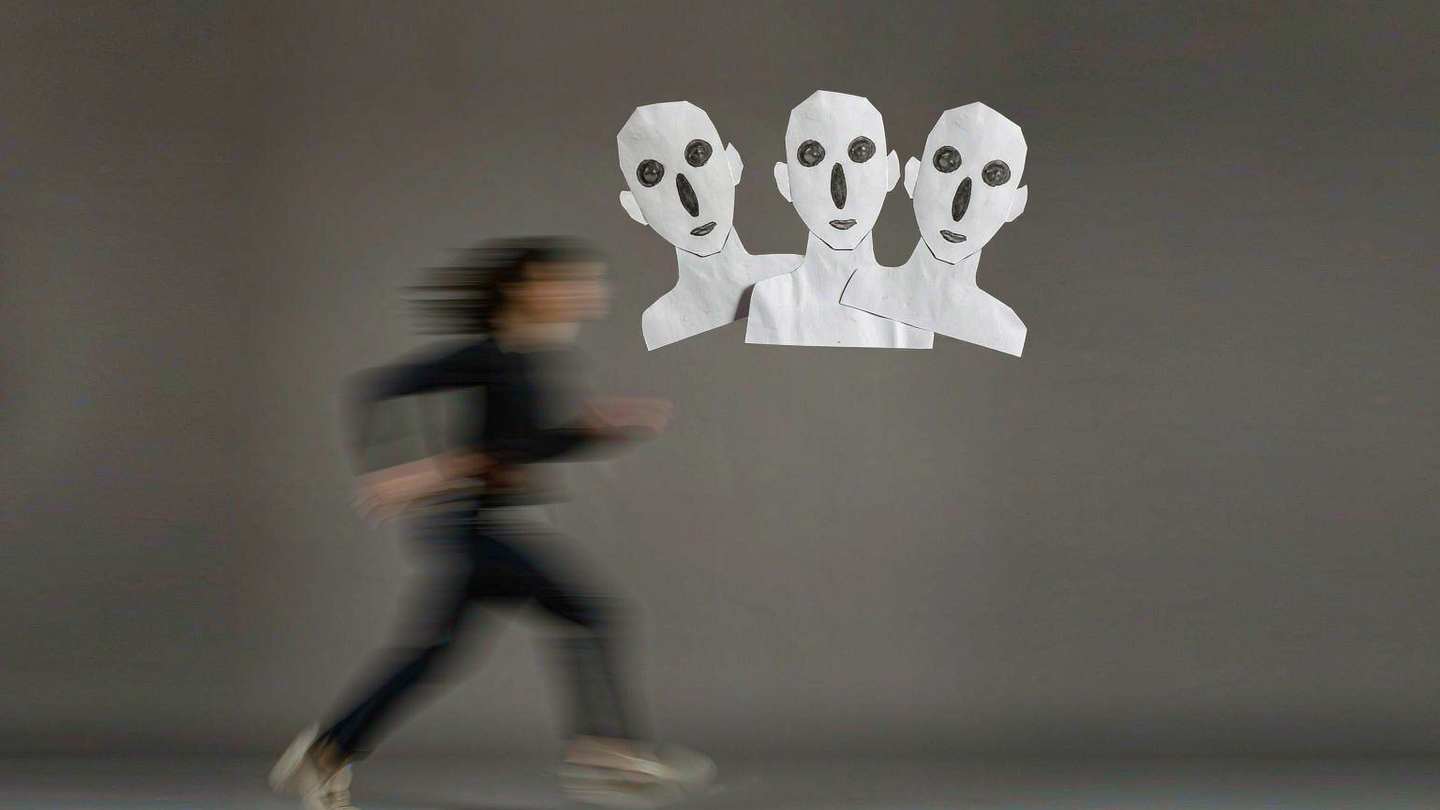
Between October 26 and October 30, four different companies shipped the same idea in four different wrappers: keep the motion, replace the actor.
Runway added Character Swap to App Studio on October 29. You hand it a video, and it swaps the characters or the location — optionally the audio too — while preserving the movement that was already there. The same day, Pollo AI shipped Pollo Motion, which lays your own images or logos onto a reference video of a specific movement. Two days earlier, on October 27, the Chinese tool OiiOii pushed an "asset swap" feature that keeps a source clip's rhythm and shot breakdown while replacing the model, the scene, the product, or the language. And on October 30, DomoAI shipped an MCP connector so you can trigger its video generation from inside Claude or ChatGPT. CapCut announced a ChatGPT plugin on October 25, "coming soon."
Individually these are feature announcements. Together they say something more specific: in the production stack, motion has become the reusable asset and identity has become the variable.
What changes when the actor is a parameter
Think about how a video used to get localized. You shoot it once with one person. To sell the same product in a second market you either shoot again with a local actor, or you dub it, or you run it with subtitles and accept the drop-off. Each of those is a separate budget line and a separate schedule.
Swap tools collapse those into one edit. The performance — the way she picks up the bottle, the half-second pause before the pitch, the way the camera settles. All of it survives. The face, the room, and the language change.
OiiOii's published workflow is the clearest illustration. Take a 13-second clip from a short drama, upload it, and the system decomposes it into structured prompts describing the people, the setting, and the camera move. Then you swap the actor and the language and generate. Their partner write-ups claim three market versions — American, Southeast Asian, Latin American — out of one source clip in about forty minutes, with per-clip cost on batch replication down by as much as 89% in their own tests. Treat those numbers as vendor figures. The workflow itself is the point.
Runway's version is the most conservative, and that is the interesting part
Character Swap sits inside App Studio, which launched three days earlier and does something adjacent: you describe a creative app in plain language and it builds one with Runway's models, your brand assets, and your files, then hosts it. Among the apps Runway showed off that day were Style Out, Precise Edit, Product Shoot, and Table Read.
Swap is deliberately narrow. It does not generate a new performance; it transplants an existing one. The company has not published a separate price for it, and shared apps require a Runway account to open. That combination — narrow capability, no standalone price, bundled into an app-hosting layer — reads like a company that thinks the model is no longer the product.
That instinct is probably right. Once everybody can generate a plausible clip, the differentiator is what you can do to a clip you already trust.
Three things this breaks
Consent gets complicated. If motion is the reusable part, then the person who performed the motion has contributed something valuable — and in most contracts, that contribution is not a licensed asset. A stunt performer, a dancer, an extra who signed a day rate now has their movement baked into a template someone will reuse across four markets. Nobody in these announcements addresses that. It will end up in court somewhere.
Detection gets harder, and labeling gets more important. A swapped clip is not fully synthetic. The physics are real, the timing is real, the shadows were captured. Tools that look for generation artifacts will have less to work with. Which means platform labels — the "AI generated" checkbox — carry more weight than they did a year ago. If you are publishing this stuff, tick the box. It is cheaper than being caught not ticking it.
Brand consistency gets a new failure mode. The reason a swap workflow is attractive is that it preserves an approved creative. The reason it is dangerous is the same: a face that does not match the product's other assets, a room that does not exist in any of your other videos. Batch production of variations makes it very easy to produce forty clips that are each individually fine and collectively incoherent.
What the vendors are actually selling
OiiOii's own marketing is unusually explicit about the use case: e-commerce, performance ads, cross-border selling. Their pitch is not "make better videos," it is "test more markets for less." One creative that already performed in China becomes six local versions you can put in front of six audiences and see which one converts.
Pollo goes the other direction — instead of replacing a person, it pastes your product or logo onto a movement you liked, which is the classic "we have a great clip but the wrong product in it" problem.
DomoAI's MCP connector is a different kind of move. It is not about quality at all; it is about removing the step where you leave the conversation. If video generation is callable from Claude or ChatGPT, then the tool becomes a function inside an agent's workflow rather than a website you visit. CapCut's announced plugin points the same way.
How to test this without wasting a week
Pick one clip you have already published and that performed well. Something with a clear physical action — picking up a product, walking into frame, turning to camera. Run it through two swap tools with the same replacement photo, and compare three things: whether the hands survive, whether the timing holds, and whether the audio stays in sync.
Hands and timing are where this category still fails visibly. If a tool gets both right, it is worth building a workflow around. If it gets one right, it is worth using for wide shots only.
And keep the source. The one thing that is genuinely new here is that a good performance is now a reusable file. That is worth archiving properly — with the release, the consent status, and the terms under which you can reuse it.
The archive problem
If a good performance is now a reusable file, someone has to keep the library. That is a new job in most small studios, and it is the one that decides whether this workflow pays off in six months or collapses into a folder of forty unlabeled clips.
What needs to travel with each source clip: the original shoot date, who performed the motion, what consent covers (inside the original campaign only, or beyond), which platforms it has already run on, and what the approved framing was. Without the consent field you cannot safely reuse it, and without the framing note you will crop it differently and wonder why the result looks off.
The teams that get value from swap tooling will be the ones that treat the source clip as an asset with a record attached, not as a file with a name. That is unglamorous work and it is where the money is.
The short version
For about five years, the question in AI video was "can it generate this shot?" That question is mostly answered for short, simple shots. The question that replaced it, as of the last week of October, is "what can I keep from a shot I already have?"
Motion, it turns out. Everything else is now a slot you can fill.
Related articles
AMD Got 19 Percent for Being the Other Option
Money did not leave AI. It left the one name with a governance problem and went to the two without one.
The $99 Billion Loop Nvidia Built Around Its Own Customers
Selling shovels is a good business. Lending money to the people buying shovels is a different one.
The 74 Percent Gross Margin Has a Shelf Life
Three forces arrive in the same four quarters, and each one costs about $3 billion per point.
175,000 Signatures Will Not Put Him Back. Here Is What Would.
The longer the campaign takes to win, the weaker its case becomes. That is the trap built into it.