
Ten Ancient Figures Grab the Open Mic and Rap: This AI Track Pulled a Million Likes in a Day

Over the past couple of days, scrolling Douyin and WeChat Channels, it has been hard to dodge one image: ten figures from Chinese history standing on a comedy open-mic stage, crowded around a single microphone, stepping up one after another to rap.
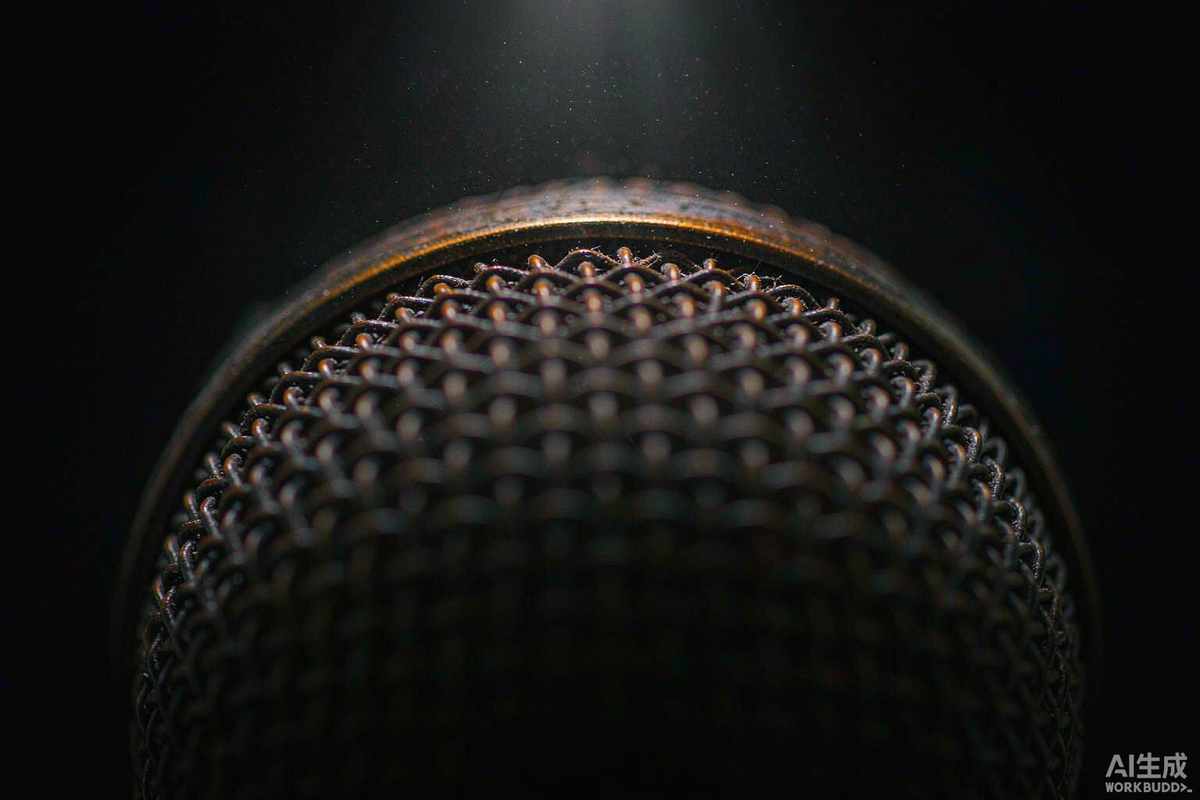
Du Fu, Su Shi, Liu Bang, Xiang Yu, Goujian, Sun Wukong, Cao Cao, Li Bai, Zhuge Liang, Sima Yi. No dragon robes, no battlefields, no smoke effects. Just one overhead light, one mic — one person finishes and steps aside, the next takes their place.
The film is called 《过来人》 (Been There). From October 13 to 15 it spread simultaneously across Weibo, Douyin and WeChat Channels, passing a million likes within a day of release, and netizens tagged it "the hottest AI song of 2026." The most-liked comment runs six characters: "It sang its way into my heart."
The first thing it gets right: it drags the ancients off their pedestals
When AI takes on historical figures, the usual move is to pile on the grandeur. Iron horses, towering palaces, robes billowing in the wind. It is satisfying technically and hollow emotionally, because the audience can tell at a glance that it is effects.
《过来人》 goes the other way. It sets the whole thing on a small stage that looks like an open mic, and lets historical figures talk, in the role of people who have "been there," about what contemporary people are up against.
Du Fu no longer only says "the nation is broken, the mountains and rivers remain." He talks about the indignity of still renting a place in Chang'an at forty to make a living. Su Shi does not do "the great river flows east." He talks about being exiled to Huangzhou at forty-three, living off the land, and still having to keep a lamp lit for himself. Liu Bang was a low-level clerk at forty-seven, and neither family nor friends thought much of him.
The clever part of this setup is what it sidesteps — the things AI is worst at, complex relationships and subtle micro-expressions — and puts all the weight on dialogue and rhythm. Those two happen to be exactly what a human can fully control.
The real value is that one line
The line most screenshotted and reposted is: "I am not here to teach you, I am here to walk this stretch with you. The nights you stayed up, the words you swallowed, the fights you did not win — I have had a share of all of them."
That line has nothing to do with AI. It is purely hand-written, and written precisely: no lecturing, no teaching, no pep talk — just acknowledgment.
Viewers are moved because the line names a specific kind of exhaustion. Mortgages, workplaces, the things you still have not pulled off at your age. People a thousand years ago faced the same things — the analogy is not new, but paired with the "been there" identity, it suddenly lands.
So the core competitiveness of this film is the copy, not the model. That matters, because it decides whether this kind of content can be replicated.
The creator is not a tech guy
The lead creator, Wang Kunzhe, is from Wuhan. He joined Wuhan Radio and Television in 2013, spent three years as a director, then quit and opened his own studio. His 《此心安处是江城》 (Where the Heart Is at Peace) and 《琴键上的江湖》 (Jianghu on the Keys) were selected for the National Photographic Art Exhibition. After moving into AIGC he also made 《千年跑团》 (A Thousand-Year Run Club), which puts Li Bai on the Wuhan Marathon course and has Yue Fei sing "eight thousand li of road, breaking through the bottleneck of hitting the wall" just before the finish line.
That resume says one thing: he did not learn AI first and then go looking for content. He had more than a decade of training in storytelling first, and then found that AI could put the pictures in his head on screen.
His own summary is blunt: "Technique is the surface; the human heart is the core."
It sounds like a slogan, but applied to this film it is accurate. Ten ancients, one open mic, one stretch of rap — the idea holds up under any technical conditions. AI only turned "get ten ancients to actually stand on stage and sing" from impossible into a weekend's work.
Where is the bar in AI music
Over the past year the volume of AI music has gotten absurd. Tens of thousands of new tracks pour onto platforms every day, and the vast majority get swiped away within the first fifteen seconds. The reason is not complicated: melodies can be generated, voices can be cloned, but "why should this song exist" is a question the model cannot answer.
《过来人》 offers one kind of answer: give the song a specific emotional job. Not "make a good-sounding song," but "say it out loud for a group of people who are too embarrassed to admit they are tired."
Technically there are a few choices worth noting too. The ten voices have to be distinguishable, or it sounds like one person changing costumes; the rap diction has to be clear, because the audience is listening for information, not atmosphere; lip movement has to match the rhythm, because once lip-sync drifts under period costume, absurdity instantly overpowers empathy. If those details had been done badly, a million likes would never have happened.
But it is not easy to copy
In the past two days a wave of copycats has already appeared: other historical figures, other genres, other stages. Most are doing middling numbers.
The reason is the same old problem. AI has pushed the cost of "making it" close to zero, so "what to make" becomes the only barrier. When anyone can generate ten ancients rapping in an afternoon, the only thing left deciding success is whether that one line is written well.
That also explains why this film spread like traditional content rather than like a tech demo. It was forwarded in WeChat Moments and on WeChat Channels first, mostly with captions like "I cried listening to this" and "I only got it the second time," and only then did people turn around and ask: what was this made with?
The order matters. Moved by the content first, curious about the tool second — that is how a content product should work. The reverse, showing the tool first and begging for emotion after, usually fails on both counts.
As for those ten ancients, they probably never imagined that a thousand years later they would be standing on an open-mic stage, rapping a verse for a crowd of people working overtime. But then again, the lines they wrote back then were always doing exactly that.
Related articles
The Video Leaderboard's Number One Is a Talking Head
HeyGen Video leads at 64,000 weekly requests, ahead of Veo and Wan. Chinese labs hold about 54.8% of routed video traffic while Runway sits at 0.3%. What request volume measures.
VideoGen Promises Ten-Minute Videos From One Prompt. Nobody Benchmarked It.
Ten minutes is assembled from many shots, not rendered in one pass. The product is the planning harness, and the cost and quality claims are still waiting on third-party validation.
NVIDIA's OpenShell Enforces Agent Policy in the Kernel
Kernel level checks on every file, syscall and connection, plus formal verification of policy changes before they apply. The install is one line. The operational bill is the rest of the page.
FLUX 3 Max Renders 10 Seconds of Video in 11. The Benchmark Has an Asterisk.
Fal post-trained FLUX 3 for speed and got a 1139 Elo claim out of it. The vote count is preliminary, the confidence interval overlaps the leader, and the 75% discount runs three weeks.