
Put Your Actor in Someone Else's Shot, on Your Own GPU
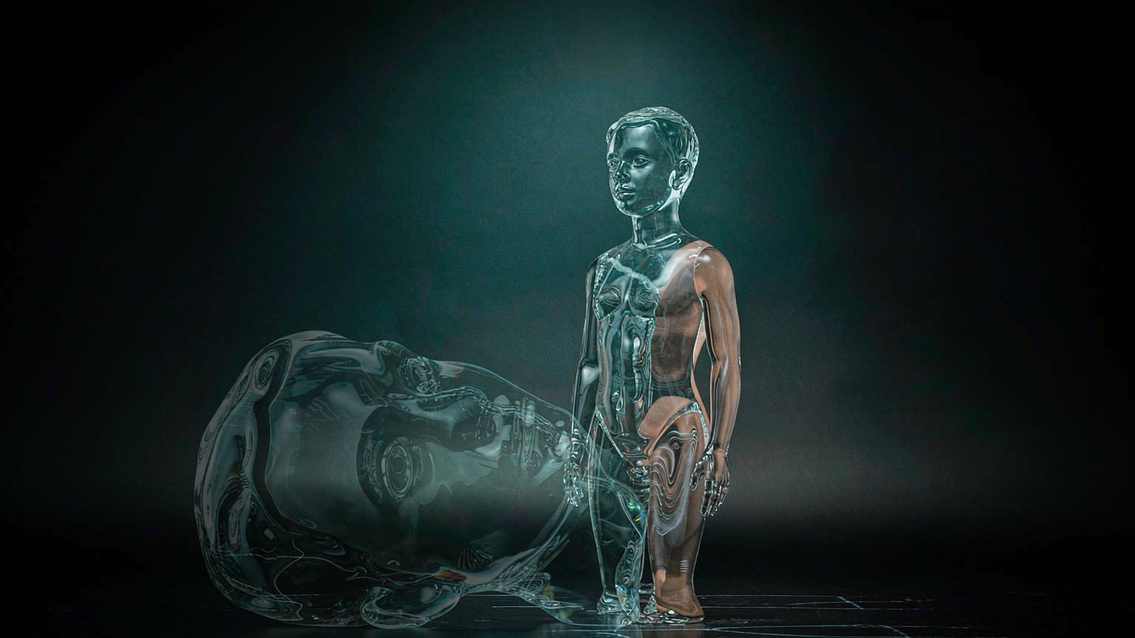
The demo that sells Openjutsu is simple. Drop in a video, drop in a photo of a person, press Generate, and the main subject in the clip becomes the person in the photo.
The sentence that matters is the next one: the camera, the cuts, the motion and the soundtrack stay.
That constraint is what separates a character swap from a video generator. You are not asking a model to imagine a scene. You are asking it to keep a shot that already exists, with its timing and its sound, and replace the person inside it. Which means every hard problem is a consistency problem, and every consistency problem is a tracking problem.
Three models, one pipeline
Openjutsu is a Next.js front end over a ComfyUI workflow, built with @comfyorg/sdk and following Comfy's own comfy-reshoot reference app. Underneath, it uses three open models for three different jobs.
MiniMax H3 generates the video. SAM 3.1 tracks people and objects through the clip. Qwen3-VL 8B looks at pictures and video frames and writes the descriptions that become prompts. Everything runs on open weights on your own hardware.
The separation is the design. A single model asked to "replace this person but keep everything else" will happily redraw the room. Splitting the job means the tracker decides what changes, the describer decides what the change should look like, and the generator only fills the region it was handed.
Four modes, in order of ambition
Simple motion transfer replaces the one person who fills most of the frame. One character in, one character out, and the app runs the single-swap workflow.
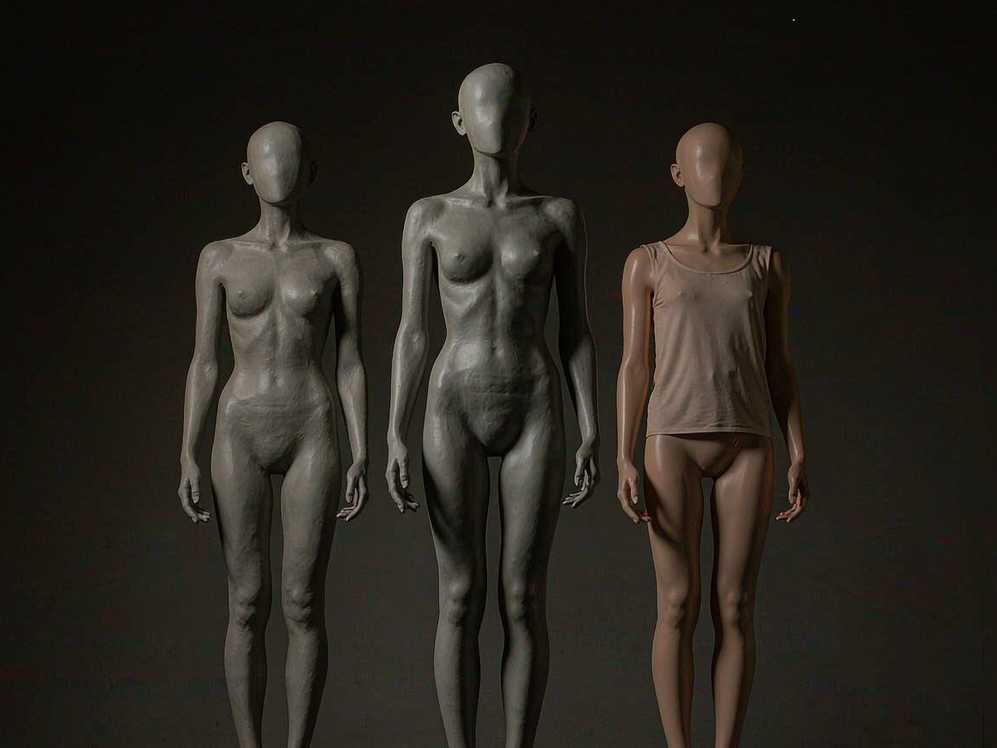
Advanced motion transfer handles one to four characters, each with an optional role. Every tracked person gets matched to a role per shot, and people you did not assign a character to stay exactly as they are. There is a higher-quality variant that makes one pass per person when you only need two characters.
Object swap changes what SAM tracks rather than who it tracks. You can replace a jacket, a car, or a head of hair with what you describe or show in a picture, remove it entirely, or change the background around it while the person stays put. Only that area gets regenerated.
From picture is the strangest and most useful mode. FLUX takes the character from your photo and poses it into the body shape of the raw video frame, keeping the character picture's background. You review or regenerate that still, then commit it. The visual describer watches the segment and writes what happens in it, actions, held objects, expressions, and rewrites that description for the prepared picture. Then you render.
There is also a Relight switch, off by default, that changes the light on the prepared character in the same FLUX pass. Seventeen looks, each with an example picture, or you can describe your own. A separate option relights the video's own person without any character picture at all, which is useful when you just need a shot to match the scene it was cut into.
What it costs to run
An NVIDIA GPU. The author tested on an RTX 4060 Ti with 16 GB of VRAM and 64 GB of system RAM, with the H3 int8 models streaming from RAM rather than sitting resident. That is a consumer card, not a rented H100, and it is the most encouraging number in the repository.
ComfyUI 0.41.2 or newer, because the core now ships MiniMax H3, SAM 3.1 and TextGenerate. On top of that you install a stack of custom nodes: comfyui-h3-oneclick-swap for the swap and object plans, people and role masks, grey mannequins, track labelling, cut finder, shot list and face-fix chunks; ComfyUI-MiniMaxH3-Context-Loop for clip looping and final assembly; ComfyUI-H3-FaceRefine for face tracking, cropping, SAM face masks and pasting back; plus ControlNet aux, KJNodes, VideoHelperSuite, Impact Pack and a couple of smaller ones.
The model files are equally specific: a DMAD four-step LoRA, the H3 text encoder at int4, the Qwen3-VL 8B describer at int8, and optionally the SolarRenderer four-step LoRA pair for the from-picture path.
On Windows there is a start_openjutsu.bat that starts the proxy, patches its live progress, builds the app and opens the page. Manual setup is five steps and includes one genuinely obscure fix: set AIOHTTP_NOSENDFILE=1 before starting ComfyUI, or the first partial-file request, which the video player sends the moment you seek, can stall /view and hang every later download until you restart.
The preflight check is the good idea
Before a job uploads, Openjutsu checks the selected workflow against ComfyUI's registered node list and model file list. Missing packs appear with installation links. Missing model files appear with their destination folders.
That is a small feature with outsized value. Most ComfyUI workflows fail with a stack trace about a node class nobody has heard of. This one tells you which repository to clone and where the file goes, before you spend twenty minutes waiting for a render that was never going to start.
It also says plainly what it does not check: Python dependencies, model integrity, and available VRAM. Which is the honest boundary. A preflight that claimed to check VRAM would be wrong half the time anyway.
Where this gets uncomfortable
Character swap has an obvious abuse path, and the repository does not pretend otherwise. The technology is a face and body replacement in existing footage, running locally, on open weights, with no upload to a service and no watermark. The legitimate uses are extensive: pickups when an actor is unavailable, previz with a stand-in, wardrobe changes without a reshoot, localization with a different performer. The illegitimate uses are one search away.
The practical defense is the same one that applies to every local model: the tool is not the policy. Studios have release forms and chain-of-custody rules. Individuals have nothing but the law in their jurisdiction, which in most places is behind the technology by several years.
There is also a technical caveat that matters for anyone planning real work. Tracking fails. Occlusion, fast cuts, people leaving frame, two people overlapping in similar clothing: SAM 3.1 is good and it is not perfect, and a swap built on a bad track produces exactly what you would expect, a character that slides off a body halfway through a shot. The advanced mode's per-shot role matching exists because of this, and so does the face-fix pass.
Why it is worth reading even if you never install it
The interesting claim in Openjutsu is architectural rather than aesthetic. It says that a believable character replacement is a pipeline problem, not a model problem: track what should change, describe what it should become, generate only that region, then fix faces and light as separate passes.
That decomposition is reusable. The same skeleton applies to wardrobe changes, product placement, background replacement and localization. None of those need a better video model. They need a better plan about which pixels are allowed to move.
The repository ships the plans, the manifests, the node list and the failure modes. That is more than most closed products will tell you about how the trick works.
Related articles
Google replaced the model behind Search, and the number that moved was a shell benchmark
Gemini 4 Hydrogen became the default on 12 November, taking over from Gemini 3.8 Flash across Search, the Gemini app and the developer API. It runs about 2.5 times faster, scores 57% on Terminal-Bench 4.1 where its predecessor scored 18.2%, and costs $1.50 in and $7.50 out per million tokens.
Three ways a coding agent wastes money, measured on 30 repositories
TokenEconomizer watches what an agent did in a repository you work in often, then stops it from rediscovering the same build command, loading tools it never uses and looping on one error. Across five agent and model combinations it cut mean cost by 18.4% to 30.9%, cheaper in all 30 repository cells, with Pass@1 up in four of five.
earshot gives coding agents 922 sounds, and every one is rendered from code
An agent can write a game, an interface or a film and never hear any of it. earshot answers requests like "three variations of a footstep on gravel" from a catalogue of 922 designs built from public-domain recordings, with no audio files in the repository at all. It runs on CPU, as a CLI, a Python package, an MCP server and a Claude Code plugin.
The agents stealing API keys were not sophisticated. The gateways were open.
Amazon's decoy servers spent October posing as inference APIs and logged agents built on ARTEX pulling provider keys out of LiteLLM, Dify, Langflow and Open WebUI. The way in was a default master key and a half-finished install. ARTEX itself ships with budgets, scope gates and evidence for every finding.