
Point It at a Website and It Rebuilds One in Rust
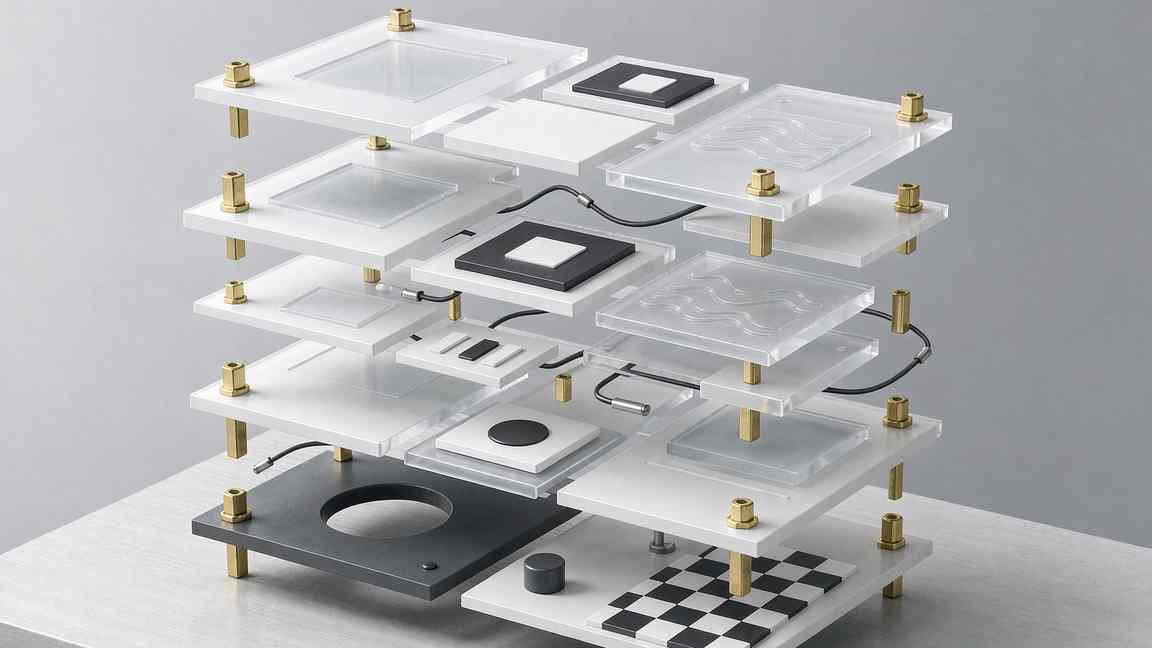
Most AI coding tools assume you are starting from nothing. Craft Anything assumes the opposite: the thing already exists, someone else built it, and you want to understand it well enough to make your own.
Point it at a website, an app, or a game, say what you want in a sentence, and press Start. It studies the original, has a coding agent build a new project, compares the build against the original, and then refines it until the comparison stops complaining. The repo, by the ArtCraft collective, has picked up roughly 19,500 stars this autumn and describes itself without flinching as early alpha.
The four steps are the product
Study, Build, Check, Ready. That is the whole loop, and the wording matters. Most "recreate this site" tools start at Build. This one spends its first and third steps on evidence.
Study means the tool inspects the target: pages at every width, its code, its files, how it runs. Build means a coding agent — Claude Code today — writes a new project in whatever language, framework, or engine you named. Check means comparing the result to the original and listing what does not match yet, with a similarity figure per page. Ready means you open it, play it, or ask for changes.
The project folder tells you what it considers data. craft.json holds the request and history. capture/ holds what was recorded from the target. checks/ holds each comparison. investigation.cany/ holds the evidence, and inbox/ holds open questions. Nothing here is a prompt log. It is an audit trail.

Clean room versus Deep, and why that's the real story
Two modes, and the difference is not a quality setting.
Clean room is the default. Nothing inside the original is read — not its code, not its files, not the page source. The tool works from what a visitor can see: screenshots, visible text, measured layout, colours, fonts, spacing, menus opened. Tools that would look inside are refused, and the refusal tells you how to switch modes.
Deep uses everything. Code and files are read with the built-in engines and with Ghidra when it is installed. A website's JavaScript gets read and its start page watched. The builder may use all of it.
That is an unusually explicit consent boundary for a tool in this category. Reverse-engineering utilities usually either refuse to be useful or quietly do whatever they can. Craft Anything makes the ethical line a mode switch, then documents what each side can see.
It is careful about what it is not, too. Clean room is "a rule about what Craft Anything offers and refuses" — not an OS sandbox. The README says this plainly: it does not isolate your computer, and a coding agent you run still acts as you. If you were hoping for a safety guarantee, that paragraph takes it away.
320 tools, one engine, no outside programs
Under the hood is a pure-Rust reverse-engineering engine with 320 tools covering native programs, .NET, Java, Android, Apple, Electron and JavaScript, websites, firmware, packet captures, databases, and game files. It has its own decoders, disassembler and decompiler, which means it works without installing anything else. The same engine powers the desktop app, the CLI, and an MCP server, and parts of it compile to WebAssembly and run in the browser.
That architecture is why the app can be honest about similarity. It is not asking a model "does this look the same?" It is measuring layout, comparing captures, and listing mismatches it can name.
Building it
Rust 1.97 or newer, because a dependency demands it. On Debian or Ubuntu the desktop app also wants a pile of windowing libraries — libxkbcommon, libwayland, libx11, libxrandr, libxi, libgl1-mesa, libgtk-3. Then:
git clone https://github.com/storytold/craft-anything && cd craft-anything
cargo run --release -p craft-anything
cargo install --path apps/craft-anything-cli
craft-anything-cli doctor
That last command is the one to run first if anything misbehaves. It checks the install, which coding agents are signed in, and which engines are available. Building needs an agent authenticated on your machine; there is no hosted fallback for that part yet.
The CLI is more useful than it looks:
craft-anything-cli rebuild https://example.com "Recreate this website"
craft-anything-cli rebuild - "A snake game in Rust" --rounds 1
craft-anything-cli rebuild https://example.com "Make the header blue" --continue-in "<project folder>"
The third form is the interesting one. You are not just generating; you are continuing an existing project with a change request, which is what actual work looks like.
What works, and what doesn't
The status section is refreshingly specific. Working today: desktop app in both modes, CLI, MCP server, the full loop for websites and apps with Claude Code as the builder, website checks at three screen widths, and game rebuilds in Unity, Unreal or Godot. Deep mode with Ghidra works. Optional image and 3D generation works if you bring your own fal.ai key.
Partly there: building with API keys and other coding agents, behaviour checks for apps and games, and a handful of engine tools tested only against stand-ins. Installers exist for Windows, macOS, Linux and FreeBSD, and they are still alpha.
That gap is the honest part. A website rebuild is largely measurable — the checker can compare two renderings. An app's behaviour is not, and the README says so instead of implying otherwise.
The responsible-use paragraph deserves attention
It never bypasses DRM, logins or anti-cheat. Rebuilds recreate layout, style and behaviour from evidence, and the agent is instructed not to copy logos, photos or text unless you confirm you own them.
I have read a lot of these paragraphs. This one is unusually concrete, and it hints at where the tool will actually be used: not to clone a competitor's landing page, but to rebuild something you own that nobody can maintain anymore. A 2014 internal tool with no source. A Flash-era site. A game whose engine is gone. Those are legitimate, common, and badly served by everything else on the market.
Should you try it
If you have a piece of software you depend on and cannot change, this is the most interesting thing I have seen all month. The four-step loop is the right shape for that job, and having an audit trail instead of a chat log is a real design decision, not a feature bullet.
If you want a website cloner, temper your expectations. It is alpha, it needs a signed-in coding agent, and the result is a new project that resembles the original, not a pixel-perfect copy. The similarity percentage in the Check step is there to keep you honest about which one you got.
Either way, the clean-room default is worth copying. As these tools get better, "what is this allowed to read" will matter more than "what can this generate," and right now almost nobody ships that as a switch.
Related articles
AMD Got 19 Percent for Being the Other Option
Money did not leave AI. It left the one name with a governance problem and went to the two without one.
The $99 Billion Loop Nvidia Built Around Its Own Customers
Selling shovels is a good business. Lending money to the people buying shovels is a different one.
The 74 Percent Gross Margin Has a Shelf Life
Three forces arrive in the same four quarters, and each one costs about $3 billion per point.
175,000 Signatures Will Not Put Him Back. Here Is What Would.
The longer the campaign takes to win, the weaker its case becomes. That is the trap built into it.