
Open-Source Image Generation Squeezed Onto a Consumer GPU: Hunyuan DiT Cuts the Barrier Down to 6GB VRAM
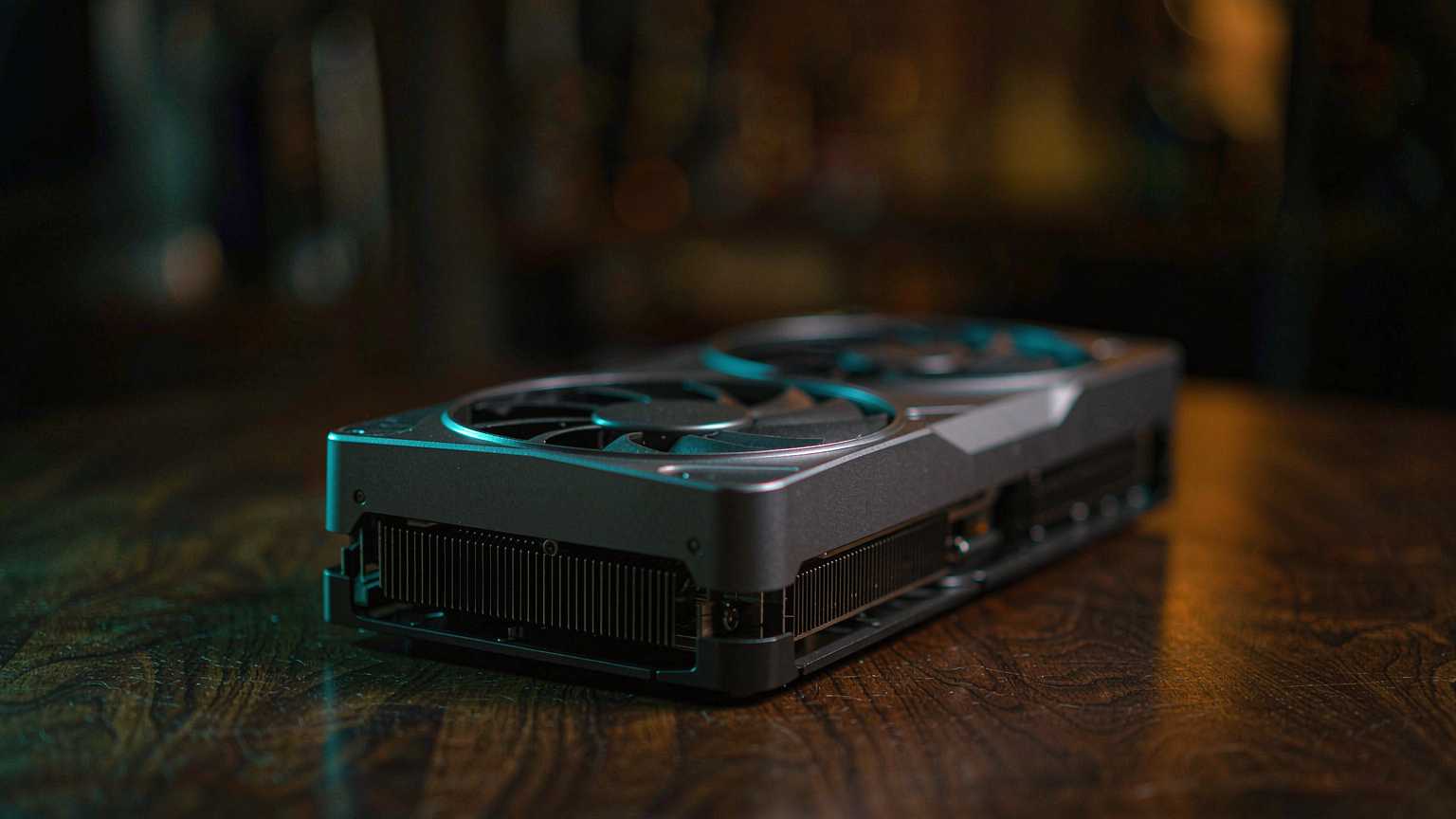
Over the past year, updates to open-source text-to-image have mostly revolved around image quality. Whoever rendered text more clearly, whoever's lighting looked more photographic, could linger a few more days on the leaderboards. This October, the wind has shifted a little. The community's focus is no longer "which image looks better," but "will my GPU actually run it?"
That 6GB VRAM Line Was Hard-Won
Among the recent news from Tencent's Hunyuan text-to-image large model (Hunyuan DiT), the most practical item is the open-sourcing of a "small-VRAM version." According to the official statement, 6GB of VRAM is enough to run it. Anyone who has used open-source image generation understands the weight of that number: previously, running a decent text-to-image setup locally had an entry price of nearly 16GB of VRAM, 8GB was barely scraping by, and 6GB would get you talked out of it outright.
The supporting moves came too. This version has adapted plugins like LoRA and ControlNet into the Diffusers library, and added support for the Kohya GUI. Kohya's role in the community is to drag "training your own LoRA" out of the command-line threshold and turn it into a few mouse clicks. Bringing it in smooths the path for "I want the model to learn my own art style."
Meanwhile, Hunyuan DiT itself was upgraded to version 1.2, with official improvements concentrated on image texture and composition. These two are exactly where open-source models have long been criticized: details blur when there are too many, and composition falls apart when too complex.
Another piece of news is easier to overlook but crucial: Tencent also open-sourced Hunyuan's tagging model, "Hunyuan Captioner." Tagging models are the first step in training a LoRA — you first have to get the machine to break each asset into readable descriptions before training even enters the picture. In the past, this step meant either using closed-source APIs or substitutes of uneven quality. Now that it's open-sourced, the local training chain has one less dependency on external services.
Once Open-Source Models Run, the Community Gets Busy "Fixing"
Hunyuan's progress is about widening the road, while the community is patching another line. After Qwen-Image 2.1 was open-sourced, it spawned a wave of derivative works, followed by an intense round of fixes.
A representative combo is Qwen-Image-2.1-viggle-turbo: 7.26GB, 6-step inference, int8 quantization, often used to quickly produce character design sheets, paired with a 676MB texture-fix VAE to patch in texture. Another author's Fix v2.0 claims to remove Qwen's signature noise and cluttered details while barely touching composition. There's also an Opinionated version with sharper images, at the cost of slightly shifting the frame; the author released it bundled with a res_2m_nc sampler derived from RES4LYF.
These patches sound trivial, but they show one thing: when an open-source model enters real production, what really determines whether it's usable is often not the version on release day, but whether the community is willing to write fixes for it in the following weeks.
The community has also accumulated some parameters you can copy directly. Someone loading a LoRA on Qwen 2.1 recommends a CFG between 2.0 and 3.0, 40 steps, with res_multistep or beta as the sampler. Another running a standard no-LoRA 2.0MP workflow says the new Qwen image model produces a Midjourney flavor previously seen only in closed-source models.
There's clear progress on speed too. Krea 2 Turbo, a two-step distilled LoRA checkpoint, cut 1024x1024 denoising time from 76.4 seconds to 19.3 seconds — roughly four times faster. The trade-off is that detail texture retains only 0.97 to 1.09 times that of the teacher model — far better than native Turbo's two-step 0.40 to 0.65 — but it performs best on close-ups and still falls short on big scenes.
The Small Gaps Patched Along the Way
Beyond the mainline models, a few niche but solidly reviewed open-source models in the community are slowly filling in their weak spots. Anima's Aesthetic v1.1 and One Obsession v4 are often used for stylized output; users praise them for obedient styles and easy prompt writing — with a fixed seed, changing the prompt yields coherent variations, and it can render short text. Their weaknesses are equally candid: multiple characters in one frame and long text are still a struggle, and the community is waiting for Anima 2.
On the Krea 2 side, complaints center on "different seeds look about the same," so someone figured out a method that adds no LoRA and installs no model-specific nodes: reuse ComfyUI's text encoder (e.g., Qwen3VL 4B) as an LLM to expand prompts, treating the prompt seed as a coarse knob and the sampling seed as a fine knob. This kind of homebrew trick spreads fast and often solves real problems better than official docs.
After the Barrier Drops, What's the Competition About?
Looking at these moves together, the direction is clear. Open-source image generation no longer only answers "can it draw convincingly"; it's starting to answer two other questions: can it run on a machine I can afford, and can it be modified precisely according to my intent?
Hunyuan squeezing VRAM to 6GB and open-sourcing the captioning model answers the first question. That batch of fixes and speed-up LoRAs from the Qwen community answers "edit precisely" and "run fast" in the second. The two lines seem unrelated, but they land on the same point: moving generation from demo to daily routine.
For ordinary creators, this is probably the most tangible change in the past year. You no longer need to rent compute for a single image, or reinstall a whole environment to switch styles. A mid-range GPU from a few years ago, plus that toolchain the community has assembled, is already enough to produce a solid body of work.
What's really been compressed is the distance between "I want to try it" and "I've actually started."
Related articles
AI Product Images Are Hitting a Compliance Wall Nobody Priced In
The cost was always quoted per generation. The real cost is priced per asset that survives review.
Robots Can Do 74 Percent of the Physical Work, and Almost None of It Pays
Capability is largely there. The economics are not. Forty years to ten per cent is not a forecast that justifies panic.
A 744B Open-Weight Agentic Model Lands Under an MIT License
The licence is the marketing. A 744B model anyone can download resets the buy-versus-build calculation.
Chinese AI Video Models Enter Hollywood: 73 Shots in That Amazon Series' Visual Effects
What's going global isn't the series, but the tools for making series.