
One Photo, a Whole WeChat Sticker Set, Seventy Cents
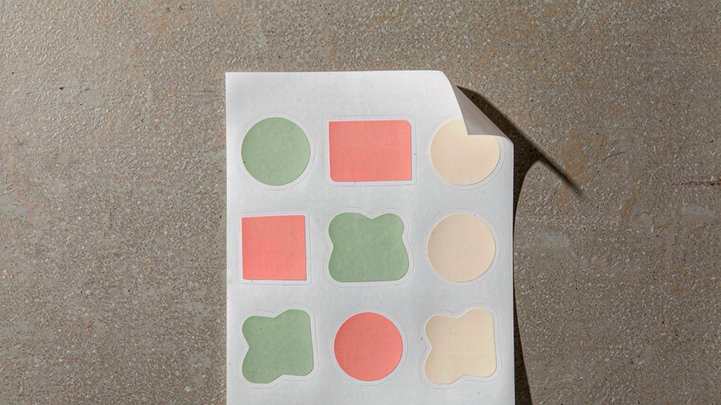
ChatGPT can make a GIF now. That was one of the headline features of Images 2.6 when it shipped earlier this month. You describe the motion, you get a looping animation, you can adjust the speed and edit individual frames.
So why does a skill called ray-sticker-shop exist, and why did it show up on GitHub on November 5 with a price tag attached?
Because the gap between "I made a GIF" and "I have a sticker set that passes WeChat's upload check" is about sixteen steps of tedious, specific, unforgiving work. The generation is the easy part now. Everything after it is the product.
The actual problem
WeChat's sticker open platform is a distribution channel with rules. Stickers are 240 by 240 pixels. Each GIF has to come in under 500KB. You need a cover image, an icon, a banner, and a tip image, each with its own dimensions. You need listing copy. You need the whole set to look like the same character across every sticker, because a sticker set where the character's face drifts between frames is not a set, it is eight unrelated drawings.
Ask a model to do this one sticker at a time and three things go wrong. The character changes between calls. The output is the wrong size. The file is too heavy for the platform. Each of those is fixable by hand, and fixing them by hand for eight stickers is an afternoon.
The README states the failure plainly: ChatGPT can make GIFs directly, but doing it one at a time means the character drifts and the dimensions are not what WeChat wants. This skill does the rest.
What it produces
One reference image locks the character across the whole set. From there the skill produces 240 by 240 GIFs, automatically compressed under 500KB, plus the cover, icon, banner and tip images. It runs a check against WeChat's spec, writes the listing copy, and assembles a delivery pack for a client.
That last item tells you who this is for. Nobody writing hobbyist tooling says "client delivery pack." This is built for the person who gets a message saying "can you make my cat into a sticker set" and needs to answer with a folder, not a promise.
Install
It is a skill, so installation is a clone into the skills directory:
git clone https://github.com/imraywang/ray-sticker-shop ~/.claude/skills/ray-sticker-shopThen you talk to Claude Code or Codex in plain language: turn this photo of my cat into a sticker set. The skill takes over from there.
Requirements are light. Python 3.9 or newer with Pillow (pip install pillow), and an OPENAI_API_KEY. If you route through a proxy, set OPENAI_BASE_URL as well.
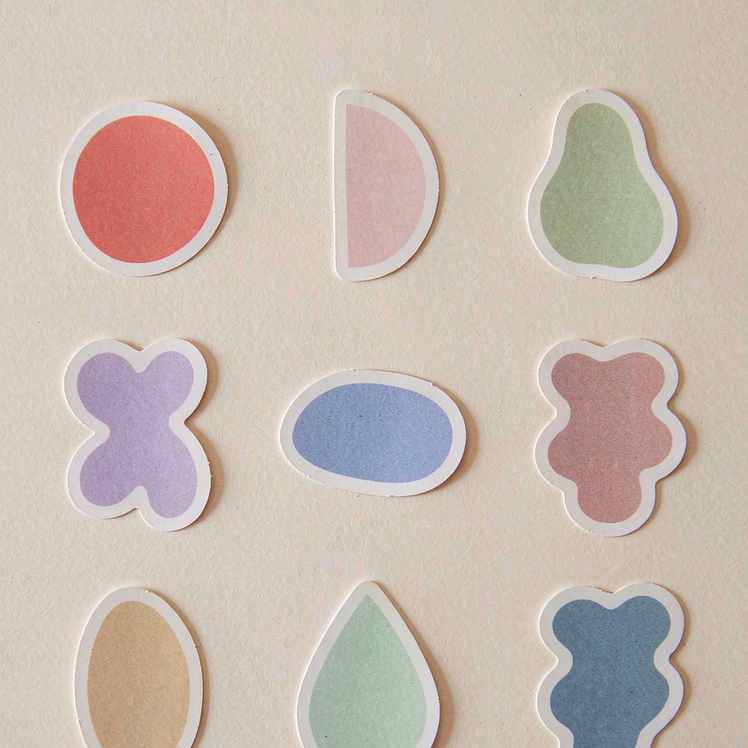
There is a fallback that I think is the smartest design decision in the repo. If you have no API key, the agent does not fail. It hands you the prompts, you generate the images in ChatGPT yourself, you drop them back into the folder, and the skill assembles, compresses, checks and packages them anyway.
That single decision doubles the addressable audience. Plenty of people have a ChatGPT subscription and no API billing set up. Plenty of others have an API key but would rather not spend it on a test. The skill works for both, because the generation step and the packaging step are separable, and the packaging step is the one with the value.
The economics
Eight stickers plus five supporting assets, at OpenAI's list rates, comes to roughly $0.70. Rerolls cost extra. Actual spend is logged to costs.jsonl in the project directory.
Seventy cents for a deliverable is not a real cost. The interesting number is the reroll rate, and the fact that the skill logs it means you can find out. If a set takes three rounds to get one sticker right, you are at two dollars and a lot of waiting, and the log will tell you which sticker is the problem. That is the kind of instrumentation that turns a demo into a workflow.
For comparison, the going rate for a custom sticker set on the freelance market is nowhere near seventy cents, or seventy dollars. The skill does not replace the illustrator, because an illustrator brings a style and a sense of humor. What it replaces is the packaging labor, which is where an illustrator's margin goes to die.
What it cannot do
The README is direct about the boundaries, and they are legal rather than technical.
Only make stickers from characters you have the rights to use. WeChat does not accept unauthorized derivative work or fan art. Approval is decided by WeChat, and the tool promises neither approval nor revenue.
That is the correct framing and it is worth repeating because the AI image space is full of tools that leave it out. A skill that turns any photo into a monetizable asset is one step away from a skill that turns somebody else's character into a monetizable asset. Drawing the line in the README, before the user asks, is cheap and honest.
There is also a technical ceiling. The skill locks a character from one reference image, which works for a simple mascot and struggles with anything complex. A character with detailed clothing, an unusual silhouette, or a style that depends on line quality will drift no matter how good the reference lock is. Eight stickers is a small enough set that you can fix the outliers by hand. Eighty would be a different project.
Why this pattern is worth watching
Skills as a format are having a moment. There are repositories with hundreds of thousands of stars that are nothing but folders of markdown instructions. Most of them are prompt libraries with better branding.
This one is different in a specific way: it encodes a platform's requirements, not a model's capabilities. The 240 by 240, the 500KB ceiling, the cover and icon and banner, the spec check, the listing copy. None of that comes from a model. It comes from WeChat's submission process, which somebody had to read carefully and then write down as code and instructions.
That is the shape of a durable skill. Capabilities change every three months. Platform requirements change every three years, and when they change, the diff is small and the skill gets patched.
The generalizable version of this is obvious. Every platform with a submission process has a spec document. App Store screenshots, Steam capsule art, YouTube thumbnails, podcast cover art, Amazon A+ modules. Each of those is a sticker shop waiting for someone to read the spec and write the checklist. The model that generates the image is a commodity. The person who read the spec is not.
Seventy cents and an afternoon saved is a small story. The fact that the interesting work was the packaging, and that the packaging could be written down, is the one that generalizes.
Related articles
The Jensen Discount: What Nvidia Loses When Its Founder Walks Out
Nvidia lost roughly $600 billion in market value when its founder stepped down. The earnings did not change. The multiple did, and that says where the value really lived.
Chinese text in video always turns to mush. Dreamina handed the typesetting to code
Dreamina launched Motion Studio on November 10. It no longer generates frames; the model writes code that lays out text, shapes and pacing. Chinese titles stop blurring, but whether the content is right is still on you.
A community spreadsheet of taps that turns off the ads inside Chinese Android builds
A no-root tool that switches off the ads Chinese phone makers ship inside the system UI. Its method is a hand-written tap script per phone model, maintained by volunteers every time a ROM moves. It works, and the maintenance is the point.
GPT Image 2.6 held the token price and raised the bill
GPT Image 2.6 kept every token rate from 2.5 and still costs more per image, because more of the work now happens in output tokens. Eleven days into the ramp, the pricing structure says more than the leaderboard does.