
No Photographer Needed: This Generation Moved the Studio Onto the Balcony
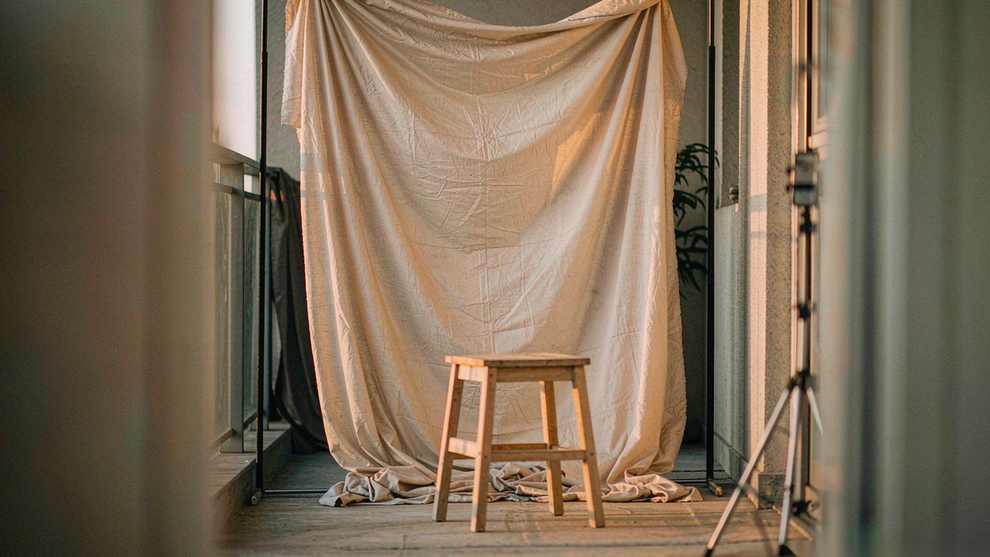
On October 14, the words "AI wedding photos" climbed to third on Weibo's trending list, took first place on Xiaohongshu's weekly wedding chart by a landslide, and #MyAILifeCeremony passed 820 million plays on Douyin in a single day. The most striking thing in all that noise wasn't any particular model. It was one man's balcony.
In Huludao, Liaoning, a 35-year-old programmer named Mr. Yu hung a white sheet on his balcony, shot a few dozen casual photos with his phone, fed them into MidJourney and Runway, and went through who knows how many rounds of adjustment. What came out was a set of wedding photos with both film grain and soft light. The images went into the digital invitation and played on the big screen on the wedding day. His wife smiled brighter than the champagne bubbles.
People online called it "cyber ocean view." He answered with one line: nothing forced, nothing strained — loving comfortably is the highest form of ceremony.
This business was always propped up by "perfection"
Wedding photography was never priced on the photos themselves. It's the venue, the makeup artist, the fact that everyone clears the day for you. What a studio sells is a promise: you will look good today, and you will look good with no surprises.
What Mr. Yu did, essentially, was take that promise apart. The venue became a balcony. The lighting became four o'clock afternoon sun. The makeup artist became a prompt. The photographer became himself. What he saved wasn't money — it was the performance pressure of that entire day.
There are hard numbers behind this. Ministry of Civil Affairs data for the third quarter of 2026 shows registered marriages in China falling for a seventh straight year, while minimalist weddings, cloud weddings and themed DIY weddings broke 61.3% of the total for the first time. In one wedding platform's survey, more than 74% of Gen Z couples said wedding photos shouldn't eat up more than 15% of the total wedding budget — yet 52% still gritted their teeth and signed studio packages starting at 20,000 yuan, afraid of being told they weren't taking it seriously enough.
Face and heart are fighting here. AI wedding photos took off because they offer an exit that doesn't require an argument: very little money spent, the sense of occasion intact, and the pictures look good.
{{INLINE1}}But "looking good" and "looking like wedding photos" are two different things
Anyone who has actually tried it knows the hard part of AI wedding photos isn't the face. It's everything except the face.
First, light. Real wedding photography follows a fixed order of lighting: key, fill, rim, catchlight, all pointing the same way, with shadows that bite. The mistake AI makes most often is giving you a side-lit face attached to a body that looks front-flashed. The person is in the scene, the light didn't come along, and it reads instantly.
Then bokeh. The blur from a fast lens falls off with distance — mushy up close, merely soft far away. AI often blurs the whole frame evenly, or melts the trees, railings and text in the background into one lump, like you're looking through frosted glass.
And skin. You write "keep real skin texture" and still get an even, reflective film, with the face and the neck sitting at different color temperatures. That's why so many people love their first version and start frowning by the third.
So his line about "tuning the emotional temperature over and over" isn't a figure of speech. What he was tuning is exactly this: eyes that smile like a first meeting, cuffs wrinkled like the day of overtime, a pothos on a shared flat's windowsill showing through the blur.
Consistency is the actual craft
One good image is easy. The hard part is that a set shows the same two people.
The current approach stacks three things. First, use real-life photos as references, three to five at a time, so the model locks the facial features. Then use face swap or image-to-image to put the face back into the generated scene — don't expect pure text-to-image to hold. Finally, use inpainting to fix hands, rings, bouquets. Hands are the disaster zone in wedding photos: bouquet, ring, dress folds — get any one wrong and the frame is dead.
Video models like Runway add one more step: turn a still into a three-to-five second micro-move — wind in the dress, a slight sway of hair, a slow push in. That's exactly what invitations and venue screens need. A still image on a big screen turns awkward after three seconds; with motion it lands.
What actually gets offended is "being there"
The objections are specific too. Some ask: if we hand even the wedding photos to AI, will the parenting plan go to a large model next? The parents' generation is more direct — "is this you being perfunctory?"
That's not unreasonable. Part of the value of wedding photos comes precisely from "we were really there that day": a whole day in the sun, makeup ruined once, the photographer shouting "look here" twenty times, the two of you eating cold boxed meals in the car. AI can't give that, and it shouldn't pretend it can.
So the more sensible use probably isn't "AI replaces wedding photos." It's treating AI as one of two layers. The documentary layer of the day itself goes to a real person or a friend. The "ideal version" you hang at home and send to the elders gets filled in with AI. Nobody cares how the invitation, the timeline cover or the opening video was made anyway. They only care whether it looks good.
What makes his "refuse AI shame" line land isn't the tech. It's that he took the choice back into his own hands. Wedding photos should be decided by the two people getting married, not by a studio's package menu.
If you want to try it, a few details that keep you out of trouble
Shoot enough real photos first. A phone is fine. Daylight by a window. Front, side, half-body, full-body, a few of each. No beauty mode, no filters. This is the foundation for your references — if it's crooked, everything downstream is crooked.
Don't stuff every requirement into one prompt. Lock the scene and composition first, then change the light, then the clothes, then the face. One change at a time, so when something breaks you know which step broke it.
Pick dimensions by use. Vertical for invitations at 3:4 or 9:16, horizontal for venue screens at 16:9 — don't stretch a vertical. Leave enough resolution: at least 2K for a big screen, or it's mush the moment it's enlarged.
Finally, treat it as a draft, not the finish line. Generate ten, pick one, have a human retouch it. That's far faster than expecting one perfect generation. Wedding photos have been shot for decades, and no couple's session ever ended the moment the shutter clicked.
Related articles
The Video Leaderboard's Number One Is a Talking Head
HeyGen Video leads at 64,000 weekly requests, ahead of Veo and Wan. Chinese labs hold about 54.8% of routed video traffic while Runway sits at 0.3%. What request volume measures.
VideoGen Promises Ten-Minute Videos From One Prompt. Nobody Benchmarked It.
Ten minutes is assembled from many shots, not rendered in one pass. The product is the planning harness, and the cost and quality claims are still waiting on third-party validation.
NVIDIA's OpenShell Enforces Agent Policy in the Kernel
Kernel level checks on every file, syscall and connection, plus formal verification of policy changes before they apply. The install is one line. The operational bill is the rest of the page.
FLUX 3 Max Renders 10 Seconds of Video in 11. The Benchmark Has an Asterisk.
Fal post-trained FLUX 3 for speed and got a 1139 Elo claim out of it. The vote count is preliminary, the confidence interval overlaps the leader, and the 75% discount runs three weeks.