
No Green Screen: Alpha Gen and the Quiet Revolution in Video Keying
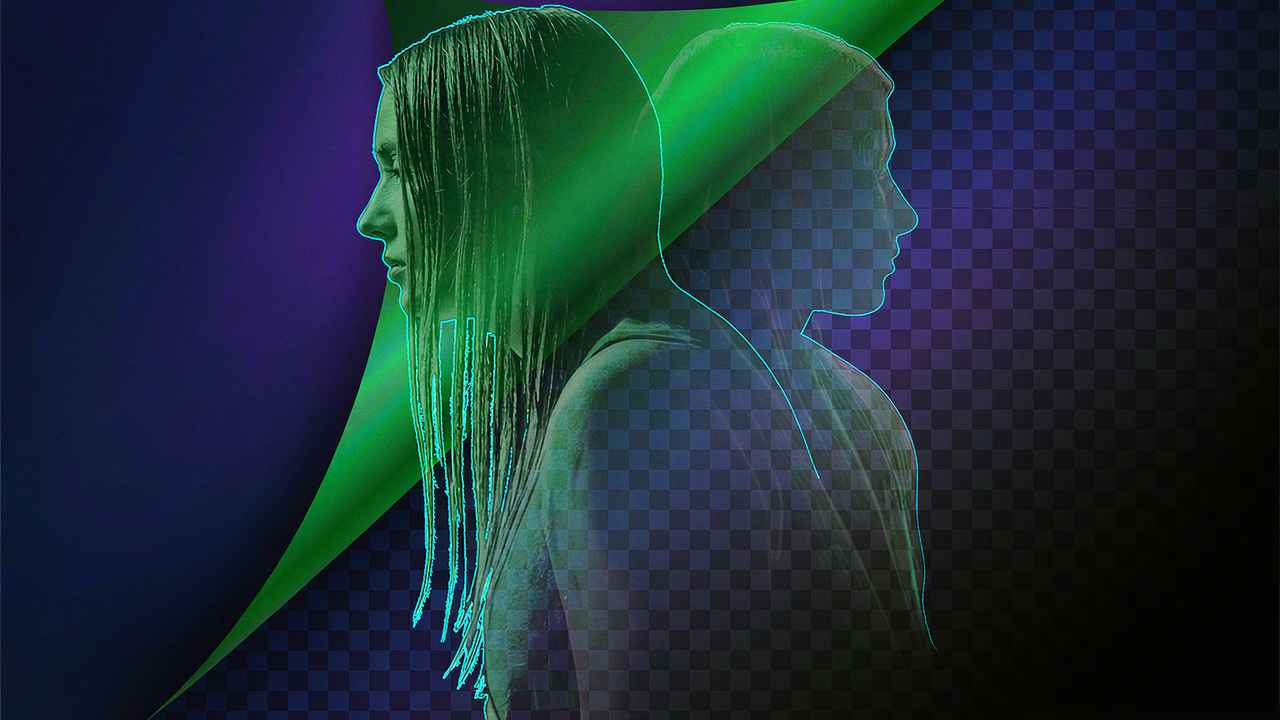
Green screens exist because pulling a clean mask is hard. For decades the fastest way to separate a subject from a background was to paint the background a color the subject never is, then remove that color in post. The whole practice, from backdrop rental to talent instructions about not wearing green, is a workaround for a matting problem nobody solved.
In early October, LTX closed out a week of visual effects releases with a tool called Alpha Gen that takes a step at that problem. Feed it an ordinary RGB clip and it returns a frame-accurate alpha matte, with no green screen, no manual masking and no prompt. The company is aiming it at the hardest edges, the ones that break traditional keying: hair, smoke, fire, glass and water.
Why those edges are the whole game
Keying is easy in the middle and brutal at the boundary. A solid object against a solid background is a solved case. A person's hair against a bright window is not, because the correct answer is not one mask value but a gradient, where each pixel is partially transparent and slightly recolored by what is behind it.
That is why compositors spend hours on rotoscoping, drawing masks frame by frame for a few seconds of a shot where hair moves in the wind. It is slow, expensive and the kind of work studios would automate tomorrow if they could. It is also why "no green screen" is a more interesting claim than it first sounds. Those edges are exactly where a person has to intervene today.

What changes if it holds up
The first thing Alpha Gen would change is where footage can come from. If a matte can be pulled from any clip, then a shot no longer needs to be planned around a backdrop. That opens up stock footage, phone video and archive material that was previously unusable for compositing because it was never shot for it.
The second is schedule. Rotoscoping sits on the critical path of a lot of VFX work. Even a partial automation moves that work earlier and cheaper, which lets smaller teams attempt shots that used to require a dedicated roto department.
The third effect is subtler. When matting is cheap, editors reuse more. A clean matte is what lets you move a subject to a new background, extend a scene, or isolate a product from a busy shot. Lowering the cost of that operation changes what footage gets treated as reusable rather than disposable.
The wider VFX week
Alpha Gen did not arrive alone. The same period saw other moves aimed at the unglamorous middle of a pipeline. Researchers on NVIDIA's Sana project released SoL-Refiner, a one-step refinement model that turns low-resolution output from any generator into sharp 2K or 4K video, which the team reported as up to 8.91 times faster end to end. LTX's own 2.5 models have been pushing the idea of turning rough Blender drafts into finished shots.
Read together, the theme is not bigger models. It is plumbing. Refinement, matting and clean-to-shot conversion are the steps between a generated frame and something you can cut into a sequence, and they are where a lot of the real friction lives.
How studios would actually adopt it
Adoption rarely happens all at once, and matting is a good example of why. A studio will not delete its green screen stage because a model improved. It will start by using automated matting on the shots where a green screen was never practical: archive footage licensed for a documentary, a phone clip submitted by a subject, a product shot that was captured on location and cannot be reshot. Those are the cases where the old workflow simply did not have an answer, and a new tool gets its first foothold.
From there it spreads to the shots where rotoscoping was possible but slow. The economics decide the order. A compositor who used to spend three days on a walking shot with windblown hair will first use the tool to get a first pass, then clean up the two percent the model got wrong. The net saving is real even when a human still touches every frame, because the hard part was never the whole frame. It was the edges, and those are the part a person can now fix instead of build.
One more consequence is worth flagging. When matting gets cheap, the demand for it goes up. Projects that skipped a location change because a roto budget was too high will now consider it. That is how pipeline improvements usually pay off: not by shrinking the same job, but by making possible the jobs that were previously priced out.
The numbers that decide adoption
Whether a tool like Alpha Gen changes a studio comes down to a ratio nobody publishes: the hours a tool saves against the hours a person spends fixing its mistakes. Rotoscoping is a good yardstick because it is unusually well measured. A difficult shot can consume days of a compositor's time, and the cost is not just the hours. It is the schedule, because roto often sits early in a shot's life and delays everything downstream.
If a model delivers a matte that is ninety-five percent right, the net saving can still be large, because the remaining five percent is concentrated at the edges where a person was going to spend most of the time anyway. If it delivers something that is eighty percent right across the whole frame, the saving evaporates, because verifying the whole image costs nearly as much as building the mask from scratch. This is the difference between a tool that removes work and a tool that adds a review step, and no launch demo can tell you which one you have.
The honest test is small and cheap. Take a shot with a known-hard edge, run it through the tool, and time how long the cleanup takes compared with doing it by hand. Do that three times on different kinds of footage before deciding anything. It is a dull way to evaluate something billed as a breakthrough, and it is the only way to find out whether the breakthrough reaches your actual work.
Where to stay skeptical
Automated matting has been "almost solved" before. Earlier tools handled easy cases well and fell apart on motion blur, on thin strands, and on transparent materials interacting with complex backgrounds. Alpha Gen's target list, which includes exactly those hard cases, is a claim about the failure modes, not just the easy wins, so independent tests will matter.
It is also worth noting what a matte is not. A perfect alpha channel does not relight a subject to match a new background, and it does not fix motion that does not fit the new scene. Compositors will still do the art. They will just spend less time on the parts that were never art to begin with.
The practical takeaway
If you edit or composite, the useful move is to test keying tools on your hardest footage, not the clip that looks best on its own. Hair, glass and smoke are the honest benchmarks. If a tool clears those, it earns a place right after the camera. If it only clears the easy shots, it is a convenience, not a workflow change.
The boring version of this story is the likely one. Matting gets quietly faster, rotoscoping budgets shrink, and a step that used to dominate a schedule becomes a checkbox. That is how most pipeline changes actually arrive.
Related articles
AI Short Drama Hit the Hot Search, and Live-Action Shoots Fell 70%
Only one of the top 20 titles on a major Chinese drama chart was made with real actors. AI costs about a tenth as much to produce, and it is rewriting the whole pipeline.
Decagon's PACT Protocol Wants Consent to Be a Standard
Decagon open-sourced a protocol for verifying a personal agent's identity and the permissions a customer granted it. It is plumbing, and it decides whether the agent economy works.
The AI Reunion Wave China Can't Decide How to Feel About
AI tribute films brought departed public figures back to Chinese screens and pulled in hundreds of thousands of likes. Then the backlash arrived, and it was about consent.
Apple Published an Open Multimodal Model and Barely Told Anyone
Apple's research-first release slipped past the mainstream, but the model's fine-grained visual grounding says a lot about where its AI stack is heading.