
Meitu Splits Brand IP Work Into Two Buttons: One for the Face, One for Motion
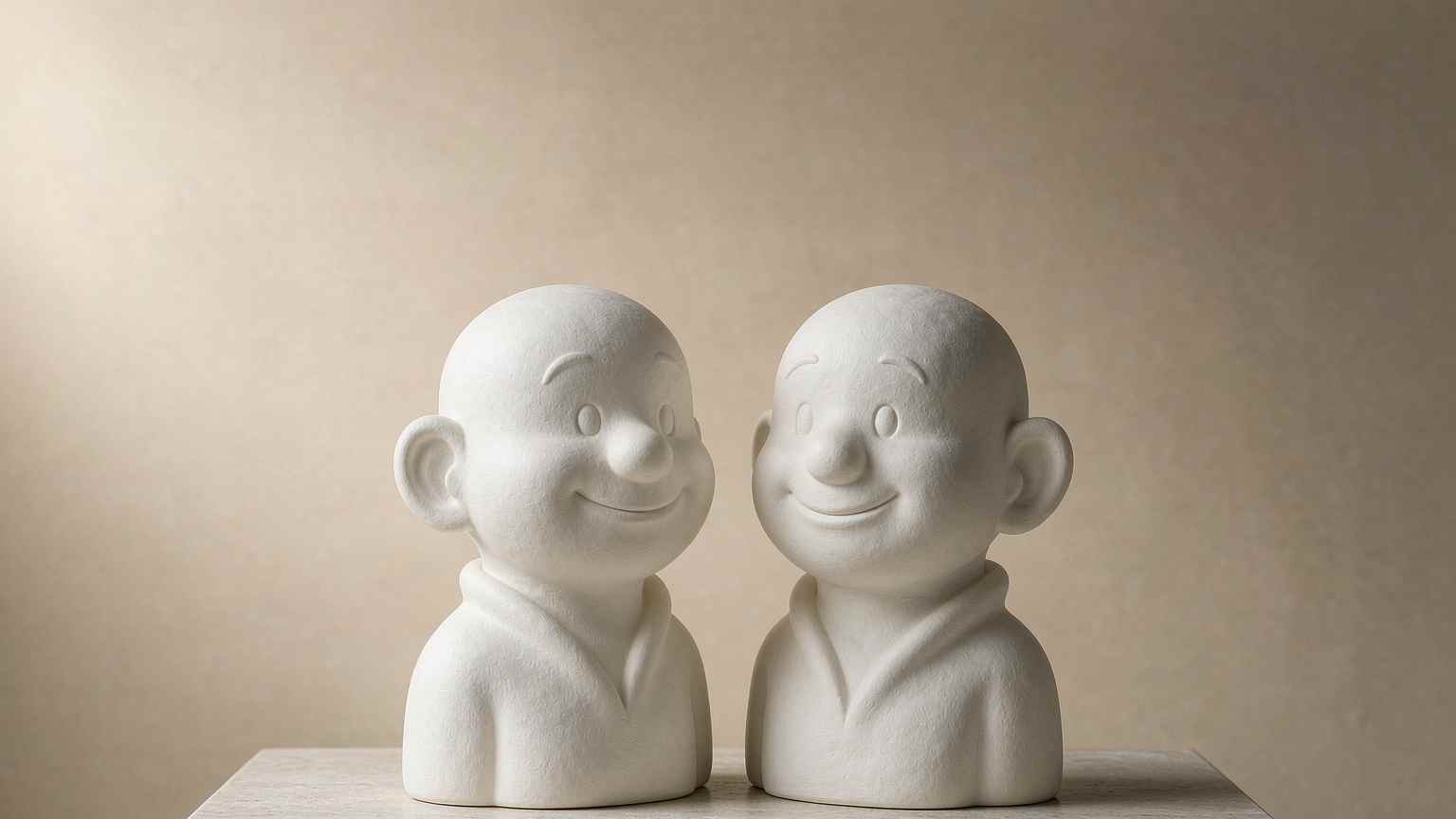
From October 29 to November 1, the 17th Cross-Strait Cultural Industries Fair was held in Xiamen. In the Fujian Pavilion, Meitu put its AI image creation platform RoboNeo on display, with the focus on three more mundane tasks: building your own character, writing a continuous story around that character, and transferring that character's movements into new scenes.
The person raising the request at the fair was a food merchant. He wanted a recognizable brand IP and wanted to keep producing content tied to trending topics, but hiring a professional team was too expensive, and he did not know how to do it himself. This description is almost the real customer profile for AI video in China: not film and television companies, but small and medium-sized merchants with no budget yet under pressure to post every day.
Looking Like the Same Person Is the Hardest Part
Generating a single image with an image model has long been easy. The hard part is making the second, fifth, and twentieth image still the same person.
RoboNeo's solution is called "IP character style locking": merchants first create a character, then use it to batch-generate emoji packs, posters, and product images. The company says consistency of facial features and clothing across images has improved noticeably. That sounds unremarkable, but in actual production it determines whether something can become a business. If the kitten you post today is not the same kitten you posted last week, audiences will not remember it, the IP does not hold up, and the account can only keep relying on one-off viral hits.
The hard part of character consistency is not "drawing it similarly" but "where the information goes." An image simultaneously contains identity (who this is), style (what it was drawn with), pose, lighting, and composition. In multi-round generation, if these are not separated, the model re-guesses identity every time; one wrong guess and the face changes. The industry approach is to extract identity features separately and turn them into conditions—for example, reference images plus identity encoding, or preserving an area in latent space solely for identity. The name does not matter; what matters is that identity information must be "harder" than style information.
The Motion Part Is Where Things Get Really Interesting
The motion capture RoboNeo demonstrated works differently from ordinary "video-to-video." It extracts the **character proportions, spatial relationships, and camera movement** from the reference video while weakening the original video's appearance features.
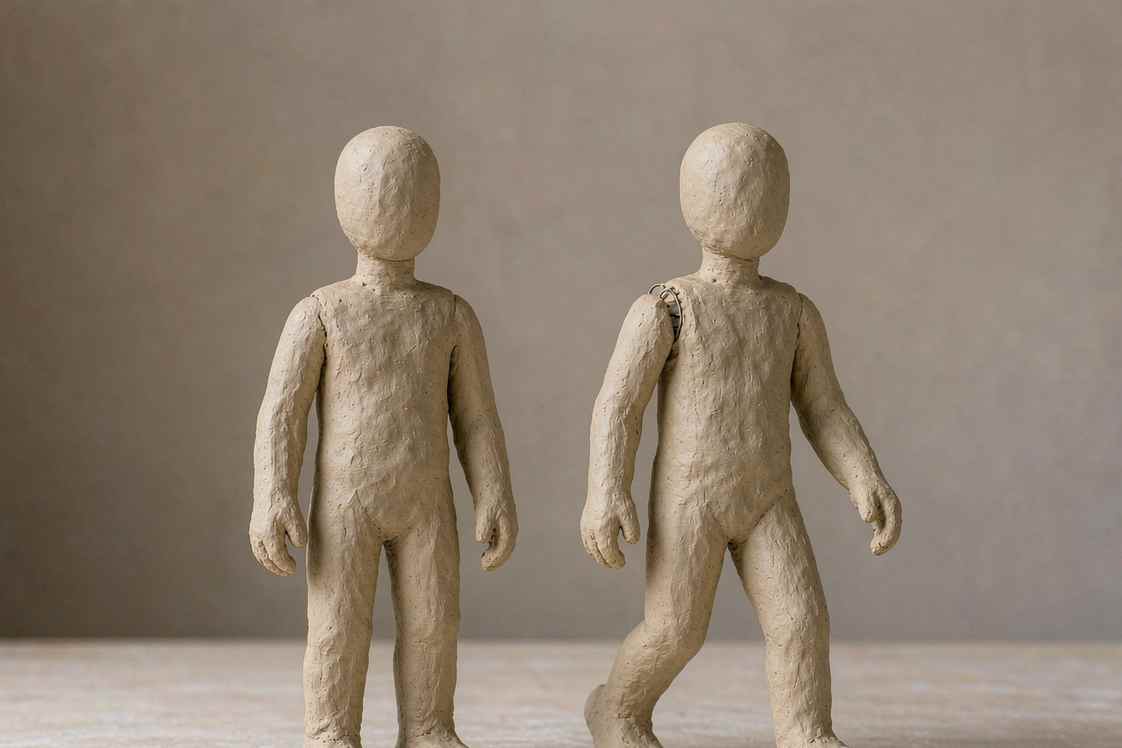
This sentence is more technical than it looks. Video-driven motion transfer has two long-standing problems:
The first is **appearance leakage**. You want your cartoon character to dance the dance in a reference video, but the generated person ends up wearing the clothes from the reference video and having the face from the reference video. This happens because the model cannot tell whether "I want the motion" or "I want this video."
The second is **structural drift**. When the motion is large, character proportions distort—long arms and short legs; when the camera moves, foreground-background relationships fall apart. The reason is that the conditioning signals contain no explicit skeleton, depth, or camera trajectory, so the model can only guess from pixels.
Separating the information in the reference video into "structure" and "appearance" and letting only structure enter the conditions has been the mainstream direction for the past two years: the skeleton provides joints, the depth map provides front-back occlusion, and the camera trajectory provides camera movement. It sounds straightforward but is messy in engineering, because when the three signals conflict, which one takes priority has to be tuned. RoboNeo has packaged this into buttons merchants can click—that is the product-level value, not the research-paper-level value.
The Script Workspace Solves Another Kind of Drift
The third feature is the script workspace, built on "script nodes + project memory": creators use multi-turn dialogue to clarify creative intent and break down the plot, then continue around an established character to make episodic series and short dramas.
This feature looks like a scriptwriting tool, but what it actually manages is **cross-episode consistency**. By episode eight of a short drama, the characters' personalities, relationships, things they have said, and places they have been all have to be remembered. Without project memory, the model starts from zero every episode to understand "what is the relationship between these two people," and the output will inevitably contradict itself. How well the memory layer is built directly determines whether continuous content is possible, rather than just single pieces of material.
The Barrier Is Lower, but the Requirements Are Not
There is another event during the cultural fair that can be viewed in comparison. On November 4, CCTV, in the "Direct to Wuzhen" track at the Wuzhen Summit, reported on Qin Wenshan, an entrepreneur in Xiangcheng District, Suzhou: one person leading seven AI digital employees—executive controller, screenwriter, director, storyboard artist, asset producer, video producer, and editor—connected into an AIGC content production line. Among his works, an AIGC animated feature film "One Palm Panda" was shortlisted for the 16th Beijing International Film Festival, and "Cangjie, the Sage of Characters," based on historical mythology, was also announced for launch this year. Xiangcheng has already set up 36 OPC communities, and more than 100 OPC companies have completed registration.
"One person, one company" sounds great, but it actually raises the capability requirements. In the past, you had a photographer, lighting technician, editor, and art designer each covering for you; now you have to make all those judgments yourself. Tools have cut the execution barrier; they have left the aesthetic barrier right where it was.
This also explains why competition in this type of product is shifting from "can it generate" to "can it stably produce the same thing." What a merchant wants is not one stunning image but three hundred usable images, and in those three hundred images the person must be the same person, and the actions must fit what they are selling.
Three Questions Still Without Answers
First, where is the upper limit of motion precision? If the reference video involves complex hand interactions, rapid turns, or frequent occlusion, the structural information itself is incomplete, and no amount of decoupling can make up for it.
Second, the physical plausibility of camera language. Extracting camera movement is not the same as understanding camera movement. Real push-pull-pan-tilt has spatial logic; applying it stiffly to a new scene will make viewers dizzy. All tools are still muddling through on this.
Third, batch quality control. The gap between one clip looking good and one hundred clips looking good is a whole process: who sets standards, who does spot checks, how many times failed items are redone, and how costs are calculated. Without tools in this link, no matter how beautiful the earlier parts are, it cannot be put into practice.
For small and medium-sized merchants, the real significance of platforms like RoboNeo is turning "making an IP" from a project into an assembly line. As for whether the assembly line can keep running, it still depends on whether it can withstand the three questions above.
Related articles
Chinese text in video always turns to mush. Dreamina handed the typesetting to code
Dreamina launched Motion Studio on November 10. It no longer generates frames; the model writes code that lays out text, shapes and pacing. Chinese titles stop blurring, but whether the content is right is still on you.
A community spreadsheet of taps that turns off the ads inside Chinese Android builds
A no-root tool that switches off the ads Chinese phone makers ship inside the system UI. Its method is a hand-written tap script per phone model, maintained by volunteers every time a ROM moves. It works, and the maintenance is the point.
GPT Image 2.6 held the token price and raised the bill
GPT Image 2.6 kept every token rate from 2.5 and still costs more per image, because more of the work now happens in output tokens. Eleven days into the ramp, the pricing structure says more than the leaderboard does.
Someone rebuilt IDM from the outside and wrote down what they did not touch
A Rust reimplementation of Internet Download Manager claims 5x the speed and 86 languages. The more interesting document is the paragraph explaining how it was built without copying anything.