
Kling put 2,000 characters inside one image, and the fight moved to typesetting
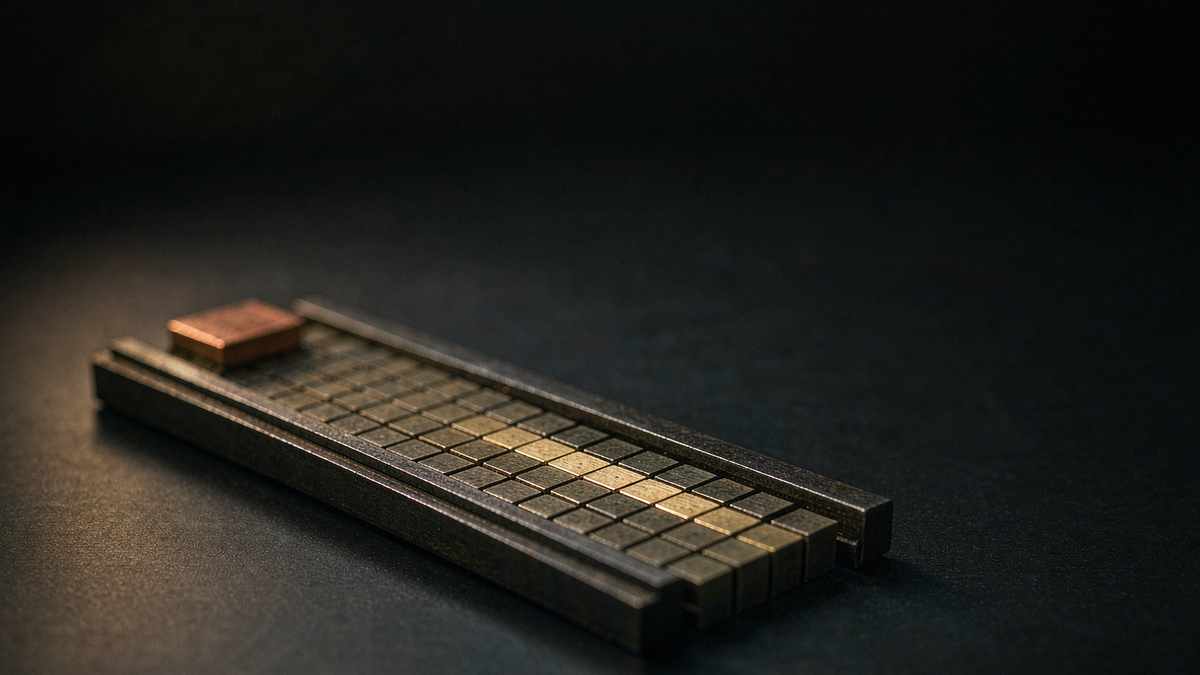
Two thousand characters do not fit on a poster. They fit on a product detail page, a restaurant menu, a spec sheet, a slide someone will screenshot and send to a supplier. That is the object Kuaishou's Kling team says its new image model can produce, and it is a stranger claim than "8K" or "more photoreal."
Kling Image 4.0 went live on the evening of 17 November. It is the first image model from a company known for video, and the launch material spends most of its space on the parts of an image that are made of text.
What actually shipped
| Spec | Kling Image 4.0 |
|---|---|
| Native output | up to 8K |
| Text per image | up to 2,000 characters |
| Text input per prompt | up to 15,000 tokens |
| Preset typefaces | more than 70 |
| Languages | Simplified and Traditional Chinese, English, Japanese, Korean, Spanish, Portuguese |
| Series generation | up to 10 related images from one description |
| Long-form | vertical long images for ecommerce pages and web layouts |
| Architecture | unified understanding and generation |
The company describes the architecture as one system that reads the prompt and draws the image, rather than a language model handing a description to a separate painter. That distinction matters for text, because a model that never sees the sentence as a sentence cannot know that a price should sit under a product name instead of across it.
There is also a reference-image path for lettering: upload a sample, and the model is meant to pick up the shape and style of the glyphs rather than the words. Designers have wanted this for years, mostly so that a generated image can carry a client's actual typeface instead of something adjacent to it.
Why text is the part nobody wanted
Ask anyone who has shipped a generated image into a client deck what broke first. It is almost never the lighting. It is a sign in the background that reads like a medical scan, a label with five letters where there should be six, a headline that melts at the third word.
The reason is structural. Image models work in a compressed latent space, and small letterforms live in exactly the frequencies that compression throws away. A face survives because a face has redundancy; every eye is roughly where the model expects an eye. A letter does not. Move one stroke two pixels and it becomes a different letter, or nothing.
Video companies hit this wall constantly, and it is why so many AI ads have signs cropped out of frame. Kling's video model was shipping 30-second clips with multiple keyframes before this, so the team had already spent a year on the problem of keeping a scene coherent across time. Text inside an image is the same problem frozen into a single frame, with a much lower tolerance.
The 2,000-character figure is the part worth testing. It is roughly a page of dense body copy. If the model holds that, it can do a menu with prices, a skincare page with ingredients, a real-estate listing with a floor plan and a paragraph of terms. Those are the jobs that keep a small studio in business, and they are the jobs that current models fail at loudly.
The ranking claim, with the usual asterisk
Kuaishou's own summary of the Artificial Analysis board places Kling Image 4.0 sixth among image tools overall and third in the UI and design section. Sixth is respectable and also a long way from first, where OpenAI's GPT Image 2.6 Sunburst has been sitting on both the generation and the editing boards.
The distinction between those two boards is where this model will be judged. Generation is a beauty contest. Editing is a reliability test: change the logo, keep the label, do not touch the model's face, do it again eleven times for eleven markets. A model that ranks sixth at generating can still be excellent at the second job if it holds structure, and structure is what a 2,000-character limit is really about.
The series mode points the same direction. Ten images from one description, planned as a set, sounds like a novelty until you remember what a campaign actually needs: one hero, four crops, three sizes, two variants for the region that reads right to left. Getting ten coherent frames in one pass is worth more than getting one perfect frame, because the bottleneck in commercial work is not the best image, it is the ninth.
The money behind it
Kling is no longer a side project inside a short-video app. Kuaishou reported third-quarter revenue of 31.6 billion yuan on 19 November, with adjusted net profit of 790 million and research spending up 41.9% year on year to 5.2 billion, a rise the company attributes mainly to Kling's training and model work. Profit was thin against that spending, and management framed it as a deliberate trade.
The video side is where the revenue is visible. Kling 4.0 shipped on 15 October with 30-second native clips, multiple keyframes and multimodal reference input; the API opened to enterprise customers on 28 October; the cheaper Flash tier followed on 4 November and runs inside Photoshop, Premiere and After Effects through a plugin. The company says growth now comes from both API calls by businesses and subscriptions from individual creators.
An image model fits that machine in an obvious way. A short-drama team that already generates video needs thumbnails, character sheets, scene boards and the poster that goes on the platform. Every one of those is a layout job with words in it. Keeping that work inside the same billing account is cheaper than sending it to a competitor, and it explains why the launch material reads like a pitch to production houses rather than to people making wallpaper.
What to check before you believe any of it
Three things are worth testing on your own material, and none of them are in the launch post.
First, long text at small sizes. Render a paragraph at 8K, then look at it at 100% and at thumbnail size. Most models hold up at full resolution and fall apart when the image is scaled down, which is the state most people will actually see it in.
Second, whether the typeface reference survives a second language. A model that copies a Latin display face beautifully may have no idea what to do with the same design applied to Japanese, where the character set is thousands of glyphs instead of sixty.
Third, what happens on the second edit. The first image is a demo. The fourth revision, after a client has asked for the price to move up, the background to get lighter and the product to turn fifteen degrees, is the product.
Kling has been selling video on control rather than on raw beauty, and this release applies the same argument to still images: fewer surprises, more passes that survive review. Whether a 2,000-character poster is the thing buyers were waiting for is an open question. It is at least a specific one, and specific claims are easier to check than "cinematic."
Prices, rate limits and regional availability were not in the launch material. Anyone planning a pipeline around this should get the numbers from the API docs before the first invoice, not after.
Related articles
Google replaced the model behind Search, and the number that moved was a shell benchmark
Gemini 4 Hydrogen became the default on 12 November, taking over from Gemini 3.8 Flash across Search, the Gemini app and the developer API. It runs about 2.5 times faster, scores 57% on Terminal-Bench 4.1 where its predecessor scored 18.2%, and costs $1.50 in and $7.50 out per million tokens.
Three ways a coding agent wastes money, measured on 30 repositories
TokenEconomizer watches what an agent did in a repository you work in often, then stops it from rediscovering the same build command, loading tools it never uses and looping on one error. Across five agent and model combinations it cut mean cost by 18.4% to 30.9%, cheaper in all 30 repository cells, with Pass@1 up in four of five.
earshot gives coding agents 922 sounds, and every one is rendered from code
An agent can write a game, an interface or a film and never hear any of it. earshot answers requests like "three variations of a footstep on gravel" from a catalogue of 922 designs built from public-domain recordings, with no audio files in the repository at all. It runs on CPU, as a CLI, a Python package, an MCP server and a Claude Code plugin.
The agents stealing API keys were not sophisticated. The gateways were open.
Amazon's decoy servers spent October posing as inference APIs and logged agents built on ARTEX pulling provider keys out of LiteLLM, Dify, Langflow and Open WebUI. The way in was a default master key and a half-finished install. ARTEX itself ships with budgets, scope gates and evidence for every finding.