
Higgsfield Published 40,000 Prompts From a 95-Minute AI Film
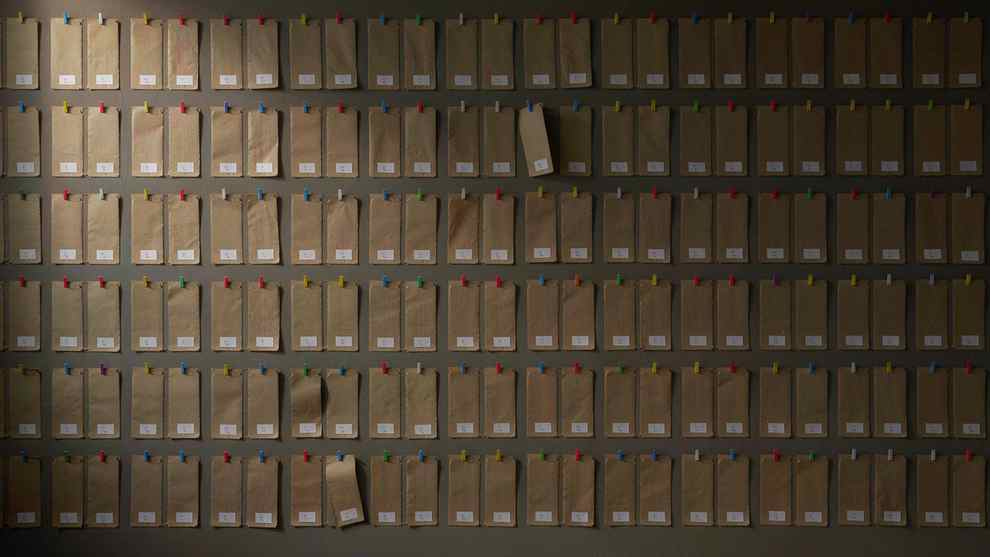
Higgsfield published the prompts behind a 95-minute AI short film. All of them. The archive runs to roughly 40,000 prompts across 108 folders arranged by scene, and behind those prompts sit 115,446 generation records.
Read those two numbers together and you get the actual story. Forty thousand prompts is a big library. A hundred and fifteen thousand generations is what it cost to get there — about 2.9 attempts per prompt, averaged across an entire feature-length film.
The film is called Hell Grind. The release is, on the surface, a marketing move from a company that sells video generation. Underneath, it's the most useful production document the AI video world has published, and it isn't useful for the reason most people will assume.
What's actually in the folders
The structure is by scene, not by prompt type. That matters more than it sounds. Every prompt library I've seen sorts by style — "cinematic lighting", "anime", "product shot" — which is how you'd organize a dictionary. Sorting by scene is how you'd organize a shooting script.
Inside a scene folder you find the prompts in the order they were used, which means you can see a shot being built: the first attempt, the correction, the second correction, the one that made it in. The failures are still there. Nobody cleaned them out.
About 4,561 of the prompts are in Chinese, the rest in English. That split matters if you prompt in either language, because it means the same shot exists in two phrasings and you can compare them.
Why 115,446 is the number that teaches you something
Anyone can write forty thousand sentences. The information is in the ratio.
If you've only ever seen finished AI films, you'd assume a competent team gets a shot in one or two tries. The archive says the average is closer to three, and averages hide the distribution: some shots landed immediately, and some clearly took ten or fifteen passes before the folder moved on.
That single fact recalibrates how you budget. If a 95-minute film needs ~115,000 generations, then a 3-minute promo needs roughly 3,600, and a 30-second social cut needs several hundred. Whatever your credit budget is, it's probably a third of what the work actually requires.
It also explains why these films take months rather than days. Not because rendering is slow, but because the loop is: generate, look, judge, rewrite, regenerate. The bottleneck is judgment, and judgment doesn't parallelize.
How to use a library like this without copying it
The obvious wrong move is to read it front to back. You'll learn nothing and burn an afternoon.
The right move is to treat it as a lookup table keyed by narrative function. Pick the scene in your own project that's giving you trouble — a character entering a room, a reveal, a transition between two locations — then find the equivalent beat in Hell Grind and read only that folder.
What you're looking for isn't the wording. It's the structure: what order the elements are specified in, which details got repeated every single time (usually the ones the model kept dropping), and where the team stopped describing and started constraining. Prompts that survive iteration tend to converge on a pattern, and the pattern is the transferable part.
The bilingual split is a free second lesson. Take one shot, read the English prompt and the Chinese prompt for it, and notice what got added or dropped in translation. Usually the Chinese version carries more about atmosphere and the English version carries more about camera and lighting, because each language has cheaper ways to say certain things.
The other release is the one filmmakers should read twice
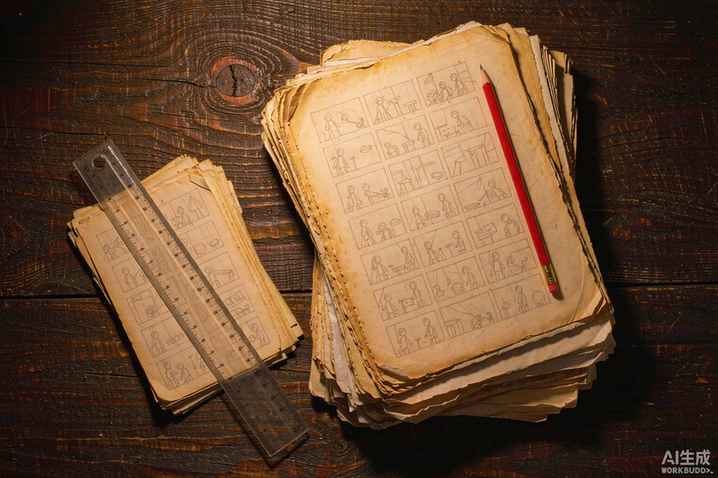
Alongside Hell Grind, Higgsfield open-sourced Passport Rush, a short made with a hybrid pipeline: hand-drawn 2D storyboards, then 3D previsualization in Blender, then AI animation.
That ordering is the whole argument. Storyboard first, block the scene in 3D second, generate last. It's the opposite of how most people work with these tools, which is prompt-first and fix-later, and it's the reason the output holds together across cuts — the camera positions and spatial relationships were decided by a human before any model ran.
For anyone doing client work, the hybrid route also solves the approval problem. You can show a client a storyboard and a grey-box Blender layout before spending a single credit. Getting notes at that stage costs nothing. Getting notes after forty generations costs a weekend.
What this does to the job of writing prompts
There's a version of this that reads as bad news for whoever currently gets paid to prompt. If a working archive is public, the argument goes, the skill is commoditized.
That's backwards. What the archive commoditizes is vocabulary — the specific phrasing that makes a model produce a foggy street at dusk. What it can't commoditize is the decision about which shot the film needs and how long it should hold.
In practice the value moves up a level. The prompt stops being the deliverable and becomes the record of a decision you already made. Which is why the folders are sorted by scene: the scene is the unit of authorship, and the prompt is just the note you left for the renderer.
Film students already learn this way. You don't study a director by reading their shot list in isolation; you watch the film, then you read the shot list, then you watch it again. This archive is the middle step, at scale, for a medium that has no film school yet.
The strategic logic isn't subtle either
Higgsfield runs a community where creators publish "Open Projects" — the finished piece, the brief, the folder structure, the models used, and optionally every prompt. Projects that reach 30 likes and 30 generations inside them get manually reviewed and verified, which earns the creator rating points and eligibility for grants.
So publishing prompts isn't charity. It's a flywheel: prompts make projects reproducible, reproducible projects get remixed, remixes generate usage, and usage is the thing a generation company sells. The 40,000 prompts are simultaneously an educational resource and a customer acquisition channel.
That doesn't make them less useful. It just means you should expect more of them. The competitive pressure now runs toward transparency, because a studio that publishes its prompt archive looks confident and a studio that hides it looks like it has something to hide.
The honest caveat
Everything in Hell Grind serves one aesthetic. Dark, heavy on texture, effects-forward. If you're making a bright product film or a children's animation, most of the archive is the wrong reference and you'll be pattern-matching against a style you don't want.
Read it as a worked example of process, not a style guide. The lesson isn't "prompt like this". It's "budget three attempts per shot, decide the camera before you generate, and keep the failures in the folder so you can see what you already tried".
That last habit is the one almost nobody has, and it's free.
Related articles
The Video Leaderboard's Number One Is a Talking Head
HeyGen Video leads at 64,000 weekly requests, ahead of Veo and Wan. Chinese labs hold about 54.8% of routed video traffic while Runway sits at 0.3%. What request volume measures.
VideoGen Promises Ten-Minute Videos From One Prompt. Nobody Benchmarked It.
Ten minutes is assembled from many shots, not rendered in one pass. The product is the planning harness, and the cost and quality claims are still waiting on third-party validation.
NVIDIA's OpenShell Enforces Agent Policy in the Kernel
Kernel level checks on every file, syscall and connection, plus formal verification of policy changes before they apply. The install is one line. The operational bill is the rest of the page.
FLUX 3 Max Renders 10 Seconds of Video in 11. The Benchmark Has an Asterisk.
Fal post-trained FLUX 3 for speed and got a 1139 Elo claim out of it. The vote count is preliminary, the confidence interval overlaps the leader, and the 75% discount runs three weeks.