
Editable SVG Is the Quiet Frontier of Image Generation

fal added Ideogram Vector to its hosted model catalog on October 22. The description is short and slightly unusual: text-to-vector generation of editable SVG graphics, with aspect ratio controls, three quality tiers, and optional reference-image conditioning.
Everything else in the image-generation world outputs pixels. This one outputs paths.
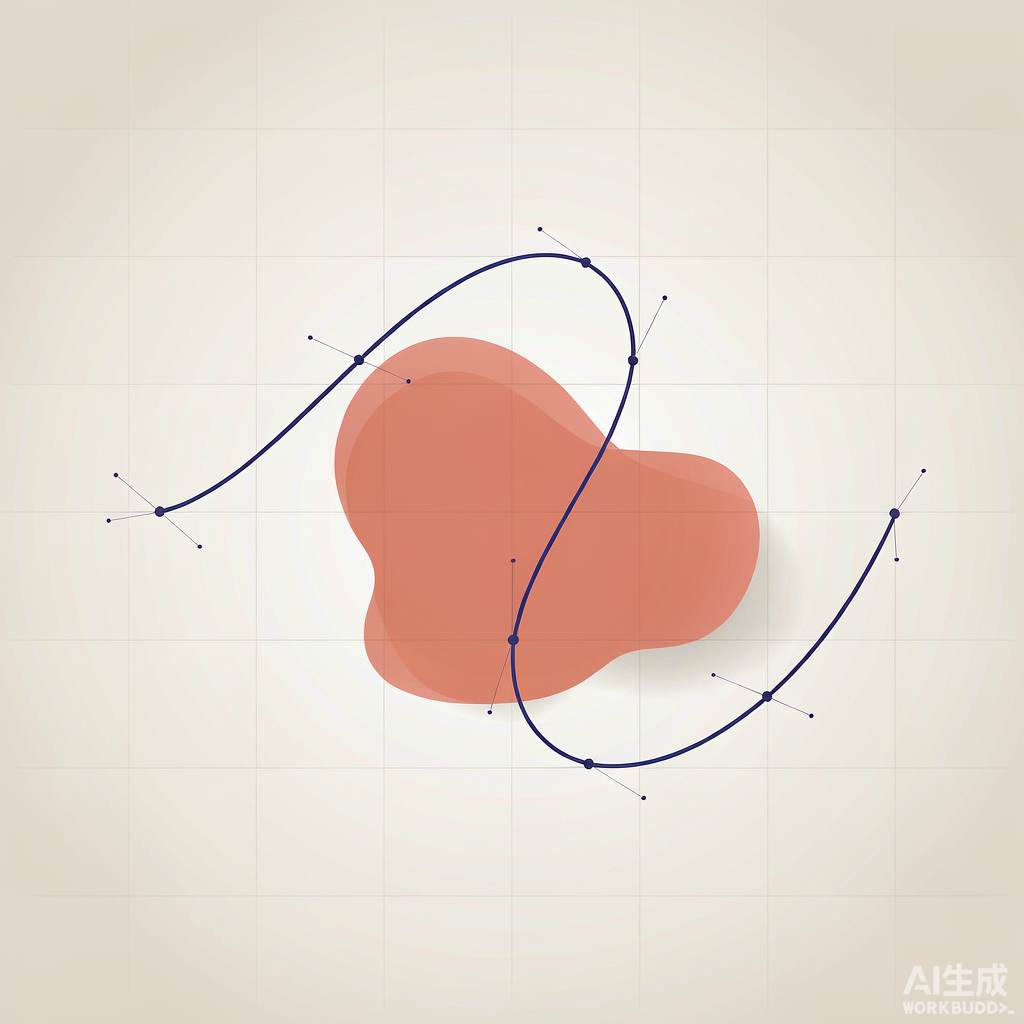
That distinction sounds like a file format detail and is actually the whole story. A pixel image is a grid of colored squares. An SVG is a set of mathematical descriptions — curves, fills, strokes, coordinates — that a renderer resolves at whatever size you ask for. One is a photograph of a drawing. The other is the drawing.
Why nobody shipped this earlier
Because it's much harder than it looks, and the failure modes are ugly.
Diffusion models produce dense continuous fields of color. Vector graphics want the opposite: a small number of clean closed shapes, each with a single fill, arranged in a sensible layer order. Converting one to the other is a well-known problem — it's what "trace bitmap" does in Illustrator — and the naive results are what you'd expect: thousands of jagged nodes, hundreds of near-duplicate colors, and shapes that look fine on screen but fall apart the moment you try to edit a curve.
Doing it well means the model has to understand what the shapes are, not just where the color boundaries are. A logo isn't twenty thousand colored regions; it's four shapes and a wordmark. Getting from the first description to the second requires semantic structure that pixel models never had to learn.
Whether Ideogram Vector actually solves that is unknown from the announcement. But it's the right problem to attack, and the fact that a hosted inference platform added it suggests someone thinks the output is usable rather than a demo.
Why designers still care about SVG in 2026
Because the physical world doesn't run on 72 dots per inch.
A raster logo is fine in a web header and useless for a 3-metre shopfront sign, an embroidered cap, a laser-etched laptop lid, or a one-colour screen print. All of those need paths, because the production equipment needs geometry, not pixels. Vinyl cutters follow contours. Embroidery machines follow stitch paths. Screen printers need color separations.
There's also the editing argument. A vector file can be recolored, kerned, simplified, and combined with other vector art without degrading. A raster file gets repainted, and repainting a logo badly is how brand guidelines get violated.
So the practical gap has always been: AI can generate a beautiful concept, and then a human spends two hours rebuilding it as vectors. That two hours is the entire reason AI hasn't disrupted logo and icon work in the way it disrupted illustration.
If the output is genuinely editable — clean nodes, closed paths, sane layer structure — the two hours becomes twenty minutes of cleanup. That's a different economic story.
What to check before believing it
Node count is the first thing. Open the SVG in a text editor and count path commands. A human-drawn icon has maybe fifty to two hundred. A traced bitmap has five thousand. If the output is in the thousands, it's a raster in a trench coat and you've gained nothing.
Colour count is the second. Real vector artwork uses a palette. Traced output uses four hundred shades of nearly the same red, which makes recoloring impossible and printing expensive.
Third, whether paths are closed and non-overlapping. Open paths with visible seams look fine at small sizes and produce hairlines at large ones.
Fourth, text. Almost certainly the model outputs letterforms as shapes rather than live text, which is fine for a logo and useless for anything you need to edit. Test whether the shapes are at least legible at small sizes.
The fifth test is the one people forget: open the file in a real vector editor and try to move one element. If the whole thing is one merged shape, the format is a lie — it's an SVG container holding a raster-like blob of shapes with no semantic grouping.
Who this is actually for
Not illustrators. The people who'll use this first are the ones who already buy icons and graphics rather than drawing them: small agencies producing social templates, e-commerce teams needing badges and banners, and the enormous population of people who make slides for a living.
That last group is underrated. A marketing manager who needs twelve clean icons in a consistent style for a deck currently has three options — buy a pack that's almost right, commission a designer for a week, or use whatever's in the template. A model that produces editable vector icons in a specified style solves a problem nobody has solved cheaply, and there are vastly more of those people than there are logo designers.
The other early adopters will be print shops and sign makers, who spend a surprising amount of their day tracing low-resolution customer files into something a plotter can follow. If the model can read a rough sketch or a phone photo of a sketch and return clean paths, that's an hour saved per job.
What it won't do is replace craft at the top end. Hand-drawn lettering, custom logos, anything where the shape itself is the idea — a model trained to produce plausible vector shapes will produce plausible vector shapes, which is exactly what a brand doesn't want.
The pattern worth noticing
Over the past year the differentiator in image generation has quietly moved from quality to output contract.
Transparent backgrounds. Layered PSD-style output. Editable text. Vector paths. None of these make a better-looking image, and each of them removes a manual step that used to sit between the model and the deliverable. The model that outputs something you can immediately use beats the model that outputs something prettier you have to fix.
Ideogram has been playing this game for a while — its earlier releases leaned on typography and graphic-design use cases rather than photorealism, which is a sensible place to be if your competition is busy fighting over portraits.
Vector output is the logical next step for that strategy, and it's a much more defensible niche than another half-point on an aesthetic benchmark. Photorealism converges. Clean SVG doesn't, because the failure is structural rather than perceptual.
The honest caveat
There's very little published detail here. fal's catalog entry describes capabilities, not architecture, and there's no independent evaluation of output quality that I could find. Three quality tiers and aspect ratio controls are product decisions, not evidence.
So treat this as a direction rather than a result. The interesting claim isn't "AI can make logos now" — it has been able to make logo-shaped pictures for two years. The claim is that it can make files a designer will accept into a production workflow. That's a much narrower target, and hitting it would matter more than any benchmark on the image side.
The test is simple and you can run it in ten minutes: generate one icon, open it in Illustrator or Inkscape, and try to change its colour without redrawing it. If that works, the format war just moved.
Related articles
The Video Leaderboard's Number One Is a Talking Head
HeyGen Video leads at 64,000 weekly requests, ahead of Veo and Wan. Chinese labs hold about 54.8% of routed video traffic while Runway sits at 0.3%. What request volume measures.
VideoGen Promises Ten-Minute Videos From One Prompt. Nobody Benchmarked It.
Ten minutes is assembled from many shots, not rendered in one pass. The product is the planning harness, and the cost and quality claims are still waiting on third-party validation.
NVIDIA's OpenShell Enforces Agent Policy in the Kernel
Kernel level checks on every file, syscall and connection, plus formal verification of policy changes before they apply. The install is one line. The operational bill is the rest of the page.
FLUX 3 Max Renders 10 Seconds of Video in 11. The Benchmark Has an Asterisk.
Fal post-trained FLUX 3 for speed and got a 1139 Elo claim out of it. The vote count is preliminary, the confidence interval overlaps the leader, and the 75% discount runs three weeks.