
ChatGPT Images 2.5 Is Faster, Sharper, and Finally Lets You Sketch
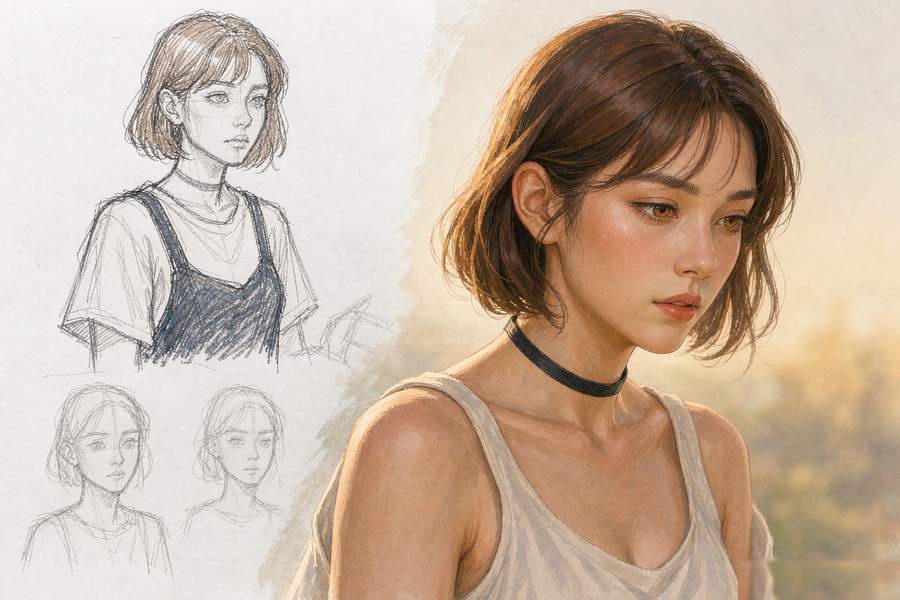
OpenAI shipped ChatGPT Images 2.5 on September 8, 2026, and the headline number everyone grabbed was the speed: up to 50 percent lower latency than the previous version. That matters, but it undersells what changed. The more interesting part is that the model now lets you draw a rough sketch and hand it over as a reference, and that edits hold up across multiple rounds instead of drifting.
If you last touched these tools in the spring, the difference will be immediate. The first thing you notice is the wait. A generation that used to take six seconds now lands in about three. The second thing you notice is that when you ask for a small change, the rest of the image stays put.
What actually got better
The official list covers three areas: speed, detail, and editing stability.
Speed is the easy one to verify. OpenAI says latency drops by up to half, and the model is available across desktop, mobile, and web, so the improvement lands everywhere rather than only on the API.
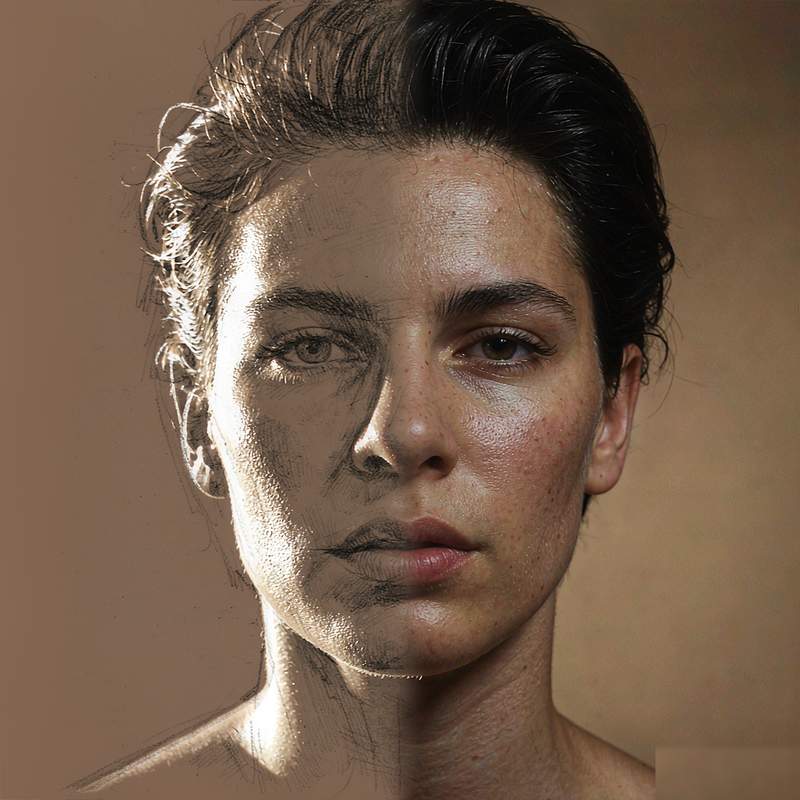
Detail is where the model had the most room to grow. Earlier versions were strong on composition but could smear fine textures and lose material definition. 2.5 pushes on lighting and material rendering, so skin, fabric, and metal read as what they are instead of as a smooth approximation.
Editing stability is the part people who actually use these tools care about most. The long standing complaint about image models is that a multi-turn edit drifts. You change the shirt color and suddenly the face is different. 2.5 is built to preserve the subject, the product shape, the composition, and the overall style when you ask for a targeted change. That one fix saves more real-world time than any latency number.
The Sketch feature is the sleeper hit
The biggest product addition is Sketch. You draw a rough layout directly in ChatGPT, and the model turns it into a finished image. You do not need to know how to draw. A few boxes, a stick figure, a horizon line, and a color note are enough to communicate intent that would take three paragraphs of prompting to describe.
This closes a gap that has existed since the first text-to-image tools. Prompts are bad at spatial thinking. "Put the product on the left, a headline top right, and a person in the lower third" is a lot of words for something a sketch communicates in ten seconds. Sketch gives the model something closer to a storyboard, and storyboards are how visual work actually gets briefed.
Two API flavors for two different jobs
On the API side, OpenAI split the release into two variants with clear roles.
GPT-Image-2.5 Flare is the general purpose model. It carries the 2.5 series speed, quality, and editing, and it is aimed at social media assets, product prototypes, and high-volume generation where you need a lot of images fast.
GPT-Image-2.5 Sunburst is the precision model. It is built for advertising stills and commercial product shots where control matters more than throughput. You get stronger control over the image, and you pay for it in generation time.
That split is a useful signal about how the market has matured. Two years ago, one model tried to serve everyone. Now the vendors are slicing by workload, because "make a hundred memes" and "make one campaign hero image" are genuinely different jobs.
The practical shift: treat it as an editor, not a generator
The upgrade is most useful if you stop treating the model as a slot machine and start treating it as an editor. The old workflow was to write a prompt, roll four images, pick the best, and when none worked, write a better prompt and roll again. That loop is where most of the frustration lived.
The 2.5 workflow is different. You start with a rough idea, generate something passable, then refine it through a series of small, targeted edits. Change the background. Adjust the lighting. Move one object. Because edits now hold the rest of the image steady, each step is a real improvement instead of a gamble.
This is where Sketch earns its keep too. When the spatial arrangement matters, a bad drawing beats a long description. Draw where the headline goes, where the product sits, where the person stands. The model fills in the quality. You supply the intent.
One habit is worth keeping: check the details before you call it done. No model is perfect, and 2.5 still produces the occasional mangled hand or wrong letter. The difference now is that the errors are rare enough to be worth one more edit, rather than reason enough to abandon the image and start over. That, more than any benchmark, is what "usable" means.
Where this leaves the field
The context worth knowing is scale. OpenAI has said the ChatGPT Images family and its API produce more than three billion images a week. That is a number that would have sounded absurd in 2023 and is now just the baseline.
It also explains why OpenAI can afford to consolidate. The same week it shipped 2.5, the company quietly retired the old DALL-E GPT inside ChatGPT, pointing everyone toward ChatGPT Images. DALL-E the name may be gone, but the job it did has been fully absorbed into a faster, sharper pipeline.
For the competition, the pressure is specific. Midjourney still owns pure aesthetic range, and nobody seriously disputes that. Adobe Firefly still owns the commercial-licensing angle for cautious enterprises. Google's Nano Banana line still wins on native high resolution and character consistency. ChatGPT Images 2.5 is not trying to beat each of them at their own game. It is trying to be the best default: fast enough, sharp enough, and now good enough at editing that you stop reaching for a second tool.
The honest takeaway is that 2.5 is an iteration, not a revolution. But it is an iteration on exactly the three things that made image models annoying to use in real work. Speed, detail, and edit stability are not glamorous. They are just the reasons a person gives up on a tool. OpenAI spent this release taking those reasons away one at a time.
Related articles
Chinese AI Image Models Are Winning Fans Overseas, and Washington Is Watching
The adoption is technical first, political second. Developers download what works, and right now that is increasingly from Chinese labs.
What the Prediction Markets Are Betting About AI Images
Real money is betting on who wins AI images. OpenAI leads stills, MiniMax leads video, and the open models are the wildcard nobody prices.
Qwen-Image 2.1 vs Nano Banana 2.0: A 7B Open Model Just Landed on Google's Heels
A 7-billion-parameter open model now sits ahead of Google's Nano Banana 2.0 on Alibaba's benchmark and within striking distance everywhere else.
Qwen-Image 2.1 vs Nano Banana 2.0: A 7B Open Model Just Landed on Google's Heels
A 7-billion-parameter open model now sits ahead of Google's Nano Banana 2.0 on Alibaba's benchmark and within striking distance everywhere else.