
Can You Still Tell an AI Image from a Real One? The Honest Answer Is No.
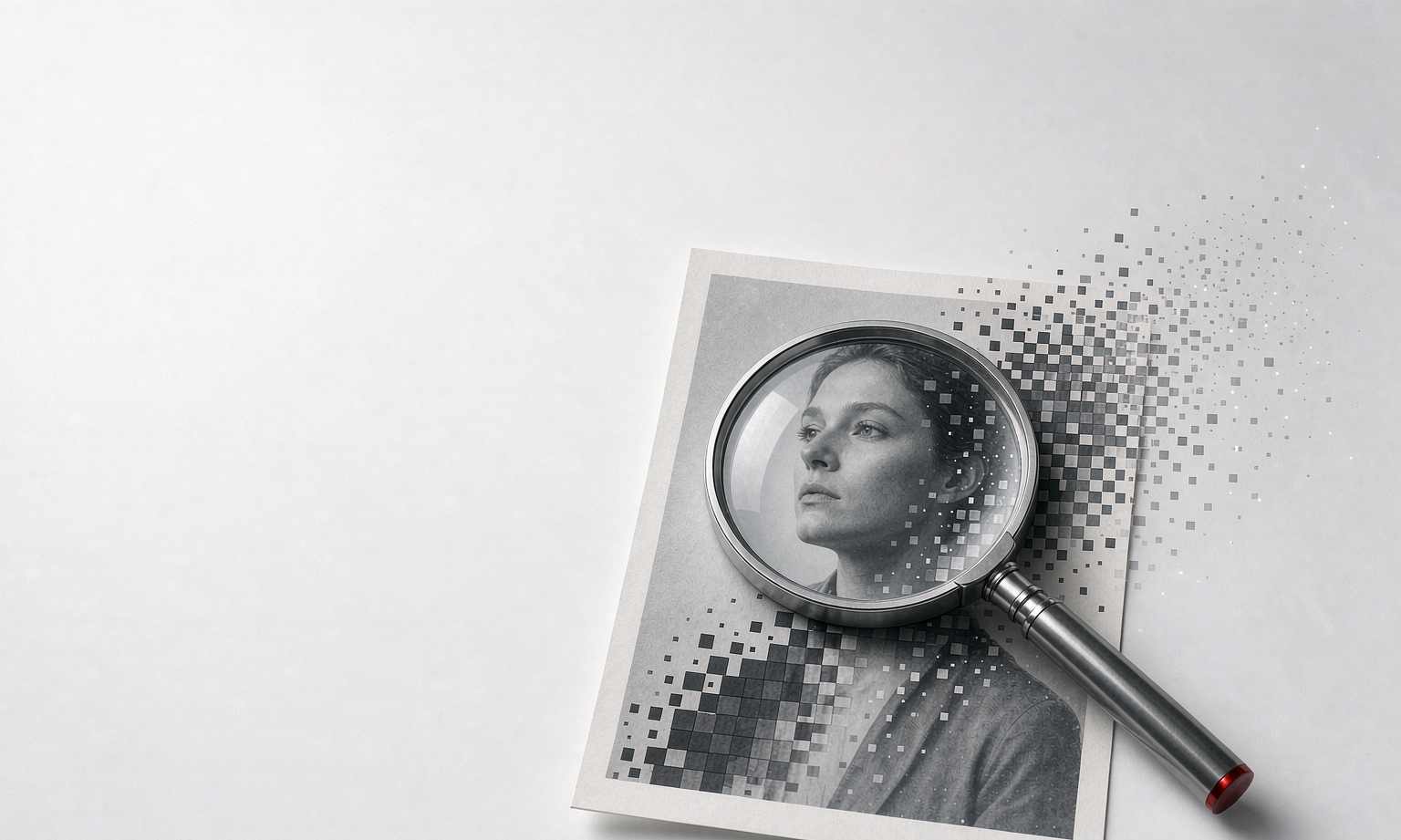
There is a game going around this month that turns a serious question into a scoreboard. It shows you a stream of images and asks you to flag which ones are AI-generated. People play it convinced they have a good eye, then watch their accuracy collapse somewhere around the point where the AI starts rendering realistic human hands correctly. It has been years since that was a reliable tell. The game pulled in over a hundred points on Hacker News, and the comments read like a support group for people discovering their own blindness.
The tells are gone
Every shortcut people used to rely on has closed. Extra fingers, mangled text, plastic skin, impossible lighting. The current models handle all of them well enough that you cannot rely on any single one. Text in particular has improved dramatically, which removed one of the last easy wins for human detection. A model that renders a legible sign inside a scene used to be a dead giveaway. Now it is table stakes.
The result is a strange situation. The images got better, but the human ability to spot them did not. Most people, faced with a good AI image and a real photo side by side, are guessing. The game's popularity is partly proof of that: it is fun precisely because you keep getting it wrong, and the getting-it-wrong is the point. Confidence runs high and accuracy runs around a coin flip.
The detectors are not saving us either
There is a parallel market in AI-detection tools, and it is just as shaky. New tools launch claiming to spot AI images, and they work in the lab and fail in the wild. A detector tuned on one model's artifacts struggles on the next model's. Compress an image, resize it, or run it through a social platform's re-encoding, and the subtle fingerprints the detector relied on get scrubbed away.
Worse, the detectors produce false positives. A real photo with certain lighting or a heavy filter can trip them. For a tool meant to restore trust in images, a false positive is a serious problem, because it lets anyone dismiss a genuine photo as fake. The detection tools, in other words, can be weaponized in both directions. That is not a flaw that more training fixes. It is structural.
The arms race only has one winner
There is a fundamental asymmetry here that people keep underestimating. The generators are trying to produce images that look real, and they have a clear objective. The detectors are trying to spot them, and they are chasing a moving target that keeps getting better. In an arms race, the side with a clear objective and a fast iteration loop usually wins, and that side is the generators.
Every new model forces the detectors to retrain, and by the time they catch up, the next model has shipped. The gap is not closing. It is widening, and it widens with every release. The people selling detection tools have an incentive to sound optimistic, but the actual trend line is not on their side. If anything, the honest position is that reliable detection is a losing game, and the sooner we accept that, the sooner we can work on the thing that actually helps.
What this means in practice
The honest answer to "can you tell" is: not reliably, and increasingly, no. The more useful question is how we live with that. Verification has to move upstream, to provenance. If an image is signed at creation, or carries a record of where it came from and how it was edited, then you do not need to squint at pixels. You check the metadata.
That infrastructure barely exists for ordinary users. Some camera makers and platforms are experimenting with content credentials, but it is not standard, and the moment an image is screenshotted, the chain breaks. Until that changes, the default is skepticism, and skepticism is exhausting. It is also corrosive, and that is the part we are only starting to feel.
The social cost is the real story
The damage is not really about being tricked by a fake image. It is about the collapse of shared confidence. When any photo might be fabricated, and the detection tools are unreliable, people start doubting everything, including real evidence. That is a heavier problem than any individual image, and it is the one the tech has not solved.
This is the part the technical conversation keeps missing. The people worried about AI images are not mostly worried about being fooled by a fun filter. They are worried about a world where a real photograph of a real event can be dismissed as fake, and a fake one can be defended as real. When the evidence itself is in doubt, the arguments that rely on evidence stop working. That is not a detector problem. It is a trust problem, and it is bigger than any of the tools on either side of it.
The responsibility is shifting, and nobody wants it
One of the quiet subplots is that responsibility keeps getting pushed around without landing anywhere. The model makers say they are just providing a tool. The platforms say they cannot verify every image. The users say they should not have to be forensic analysts. Everyone is technically right, and the result is that nobody is accountable for the harm when a fake image does damage.
That diffusion of responsibility is the actual problem. When a manipulated image spreads and causes harm, the harm is real, but there is no single actor whose job it was to catch it. The model maker shipped a capable tool, the platform hosted it, and the user believed it. Each link in the chain can point to the next and claim it did nothing wrong.
Until responsibility lands somewhere concrete, the default answer will be to blame the tool or blame the viewer, and neither of those works. Blaming the tool is like blaming a camera for a staged photo. Blaming the viewer ignores that no human can reliably tell anymore. The honest fix is structural, clear rules about disclosure and provenance that bind the people who publish and distribute images, not the people who look at them.
What actually comes next
The image generators won the arms race. They got so good that the question "is this real" no longer has a fast answer. The next problem to solve is not making better detectors. It is building a system where the truth of an image does not depend on whether your eye happens to catch it. Provenance, signed content, verifiable chains of custody. Those are boring, and they are the only thing that will actually work. The eye has lost, and pretending otherwise just gives everyone a false sense of security.
Related articles
The Quiet Licensing Shift That Could Change Open-Source AI Images
Open weights no longer mean what they did a year ago. The licensing fine print is getting more complicated right as the models get better.
The Local Model Squeeze: Why Creators Keep Chasing Unrestricted Image Models
Every week another creator asks for an unrestricted model. The demand says more about the cloud tools than the people asking.
Tongyi Wanxiang Qwen-Image 2.1 Goes Open Source: Why a 7B Model Dares to Challenge Google and OpenAI
A 7B open-source image generation model—how can it go head-to-head with Google and OpenAI? This article breaks down Qwen-Image 2.1's scorecard, core capabilities, and licensing controversy.
The Local Model Squeeze: Why Creators Keep Chasing Unrestricted Image Models
Every week another creator asks for an unrestricted model. The demand says more about the cloud tools than the people asking.