
AI Finally Learned to Spell: Why the Text Rendering Breakthrough Matters
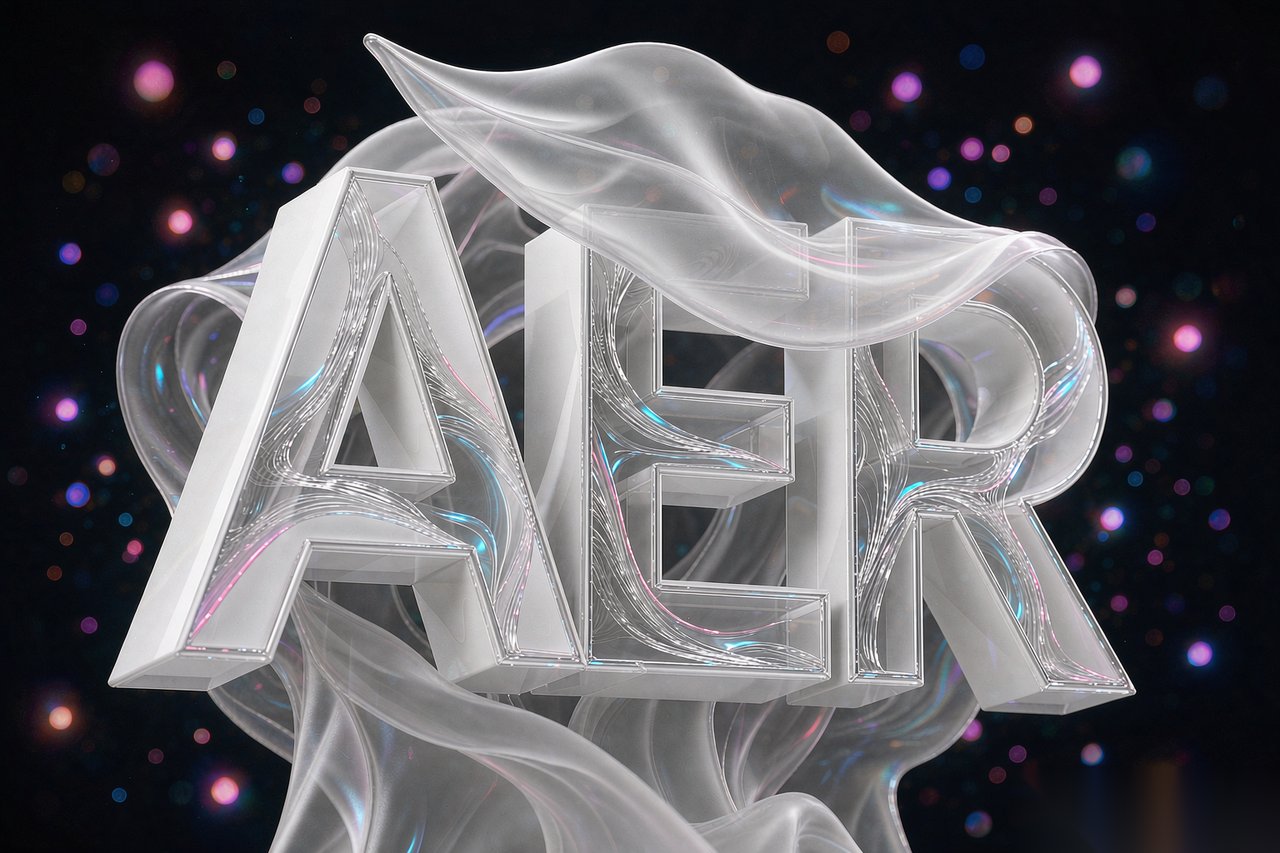
For most of the AI image era, there was a reliable way to spot a generated image. Look at any text in the frame. A street sign would read "PHARNACY." A storefront would say "CLSOED." A magazine cover would be covered in letters that looked like English from a distance and dissolved into nonsense up close.
That era is ending. Across 2026, the big image models fixed text rendering, and the reaction from the community has been louder than any benchmark result.
What changed
Text inside images is hard for a specific reason. A diffusion model doesn't "know" what letters mean. It learns visual patterns, and a word is just a pattern of strokes. For a long time, models could approximate the shape of a word without understanding the sequence of characters, which is why you got convincing-looking garbage.
The new models approach this differently. GPT Image 2, Google's Nano Banana Pro, and the newer open models all treat text as something to be reasoned about, not just approximated. The result is that a model can now render a headline, a label, a sign, or a full UI screenshot with the letters in the right order and the spelling correct.
The improvement showed up fast. When @PlayingGodAGI posted two test images in 2026, the community reacted strongly. One was an anatomical diagram where every muscle, bone, and nerve label was accurate to the textbook. The other was a YouTube homepage screenshot where the interface elements, video thumbnails, and title text rendered without distortion. His summary: "This eliminates the last flaw of AI-generated images."
What it unlocks
The practical consequences are bigger than "images look better now."
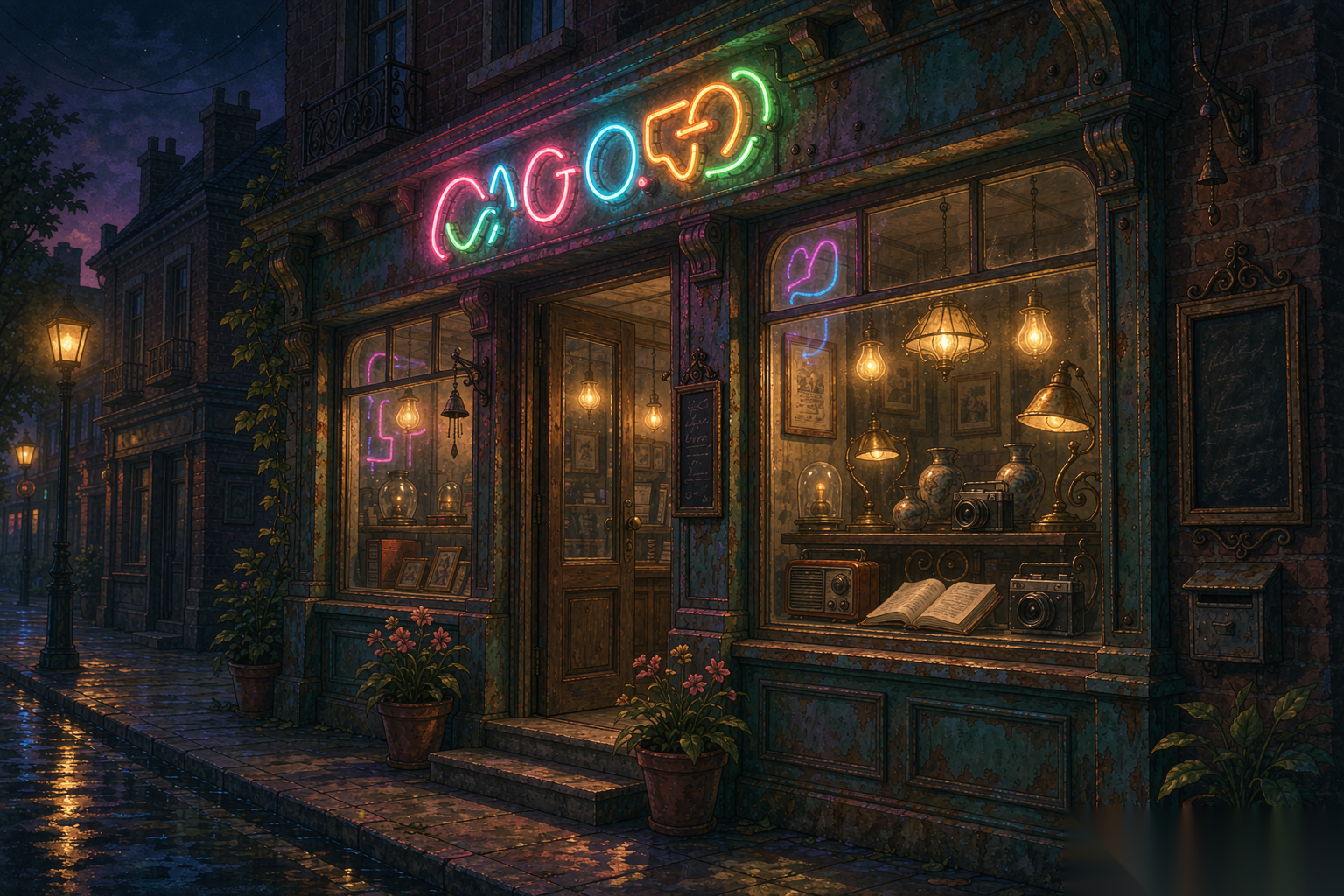
The first is signage and branding. A model that spells correctly can produce a storefront mockup, a product label, or a marketing image with the brand name in it. That used to require a designer to fix the text by hand. Now it's part of the generation.
The second is interface design. Rendering a believable UI, with correct labels and layout, is a genuinely useful capability for prototyping. The YouTube screenshot test matters because it shows a model can reconstruct a real, text-heavy interface without distorting it.
The third is multilingual work. When the Japanese blogger @masahirochaen tested GPT Image 2 on Japanese text and found the kana and kanji rendered correctly, it changed what "text rendering" means. This isn't just English spelling. It's multilingual typesetting, which opens up markets where the previous models were essentially useless.
Reddit noticed the multilingual point specifically. One commenter pointed out that "the Kanji and Katakana are both valid," a sentence that would have been absurd two years ago.
How the models pulled it off
The reason text was hard is worth understanding, because it explains why the fix happened all at once.
A diffusion model generates pixels from noise, guided by a text prompt. For a long time, it had no real representation of "letters" as discrete units. It learned that certain stroke patterns look word-like, and it reproduced the shape without tracking the sequence. That's why old AI text looked right from across the room and wrong up close.
The shift came from two directions. Models got better at treating text as a first-class concept rather than a texture, and they were trained on far more examples of real-world text in context. Signs, labels, screenshots, book covers. Once the training data included enough of the real thing, the models stopped guessing and started spelling.
The result is not a single breakthrough but a threshold crossed. Text went from "unsolved" to "mostly solved" over about a year, and the community noticed exactly when it happened.
The detection problem gets harder
There's a flip side that doesn't get enough attention. The text breakthrough makes AI images harder to identify, and that has real consequences.
For years, the simplest way to catch a fake was to read the text in it. A forged document, a staged screenshot, a fabricated product label: the letters gave it away. That shortcut is now gone for the frontier models, which means detection has to move to subtler signals, lighting inconsistencies, physical impossibilities, or the metadata and watermarking embedded by the platforms.
The models themselves still fail on physical logic. A Rubik's Cube reflection, a TNT cannon's ballistic trajectory, a map that doesn't resolve when you zoom in. These are the new tells, and they're harder for a casual observer to spot than a misspelled word.
It's also why watermarking and provenance matter more than ever. If you can't spot a generated image by reading it, you need the platform to tell you it's generated. Google's SynthID and similar systems are the backstop, and the text breakthrough makes them more important, not less.
What still isn't solved
A few honest caveats.
Short text is close to solved, but dense text is still the frontier. In a September 2026 test, all eight leading models spelled a two-word product label and a sale headline correctly. The differences now are in layout and long strings. A menu or an infographic with a paragraph of text is still where mistakes appear, and the advice to proofread every public asset still applies.
Midjourney, notably, is still weak on long strings of text. Single stylized words are fine. A headline with several words starts to fall apart. If your work is typography-heavy, Midjourney is not the tool.
And there's a second-order problem people are starting to talk about: text that's too good. A model that can render a realistic UI or a convincing news graphic also makes it easier to fabricate something that looks authoritative. The text breakthrough is a double-edged sword, and it lands in the middle of an ongoing argument about detection, watermarking, and provenance.
The bottom line
The "AI can't do hands, AI can't do text" shorthand is dead. Hands got fixed first. Text was the harder problem, and it's now mostly solved for the everyday cases that used to embarrass people.
That doesn't mean every generated image is trustworthy. It means the tells have moved somewhere subtler, and the people who relied on "look at the spelling" as a detection trick need a new method. For everyone else, it just means the images got better, and a lot of manual cleanup work quietly disappeared.
Related articles
Flux 2 vs Stable Diffusion 3.5: The Open-Source Image Race Has a Clear Leader
Flux 2 leads on quality, Stable Diffusion 3.5 keeps the deepest ecosystem. How to choose between them in 2026.
Who Owns an AI-Generated Image? Copyright, and the Firefly Loophole
Licensing, indemnification, and Adobe Firefly's legal cover: what you can safely publish in 2026.
GPT Image 2 vs Nano Banana Pro: The 2026 Showdown Nobody Can Agree On
Speed and text versus resolution and consistency: a grounded 2026 comparison of GPT Image 2 and Nano Banana Pro.
Midjourney V8.2 in 2026: Still the King of AI Aesthetics, but It Costs You
What V8.1 and V8.2 changed, what the subscription costs, and who should actually pay for Midjourney in 2026.