
Agility Digit 5 Ships With a Safety Case, Not Just a Spec Sheet
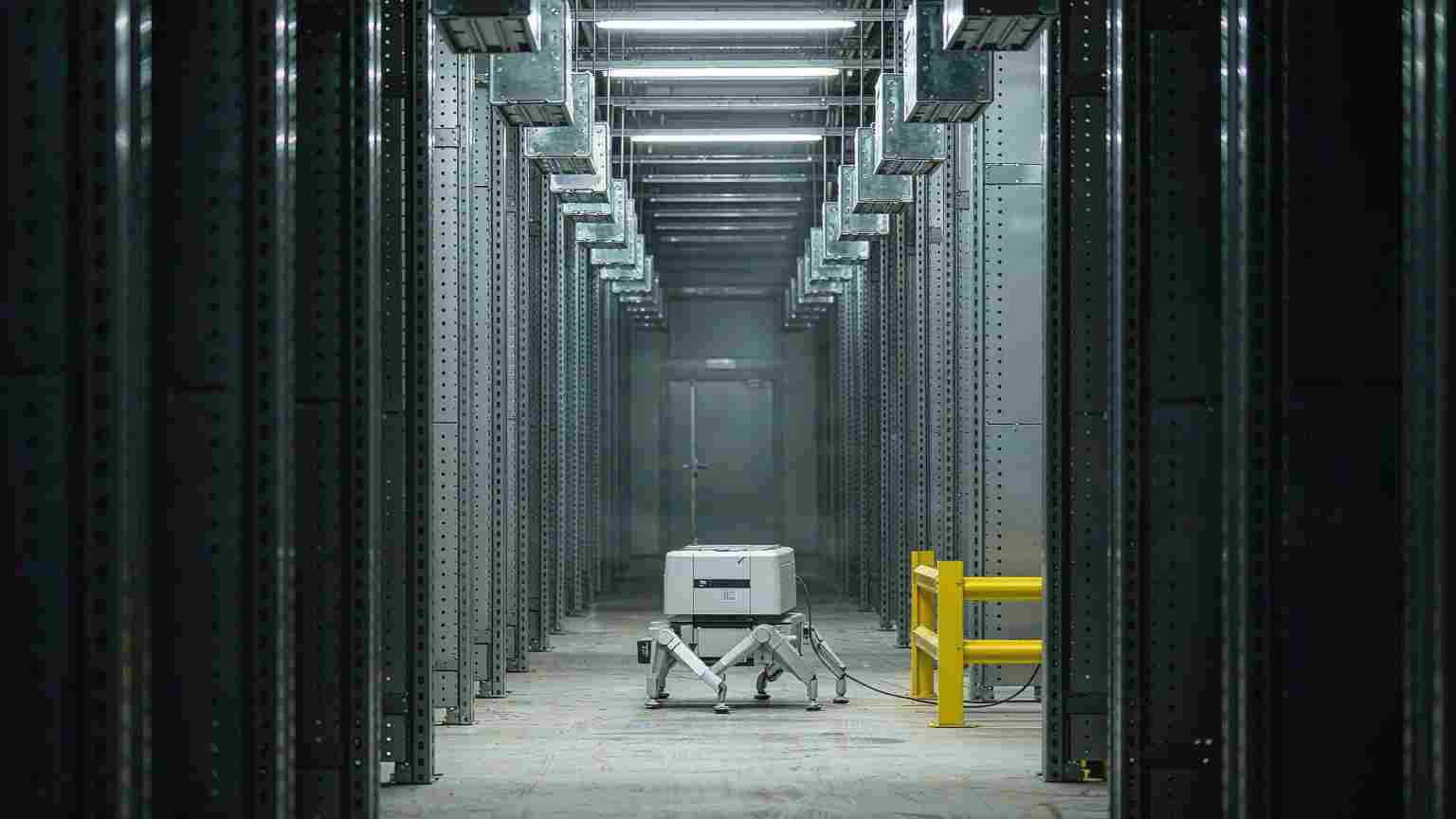
Agility Robotics has announced Digit 5, the next version of its bipedal warehouse robot, and the more interesting part of the announcement is what comes with it. Agility also signed a partnership with FORT Robotics to work on functional safety for humanoids, which puts the effort on certification rather than on a demo reel.
That choice is a signal about where the humanoid industry is in late 2026. The companies getting paying work are the ones clearing a safety bar, and the safety bar is not something a lab can leap over with a better model.
What the numbers say
Agility cited more than 65,000 operational hours for Digit 4 across North American customer sites, naming Amazon, GXO, Schaeffler and Toyota Motor Manufacturing Canada. Hours in service is a different kind of metric from a benchmark score. A robot that has run for tens of thousands of hours in real facilities, around real people, has a track record that a new entrant cannot claim.
FORT Robotics builds safety and control systems for industrial equipment, the layer that can stop a machine when a human steps into its path. Partnering with a firm like that points at certification work: emergency stop behaviour, speed and force limits, and the documentation that a plant safety officer needs before a robot is allowed on the floor.
Why safety is the gate
A warehouse is not a lab. It has forklifts, moving pallets, uneven surfaces, and people who do not always follow the marked lanes. A fixed industrial arm is kept behind a fence, so its failure modes are contained. A mobile humanoid shares the floor, which means every failure mode is a person's problem.
That is why the standards that matter are not about intelligence. The American Association for Advancing Automation finalised the third part of the R15.08 standard, which covers safety requirements for industrial mobile robots after they are deployed. Part 1 was reaffirmed in 2026. In the United States there is no single robot-specific federal standard, so employers lean on consensus standards like R15.06, R15.08 and ISO/TS 15066 to show they did the right thing.
In the European Union, the transparency obligations in Article 50 of the AI Act began applying on August 2, 2026, with enforcement now running through the AI Office and national authorities. That touches anyone deploying AI-driven robots or agents that interact with users in the EU.
Read together, these are the rules that decide whether a humanoid can be sold into a factory or a warehouse at scale. A robot that cannot be certified stays in a pilot.
The standards have teeth that models do not
Part of what makes the safety angle decisive is that the rules are already in force. The third part of the R15.08 standard, covering industrial mobile robots after they are deployed, was finalised this year by the industry association, and the first part was reaffirmed. In the United States, there is no single federal robot safety standard, so employers rely on consensus standards and on the documentation a vendor supplies. That documentation is where a humanoid either passes a customer's risk review or does not.
In the European Union, the transparency obligations under Article 50 of the AI Act started applying on August 2, 2026, with the AI Office and national authorities now enforcing them. Anyone deploying an AI-driven robot or agent that interacts with users in the EU has to meet those obligations, which include telling people when they are dealing with an AI system. For a warehouse robot working alongside staff, that is a live requirement rather than a future one.
Why the safety work is hard to fake
A safety case is not a page in a brochure. It is an argument, backed by tests, that a machine behaves predictably in the situations that matter. For a mobile humanoid, that means demonstrating how the robot detects a person in its path, how quickly it stops, and what happens when a sensor fails. Each of those requires physical testing, not model evaluation.
That is why a partnership with a functional safety vendor is a different signal from a better demo. The work is slow, it produces documents rather than videos, and it is the part a customer's own engineers will actually inspect. A robot vendor that invests here is signalling that it expects to sell fleets rather than pilots.
It also creates a defensible position. Once a safety case exists, it can be extended to new versions and reused across customers, which lowers the cost of each new deployment. A competitor starting from scratch pays that cost again.
The pilot-to-product gap
Most humanoid announcements are about capability. Agility's framing is about deployment. The distinction is the difference between a robot that can do a task once, on camera, and a robot that a customer will buy a fleet of.
A customer buying a fleet needs three things beyond the demo. The first is reliability, measured across many units over many shifts. The second is a safety case that satisfies its own risk process, not the vendor's. The third is a maintenance and spare-parts plan, because a robot that cannot be repaired is a liability. Digit 5 comes with the first two visible in the announcement, and the operational hours figure is the evidence for the first.
The counterexample worth noting
The rest of the field shows how hard this is. Tesla has scaled Optimus production at Fremont, and the reported constraint is not chassis output but hands and generalisation, meaning whether the robot can handle variability it has not seen. General capability is a research problem. A safety case is an engineering and documentation problem, and it can be cleared in parallel with a narrower capability.
That is why some companies are getting deployments while others are still chasing generality. A robot that reliably moves totes from A to B, safely, is worth money today. A robot that might do anything is not yet buyable, because nobody can certify "might do anything."
What to watch
The progress to track is certification and hours, not new versions. If Digit 5 shows up in named customer facilities with published operating hours, that is the real advance. If the safety partnership produces a documented case that other vendors can reference, it raises the floor for the whole category.
The other thing to watch is whether the safety work becomes a selling point rather than a compliance cost. Factories that have been burned by automation that promised more than it delivered tend to reward vendors who bring paperwork and evidence. In that market, a safety case is not overhead. It is the product.
The stronger signal would be a vendor publishing its safety approach in enough detail that a customer's engineers can audit it without a vendor engineer in the room. That is the point at which a humanoid stops being a pilot project and becomes equipment a plant is willing to buy on its own terms.
Related articles
Frontier Agents Finished 30 Percent of a Research Workflow. That Is the Number.
Agents can run research. Inventing the procedure is still out of reach.
Figure AI Locked In $3.5 Billion of Compute Before It Has a Product to Sell
The bet is that generalisation is a compute problem. The field has not settled that.
OpenAI Finally Put Transparent Backgrounds in the Image API
A small feature that deletes a whole step from the pipeline.
Dolphin AI Turns a Script Into a Multi-Shot Video Without Losing the Costume
Continuity across cuts is the part most video models still fail.