
A Skill That Draws Diagrams an Image Model Cannot Fake
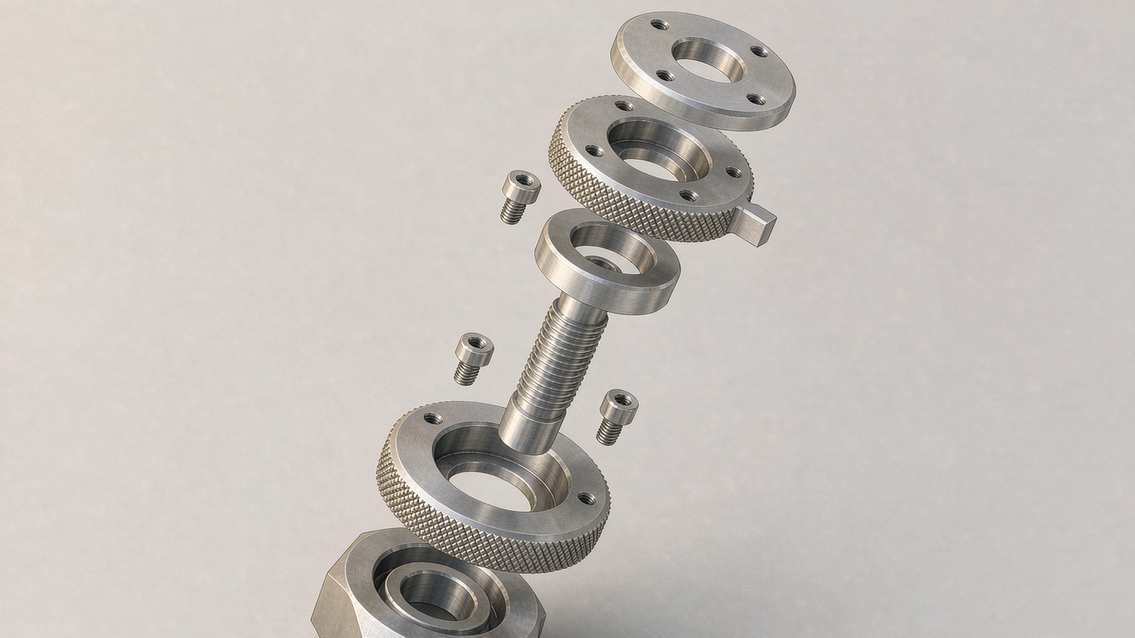
There is a specific failure mode with generated diagrams that anyone who has tried it knows. You ask for a cross-section of a gearbox and you get something that looks like a cross-section of a gearbox, with teeth that could not mesh and a shaft that passes through a bearing housing. It reads as correct at thumbnail size and falls apart the moment someone who knows the subject looks at it.
Anatomy, a skill repository that has picked up about 27,000 stars since early October, is an attempt to answer that problem from the opposite direction. It does not generate a picture. It builds a small working model, then draws the model.
What it does
The instruction is deliberately plain. Ask for an explanation of a token bucket rate limiter and it does not produce a flowchart with three boxes. It invents a physical object whose working is the concept, then builds that object out of dozens of small shaded parts, frames it in a card with a title, a hint, and a live readout, and makes it move under the pointer and the keyboard.
The mapping is the creative step, and the examples show how literal it can get. A cache key that skips work when nothing has changed becomes a pin-tumbler lock that only turns when every pin is at the right height. One GPU context serving many canvases becomes a gantry plotter with a single print head visiting sixteen wells in sequence. Neither is a metaphor pasted onto a diagram. Both are mechanisms where the physical constraint is the same constraint the software has.
The numbers come from the simulation
Here is the design decision that separates this from a drawing tool.
Every number the figure displays comes from the same small model that moves its parts. The pressure reading on the rocket engine card comes from the simulation that also drives the exhaust plume, rather than from a label someone typed. The needle on the dial indicator reads whichever gauge block the carriage has slid under, because the geometry says so.
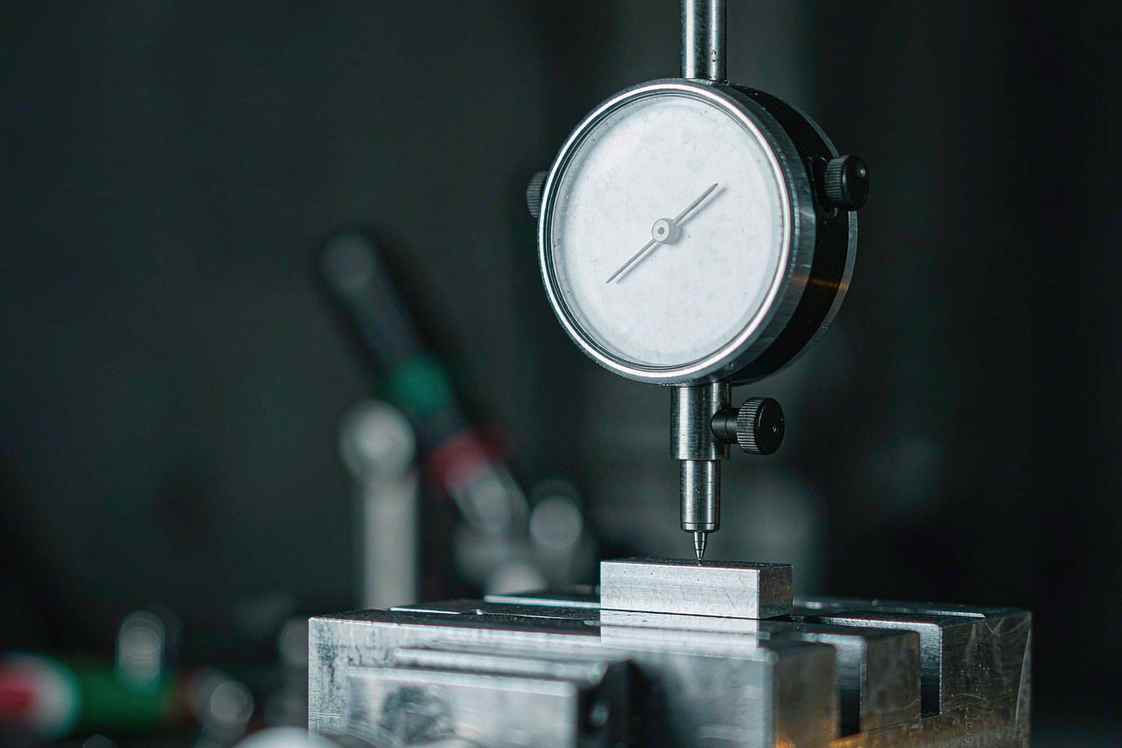
That single constraint removes the entire class of error that generated illustrations are prone to. A picture can show a needle pointing at 40 while the carriage sits under the 25 block, because nothing connects the two. A simulation cannot. If the model is wrong, the picture is consistently wrong in a way an engineer will spot immediately, which is a much better failure mode than plausible nonsense.
The raptor engine example pushes this further. Hover and the engine separates into eleven assemblies. The repository includes an audit that proves no pipe passes through any solid part, at rest, in the separated state, and in every frame of the transition between them. That is a collision check running across an animation, and it is the kind of claim a rendering pipeline can make and a diffusion model cannot even attempt.
The parts list
The output is SVG for the structure, with optional WebGL shaders for things that need continuous fields: the exhaust plume on the rocket, the caustics projected on paper under a ripple tank, the reflections in the water. A 3D mode in beta re-projects and re-shades about ninety parts on every frame while you drag a dial.
The examples are also a scale reference. The dial indicator is the smallest at roughly 300 lines and is the one to read first if you want to understand the format. The ripple tank layers an SVG apparatus over two WebGL passes driven by a dispersion and optics model, which is a considerably larger commitment.
Screenshots in the repository are captured with the skill's own scripts/capture.mjs, which tells you something about the intended workflow: the output is meant to be reviewed as an artifact, not admired in a chat window.
Installing it
It is a skill, not a model, so installation is a copy.
npx skills add wheresryan22/anatomy -gThe CLI asks which agents to configure. Supported targets are Claude Code, Antigravity, OpenCode, Codex, and MiniMax Code, and you can skip the prompt with -a claude-code, -a antigravity, -a opencode, -a codex, or -a minimax-code. Global installs land in ~/.claude/skills/anatomy, ~/.gemini/antigravity/skills/anatomy, ~/.config/opencode/skills/anatomy, ~/.agents/skills/anatomy, or ~/.minimax/skills/anatomy depending on the target. Drop the -g flag to install into .claude/skills/anatomy or .agents/skills/anatomy for one project.
Requirements are Node 20.10 or later and nothing else. No API keys, no npm install, no build step, because the kit uses only Node's built-in modules. If you prefer not to use the CLI, cloning the repository into the skills directory works the same way.
Then, in Claude Code:
/anatomy explain how a token bucket rate limiter works, interactiveIn Codex the command is $anatomy. The other three agents take /anatomy.
Where it fits next to image models
The obvious question for anyone who has been watching image generation get better every quarter: why not generate the illustration instead?
Because the two tools answer different questions. A diffusion model answers "what does a diagram of this usually look like." Anatomy answers "what does this mechanism actually do, given these parameters." For a marketing page, the first is fine and much cheaper. For a technical explainer that a customer will read before signing a contract, the second is the only one that survives scrutiny.
There is a cost, and it is not small. A generated image takes seconds and one API call. Anatomy runs a build loop: invent the mechanism, model the parts, wire the motion, simulate the readouts, then self-check by zooming into every joint and inspecting them one at a time. The repository is explicit that this self-check is part of the pipeline, which means the skill is spending tokens on verification rather than on polish.
That trade, quality of correctness over speed, is the same one showing up across agent tooling this month. The interesting thing is that it is being applied to illustration, a category most people assumed belonged to the image models permanently.
What I would use it for
Three things, in order of confidence.
Architecture explanations that go to people who will ask hard questions. A pipeline diagram built from a simulation will not have an impossible data flow, because the flow is what the parts are doing.
Teaching material where the physical intuition is the point. The ripple tank example exists because interference is easier to understand when you can see two dippers making waves and the pattern landing on paper.
And internal documentation that nobody wants to draw. The skill's real value may be that it removes the excuse. You describe the mechanism in a sentence, and something comes back with the joints checked.
Do not use it for anything that needs a specific brand style, a photograph, or a human face. It draws machines. That is the whole range, and within that range it is doing something no image model currently does.
Related articles
Chinese text in video always turns to mush. Dreamina handed the typesetting to code
Dreamina launched Motion Studio on November 10. It no longer generates frames; the model writes code that lays out text, shapes and pacing. Chinese titles stop blurring, but whether the content is right is still on you.
A community spreadsheet of taps that turns off the ads inside Chinese Android builds
A no-root tool that switches off the ads Chinese phone makers ship inside the system UI. Its method is a hand-written tap script per phone model, maintained by volunteers every time a ROM moves. It works, and the maintenance is the point.
GPT Image 2.6 held the token price and raised the bill
GPT Image 2.6 kept every token rate from 2.5 and still costs more per image, because more of the work now happens in output tokens. Eleven days into the ramp, the pricing structure says more than the leaderboard does.
Someone rebuilt IDM from the outside and wrote down what they did not touch
A Rust reimplementation of Internet Download Manager claims 5x the speed and 86 languages. The more interesting document is the paragraph explaining how it was built without copying anything.