
A Menswear Brand Fed a Creator's Photos to AI Try-On and Topped the Double 11 Chart
On November 10, a creator who posts as Sun Relie on Xiaohongshu published a two-panel image. On the left, a photograph of her in her own clothes. On the right, the same face, the same body, the same posture, wearing a new jacket from a sportswear label called FPA.
Her caption was short: you took my photo without permission, then fed it to AI to generate your product.
Within a day the post had pulled in other people with the same complaint. One creator, surnamed Li, runs an original apparel team and told reporters that an FPA account had posted a commercial image in July that replicated her team's shoot almost exactly: same pose, same red brick wall, same trees, same air-conditioning unit on the exterior wall. Only the model's face and outfit had changed. She contacted customer service on October 9 and was told, after several rounds, that the image had been deleted.
The label's own account has a little over 8,200 followers and describes itself as building a new-generation sportswear brand. It apologised in the comments, in language that is worth reading closely: a department within the team, pursuing output efficiency blindly, had used creator images for AI clothing swaps. The problematic images came down. As of 4pm on November 13, FPA was still ranked first on Tmall's Double 11 menswear store chart.
The arithmetic that produced the behaviour
The reporting around this story included a set of cost figures that explain more than any statement about corporate culture.
An AI-generated model image runs about 0.4 to 0.6 yuan. A fifteen-second AI video runs 4 to 9 yuan. A human model costs 800 to 3,000 yuan per hour, shoots 30 to 150 outfits in a day, and with studio, make-up and travel the daily cost passes 10,000 yuan without much effort.
Set those numbers against the store's catalogue. More than 999 product links, of which over 400 sell fewer than 100 units a month, while the top three items together move more than 13,000 units. That is a long tail with a small head, and the standard platform incentive applies: more images and more video produce more traffic. Shooting the tail with humans is not expensive, it is impossible. The tail does not generate enough revenue to pay for its own photography.
So the tail gets generated. That part is a legitimate business decision and every large retailer is making it. What is not legitimate is where the reference images came from.
The alibi is always efficiency
The apology's phrase (a department pursuing output efficiency blindly) is the standard shape of these statements. It locates the failure in an over-enthusiastic team rather than a process, which lets the company present the incident as an exception.
But look at how the images were made. The background was preserved exactly: the brick wall, the trees, the outdoor unit. The face and the outfit were replaced. That is too specific to be an accident of a generic image model pointed at a prompt. A person took a real photograph of a real model in a real location, ran it through a clothing-swap pipeline, and published the result as a product shot. Somebody chose the source image. Somebody approved the output. The efficiency argument does not survive contact with the workflow.
Li's summary of the practical situation is the part that will resonate with anyone who has tried to enforce a copyright online: AI infringement is very hard to pursue, the time, energy and enforcement costs are high, and against this kind of adjacent-but-not-identical copying, most creators simply have no route.
The product problem underneath the legal one
There is a second failure here, and it is the one consumers will feel.
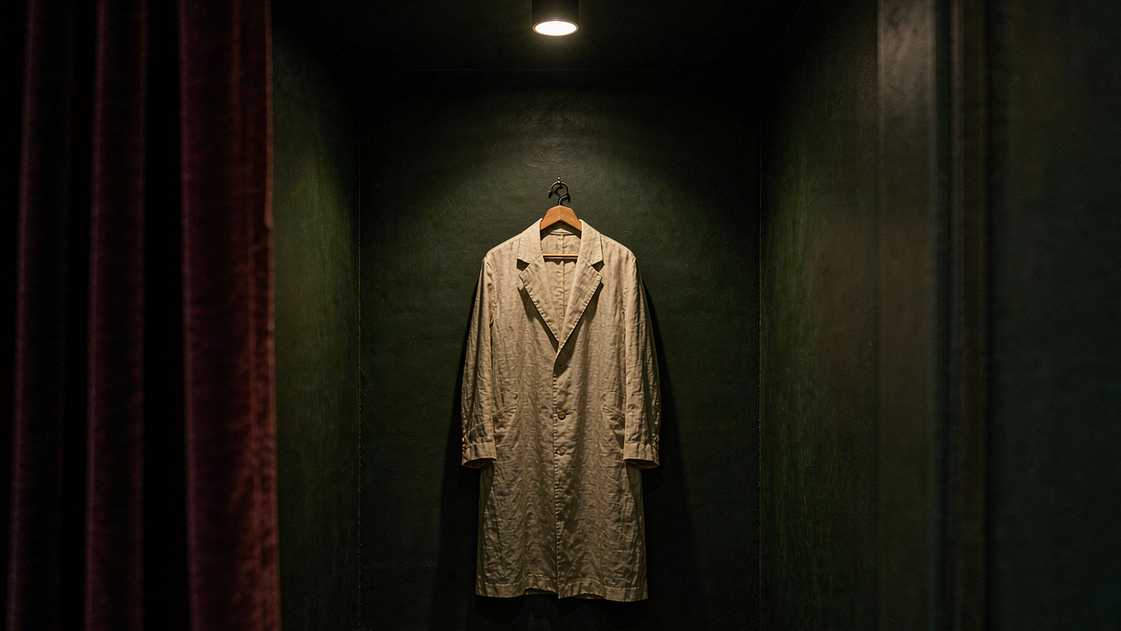
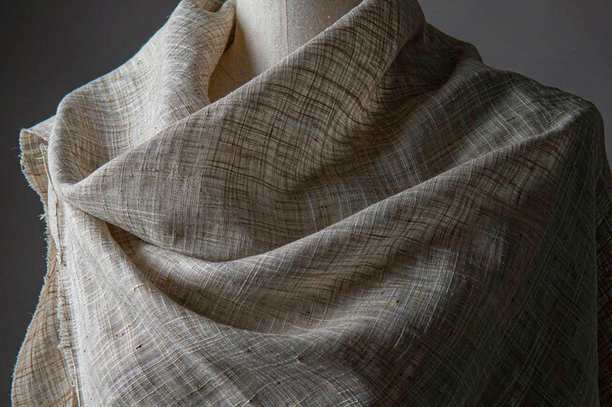
Clothing is a physical product evaluated through images. Does the wool drape or stand up? Does the shoulder line sit where it should? Does the collar hold? AI generation is not a simulation of a garment; it renders an idealised version of one. Xie Yongjiang, who directs the internet governance and law research centre at Beijing University of Posts and Telecommunications, put it directly: general AI draws pictures, it does not physically simulate a real sample, so it struggles to reproduce fabric texture, drape and cut.
The visible artefacts follow from that. Three-legged trousers. Models with six fingers. A down jacket photographed on a hand with an extra digit, discovered on the fourth image of a listing. These are comic, and they are also a signal: the picture is not evidence of the object.
For apparel, that matters more than for almost any other category, because the entire purchase decision is an inference from a photograph to a fit. When the photograph is a rendering, the inference has no ground truth. One case that reached court involved a customer who asked customer service explicitly whether the photos were real, was told yes, and received shirts that differed in seven or eight visible ways. The first instance went against her. The Guangzhou Intermediate Court reversed it on appeal, awarding a refund plus triple damages, and the case was listed among Guangzhou's ten typical consumer protection cases for 2026.
What compliance actually looks like
The rules exist. The Measures for Labelling AI-Generated Synthetic Content took effect on September 1, 2025, requiring labels on generated material. Both Pinduoduo and Taobao have told merchants not to use significantly distorted AI images.
In practice, shoppers have started doing the labelling themselves. The tactic circulating on social platforms is simple: if a listing carries the platform's "suspected AI-generated" tag, or if the image reads as generated at a glance, close it and buy elsewhere. That is a market response to a trust failure, and it is more effective than any enforcement action, because it costs the seller the sale directly.
For brands that want to keep using generated imagery without ending up in this story, the line is not complicated. Generate from your own sample, your own shoot, your own model release. Keep the real photograph alongside the generated one so a customer can compare. Label it. Do not let a generated image carry a claim (fit, fabric, colour) that only a real one can support.
FPA did none of those things, and the cost so far is an apology and a delisting. The ranking did not move.
That last detail is the one worth sitting with. A brand can be caught taking a creator's photograph, converting it into an advertisement for a garment that creator never wore, apologise in a comment thread, and remain at the top of the platform's own chart three days later. The enforcement that mattered belonged to neither the platform nor the courts; it was a shopper scrolling past a listing that looked generated, and deciding not to buy.
Related articles
The Jensen Discount: What Nvidia Loses When Its Founder Walks Out
Nvidia lost roughly $600 billion in market value when its founder stepped down. The earnings did not change. The multiple did, and that says where the value really lived.
Chinese text in video always turns to mush. Dreamina handed the typesetting to code
Dreamina launched Motion Studio on November 10. It no longer generates frames; the model writes code that lays out text, shapes and pacing. Chinese titles stop blurring, but whether the content is right is still on you.
A community spreadsheet of taps that turns off the ads inside Chinese Android builds
A no-root tool that switches off the ads Chinese phone makers ship inside the system UI. Its method is a hand-written tap script per phone model, maintained by volunteers every time a ROM moves. It works, and the maintenance is the point.
GPT Image 2.6 held the token price and raised the bill
GPT Image 2.6 kept every token rate from 2.5 and still costs more per image, because more of the work now happens in output tokens. Eleven days into the ramp, the pricing structure says more than the leaderboard does.