
A Claude Skill That Turns a Motorcycle Engine Into a Page You Can Take Apart
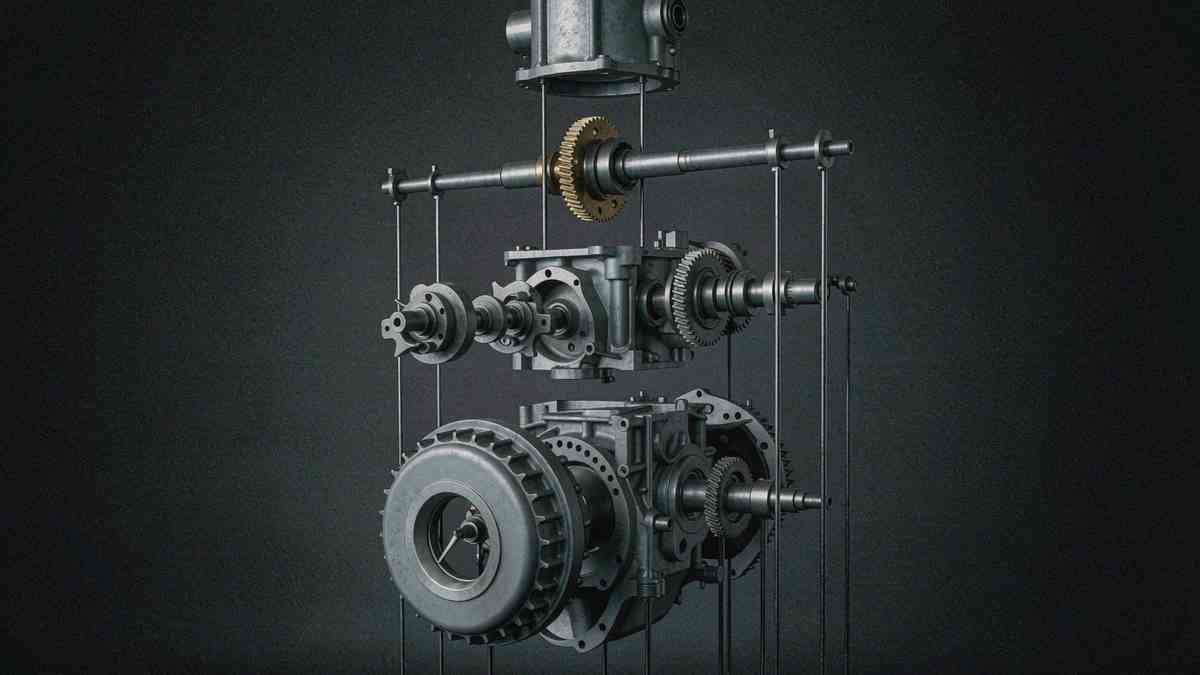
The instructions for this one are a sentence. Ask Claude Code to build a simulator of a four-stroke motorcycle engine you can take apart, and it will. Ask how a mechanical watch keeps time and it builds that. Ask for a teardown of a hydraulic excavator arm plus a twenty-second video of it, and you get both.
The project is called teardown, it has 3,497 stars and an MIT licence, and it is a skill rather than an app. Installation is one line: npx skills add elvarofficial/teardown -g -a claude-code, then npm install && npx playwright install chromium inside the folder. Node 20 or newer, ffmpeg if you want the film, Python 3 if you want the sound.
What comes out
One HTML file per machine, fully offline, with three.js and the fonts inlined. That constraint is the design. No server, no CDN, no build step for the reader. You can email it to someone and it opens.
Inside the page, the machine sits in the middle. Every HUD panel around it reads actual numbers from the simulation rather than quotes from a spec sheet: shaft speed, valve timing, pressure. A button opens the assembly that does the work at the moment you press it, so you can see the part that is currently responsible for the movement. And if nobody touches anything for a while, the page starts touring itself, moving the camera and opening parts in a fixed sequence.
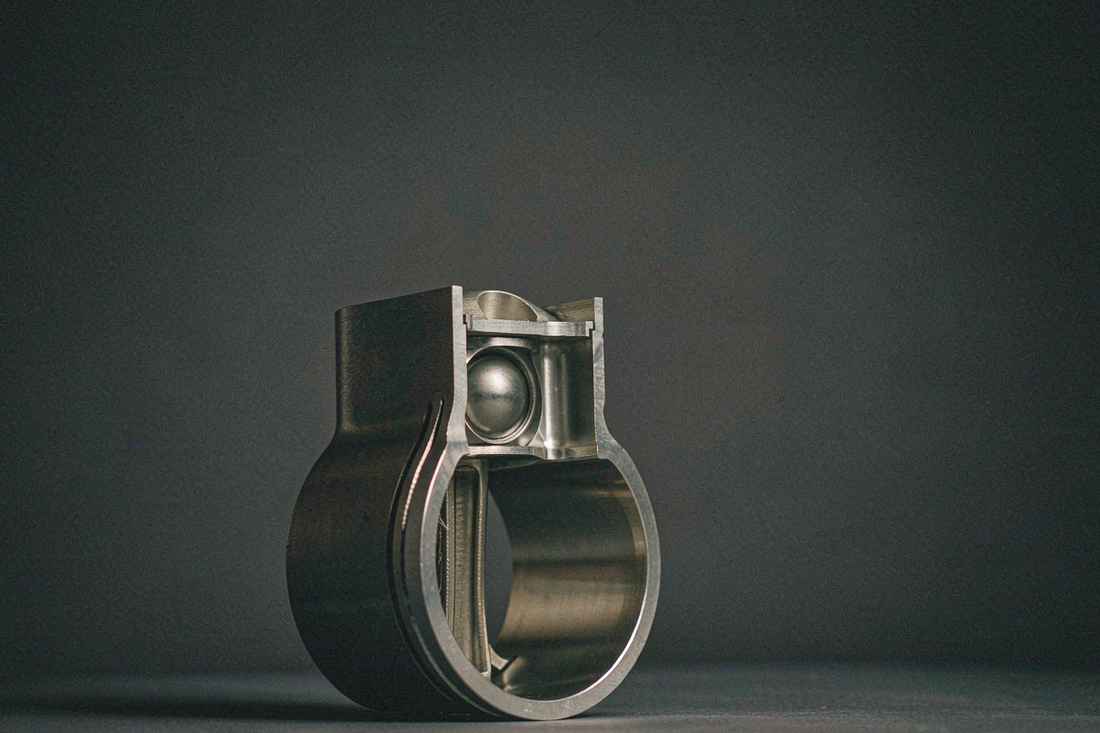
Three machines ship as reference implementations: a V8 engine, a Cessna, and a Strandbeest. You can build them locally with node sims/build.mjs v8-live and open the result, which is worth doing even if you never ask Claude for a new one. It shows the standard the skill is aiming at.
How the skill keeps quality up
The interesting engineering is not the 3D, it is the review loop. SKILL.md contains rules about how a machine is assembled, what makes it look right, and how the agent should check its own output before handing it over. The kit under sims/kit/ provides the runtime, the stage and shader warm-up, so the model is not writing a renderer from scratch on every request.
Capture is separate and equally deliberate. sims/capture.mjs renders the film frame by frame to a 60fps MP4, or to sheets of stills for review. run_sfx.py generates sound procedurally on the film's timeline and masters it to minus 14 LUFS, which is the loudness target streaming platforms normalise to. A generated video with mismatched audio is instantly recognisable, and this step is the difference between something you can post and something you cannot.
The lineage is stated plainly: the runtime, frame capture, sound engine and review rules come from whaleyxbt/claude-motion, also MIT. Sound samples are CC0 from Freesound, prepared by another repo. Building on someone else's animation kit and saying so is not glamorous, and it is why this shipped in weeks rather than months.
Why a dismantlable machine teaches better than a diagram
Exploded-view diagrams have been in service manuals for a century, and for good reason: they answer "what is inside" without answering "what moves what". A static diagram cannot show that the cam opens the valve just before the piston reaches the top, which is the one fact that makes valve timing click.
Interaction fixes that, cheaply. Dragging a slider changes the crank angle, and the rest of the machine follows. Opening the housing mid-cycle shows which part is under load. The numbers on the panels update, so you can watch the relationship rather than memorise it.
The touring mode matters more than it sounds. Most people do not know what to click first, and a page that sits still waiting for a good question is a page that gets closed. An auto-tour turns a simulation into an explainer, which is the format most technical content actually needs.
The obvious failure mode
A language model writing a physics simulation will get the physics wrong sometimes. It will produce a plausible-looking engine with valve timing that is off by twenty degrees, or a gearbox whose ratios do not multiply out. Nothing in the pipeline guarantees correctness; the review rules improve the odds without certifying anything.
That is worth saying because the production value of these pages is high enough to be persuasive. A clean 3D model with live numbers reads as authoritative. If the numbers are invented, the page is a very convincing piece of misinformation, and it is more dangerous than a bad diagram because it moves.
The countermeasure is the same one that applies to any agent output: ask it to show its sources and its arithmetic. A well-built simulator exposes its parameters in the code, and you can check that a four-stroke cycle at 3,000 rpm fires 1,500 times a minute. If the panel says something else, the page is wrong and you can see it.
The second limitation is scope. Machines with clear mechanics work: engines, watches, linkages, hydraulic arms. Machines whose behaviour is mostly chemical, electromagnetic or software-defined do not reduce to a rotating assembly, and the skill will produce something confident and useless if you ask for a battery.
## The film is the deliverable more often than the page
Worth separating two outputs that the skill produces from one request. The interactive page is for the person who wants to understand. The recorded film is for everyone else: the pitch, the launch post, the training module, the conference loop.
That second output is why the capture and audio pipeline exists at all, and why it is built to a broadcast-ish standard rather than a demo standard. A 60fps render with audio mastered to minus 14 LUFS drops into a video editor without a fix-up pass. A screencast of someone dragging a slider does not. The gap between those two artifacts is where most AI-generated explainer content dies, because the vision is right and the finishing is missing.
The format is the story
What makes this more than a clever demo is the output format. One HTML file, offline, self-touring, with a recorded film and mastered audio, is a complete teaching artifact. It can be a landing page, a sales explainer, a museum kiosk, or the appendix of a hardware manual.
That combination used to require a 3D artist, a motion designer, a sound designer and a front-end developer. Now it requires a sentence and a review pass, and the review pass is where the humans should spend their time. The model is very good at the assembly and the camera work. It is not yet reliable about the numbers, and the numbers are what the page is for.
Related articles
The Jensen Discount: What Nvidia Loses When Its Founder Walks Out
Nvidia lost roughly $600 billion in market value when its founder stepped down. The earnings did not change. The multiple did, and that says where the value really lived.
Chinese text in video always turns to mush. Dreamina handed the typesetting to code
Dreamina launched Motion Studio on November 10. It no longer generates frames; the model writes code that lays out text, shapes and pacing. Chinese titles stop blurring, but whether the content is right is still on you.
A community spreadsheet of taps that turns off the ads inside Chinese Android builds
A no-root tool that switches off the ads Chinese phone makers ship inside the system UI. Its method is a hand-written tap script per phone model, maintained by volunteers every time a ROM moves. It works, and the maintenance is the point.
GPT Image 2.6 held the token price and raised the bill
GPT Image 2.6 kept every token rate from 2.5 and still costs more per image, because more of the work now happens in output tokens. Eleven days into the ramp, the pricing structure says more than the leaderboard does.